
Is Your COVID Vaccine Still Effective? Shocking New Data Reveals What You MUST Know!


A federal judge recently halted two significant shifts in vaccine policy initiated by Health and Human Services Secretary Robert F. Kennedy Jr., whose controversial stance on vaccinations has drawn widespread scrutiny. This ruling comes at a poignant time, marking six years since the first COVID-19 lockdown in the United States, a period that has left lasting impacts on public health, particularly regarding vaccine hesitancy.
On March 16, a judge in Massachusetts sided with the American Academy of Pediatrics (AAP) and other medical organizations, blocking Kennedy's efforts to reshape federal vaccine policy. The judge ruled that Kennedy's appointments to the Advisory Committee on Immunization Practices (ACIP) were unlawfully constituted, which invalidated votes that downgraded recommendations for hepatitis B vaccines for newborns and broadly altered COVID-19 vaccine guidelines.
This ruling is critical as it not only halts the new policies but also reinstates the previous recommendations supported by major medical institutions. The AAP had expressed serious concerns regarding Kennedy's approach, claiming it could potentially lead to increased risks of preventable diseases, especially among children. “The changes made under Kennedy’s leadership are not grounded in credible evidence,” stated a representative from the AAP.
Confusion in Vaccine Guidelines
Under Kennedy’s direction, significant shifts in vaccine recommendations were initiated, including the removal of the COVID-19 vaccine from the CDC's recommended immunization schedule for healthy children and pregnant women. This decision contradicted expert guidance, prompting the AAP to issue its own vaccination schedule. Medical experts advocate that all children aged 6 months to 23 months should receive the latest COVID-19 vaccine to mitigate the risk of severe illness.
The conflicting narratives surrounding vaccine guidelines have only exacerbated public confusion. Following Kennedy's announcement in May 2025, which significantly restricted who could receive the COVID-19 vaccine, public health officials and pediatricians faced the daunting task of reassuring parents about vaccine safety and efficacy. Kennedy's actions were met with criticism, and he implied that organizations like the AAP were influenced by corporate pharmaceutical funding.
Further complicating the matter, in August 2025, the FDA approved a new round of COVID-19 vaccines, but eligibility was limited—available only to individuals aged 65 and older or those aged 6 months or older with existing health conditions. This narrow focus has led to a patchwork of state-level responses, with some states enacting their own regulations to maintain access to vaccines, despite Kennedy's restrictive policies.
Another contentious change proposed by Kennedy involved splitting the MMR vaccine—previously a combination shot protecting against measles, mumps, and rubella—into separate vaccines. Critics argue this could lead to lower vaccination rates and, consequently, increased outbreaks of these diseases, which have already seen a resurgence in various parts of the country.
The recent court ruling has immediate implications, postponing a scheduled meeting of the ACIP and rendering previous decisions regarding the hepatitis B vaccine for newborns moot. The judge's ruling means that the previous recommendations will likely be reinstated, which called for administering the hepatitis B vaccine within 24 hours of birth, followed by two additional doses in the following months.
Future Implications
The Trump administration, under which Kennedy was appointed, has indicated plans to appeal the judge's ruling, potentially escalating the case to the Supreme Court. As public health remains a contentious issue in America, this case illustrates the ongoing struggle between traditional medical practices and emerging, often controversial, political ideologies surrounding healthcare.
For many Americans, especially parents navigating the complexities of child vaccination, this ongoing saga reflects broader societal divisions over public health measures born out of the pandemic. With vaccine hesitancy persisting, the stakes are high, and experts warn that misinformation and policy changes can have dire consequences for community health. As this situation evolves, one thing remains clear: the path forward will require a careful balance between individual rights and public health imperatives.
Bitcoin Hits Shocking $68K—Is This Your Last Chance to Buy Before XRP Explodes?

Tencent's Shocking New AI Tool: How WeChat Just Got a Major Upgrade—Are You Ready to Lose Out?
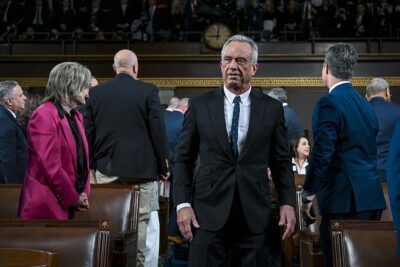
Court's Surprising Vaccine Ruling: Are Babies Safer or is RFK's Influence Growing?

Why This Shocking College Football March Madness Upset Will Change Everything You Thought You Knew!

Coinbase Shocks Wall Street: Trade Tesla, Apple, Nvidia 24/7 with 10X Leverage—Are You Missing Out?

Hyderabad Startup BioReform Shocks World with UN Recognition—What They Discovered Will Leave You Speechless!
You might also like: