
Is Your Blood Turning Toxic? Shocking Truth About Carbon Dioxide You Must Know Now!

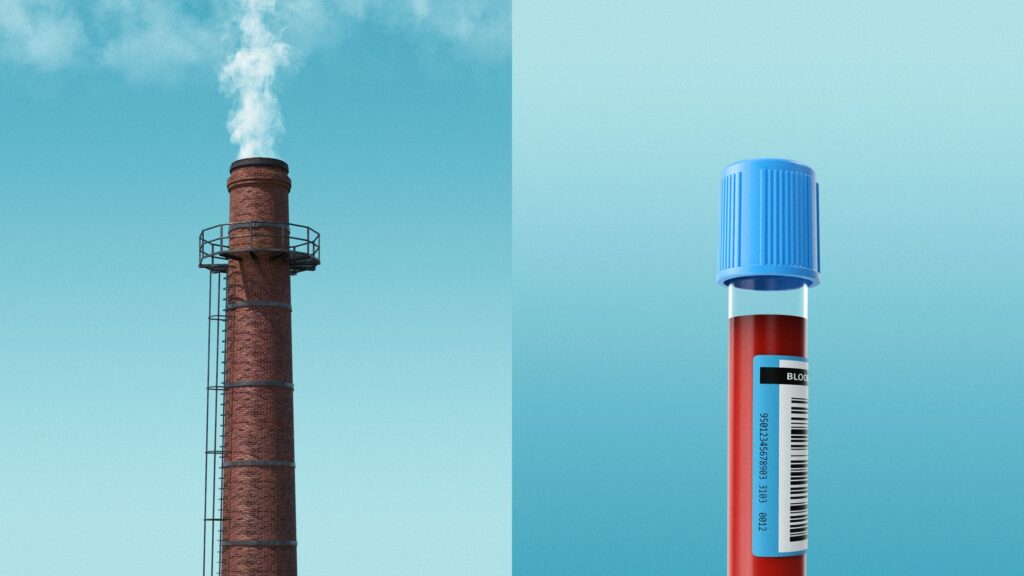
As the global conversation around climate change intensifies, a recent study reveals a surprising link between rising carbon dioxide (CO2) levels and human health. While the effects of increased CO2 on the climate and ecosystems are well-documented, new findings indicate that these emissions could also be altering the chemical composition of human blood, potentially leading to significant long-term health issues.
Research published in the journal Air Quality, Atmosphere & Health has shown that elevated levels of CO2 correlate with increased concentrations of bicarbonate (HCO3-) in the bloodstream, alongside decreases in crucial minerals such as calcium (Ca) and phosphorus (P). Specifically, bicarbonate levels increased by approximately 7%—or 0.34% per year—between 1999 and 2020, while calcium and phosphorus levels dropped by 2% and 7%, respectively. If these trends persist, experts predict that blood bicarbonate values could approach the upper limits of the accepted healthy range within the next fifty years, with calcium and phosphorus levels following suit by the end of this century.
This chemical shift occurs because, as CO2 dissolves in the bloodstream, it changes the body’s acid-base balance. To offset this, the kidneys conserve bicarbonate, a buffering molecule essential for maintaining blood pH levels. Bones also play a role in this process, exchanging minerals like calcium and phosphorus to help manage acidity. “There’s a delicate balance between how much CO2 is in the air, our blood pH, our breathing rate, and bicarbonate levels in the blood,” says Phil Bierwirth, a retired environmental geoscientist and co-author of the study. He emphasizes that the current atmospheric CO2 levels exceed what humans have ever experienced, which may leave little room for adaptation.
The implications of these findings are alarming. Elevated CO2 levels have been associated with various health issues, including cognitive impairment. Even moderate increases in indoor CO2 concentrations can adversely affect focus and decision-making abilities, as noted by Earth.com. Additionally, chronic CO2 retention can lead to metabolic acidosis, which may contribute to kidney and arterial calcification as the body attempts to correct its pH balance.
Experts are particularly concerned about the long-term effects on children and adolescents, who will be exposed to these rising atmospheric CO2 levels for the longest duration. “We’re not saying people are suddenly going to become unwell when we cross a certain threshold,” cautions Alexander Larcombe, a respiratory physiologist and another author of the study. “But this suggests there may be gradual physiological changes occurring at a population level, and that's something we should be monitoring as part of future climate change policy.”
As the science evolves, it’s clear that the ramifications of climate change extend far beyond environmental concerns. The potential for shifts in our physiological health underscores the urgent need for comprehensive action against rising emissions. Addressing climate change is not only about protecting ecosystems; it’s also about safeguarding public health and ensuring future generations can thrive in a world increasingly affected by environmental changes.
Is This Controversial GOP Candidate the Key to Saving California from Itself? You Won't Believe His Shocking Plan!

BTC Soars to $74K! What This Shocking Surge Means for Your Crypto Future!

Discover the Shocking Secret Behind New Zealand's Rural Boom: Are You Missing Out on $100K Gains?

You Won't Believe What Doug Mills Reveals About Capturing the U.S. Presidency! 4 Shocking Secrets Inside!

Rapper-turned-mayor makes a shocking bid for Nepal’s leadership—will Gen Z’s protests spark chaos again?

Florida A&M's Shocking Mistake Costs Them BIG: How It Fueled Florida's Streak! You Won't Believe the Details!
You might also like: