
Is Your Baby's Safety at Risk? Discover the Shocking Truth Behind Rural Maternity Care!

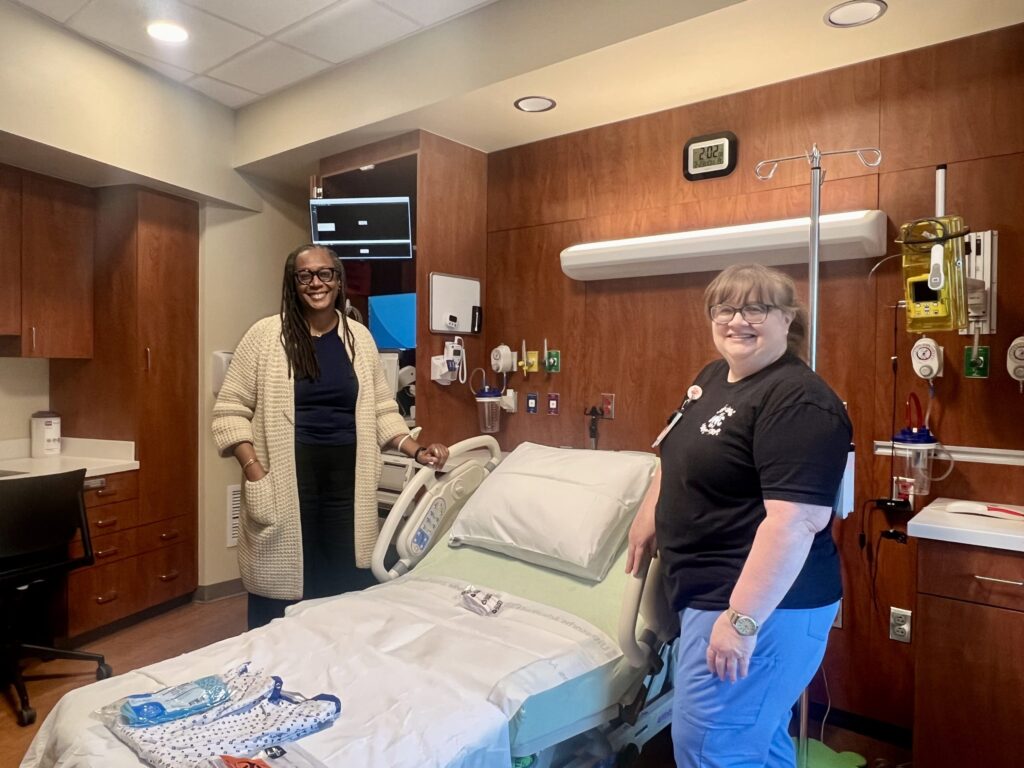
A clear container filled with pink, blue, and white beads greets visitors at the nurses’ station of a five-bed rural maternity care unit in Siler City, North Carolina. The label on the container reads: “Legends are born.” Each bead represents a baby delivered at the UNC Health Chatham Maternity Care Center, which opened in September 2020. As of February 23, 2026, a total of 894 beads have been added, marking both joyful births and the few families who experienced a loss.
For residents of Chatham County, the ability to give birth locally is a relatively new reality. This contrasts sharply with many women in rural North Carolina—and across the country—who find maternity care increasingly out of reach. A report by March of Dimes in 2024 identified 20 counties in North Carolina as maternity care deserts, lacking hospitals or birth centers that provide obstetric care, along with a workforce of practicing OB-GYNs, certified nurse-midwives, and family physicians. Another 17 counties face low access to maternity care.
The dwindling access to obstetric services is largely attributed to years of financial strain on rural hospitals, workforce shortages, and low Medicaid reimbursement rates, making it challenging for these institutions to sustain maternity care. Between 2010 and 2022, eight rural hospitals in North Carolina eliminated maternity services. By the end of that period, 44% of rural hospitals were without obstetric services, compared to 27% of urban hospitals, as highlighted in a study published in Health Affairs. Unfortunately, closures have continued.
Amidst this backdrop, UNC Health Chatham stands out as the only rural hospital in North Carolina to successfully restore maternity services, reopening a unit that had been absent for nearly 30 years. The center serves low-risk mothers and newborns and is staffed primarily by family physicians trained in obstetrics, along with midwives. This model proves to be more cost-effective than relying solely on OB-GYNs, who are typically more expensive to employ and harder to recruit to rural areas. Since its opening, births at the unit have increased annually, with hospital leaders anticipating the center will reach 1,000 cumulative deliveries this year.
The benefits of having localized maternity care in Chatham County are tangible. Families now have their travel distances for labor and delivery cut nearly in half, and clinical outcomes for low-risk patients are comparable to those who choose to deliver at the larger UNC Health academic medical center in Chapel Hill, as indicated by a January study evaluating the unit's first three years in operation. Furthermore, U.S. News & World Report recognized UNC Health Chatham in its 2026 annual report as one of the best hospitals for maternity care, highlighting the center's national acclaim.
Innovative Maternity Care Model
The model employed at Chatham Hospital reflects a significant shift from the past when maternity care was eliminated due to staffing challenges and financial viability. In 1991, the hospital was delivering around 300 babies annually. Nearly three decades later, when leaders decided to reinstate maternity services, they realized it had to be done differently to ensure sustainability. This time, they appointed family physicians to lead the unit rather than OB-GYNs, a novel approach in North Carolina.
This strategy was partly inspired by Cristy Page, former chair of the UNC Department of Family Medicine and now CEO of UNC Health and dean of the UNC School of Medicine. While family physicians have been providing obstetric care in many areas across the country, the Chatham model is unique for the state, being the only maternity unit led by family physicians and midwives without any OB-GYNs on staff.
Greg Griggs, head of the North Carolina Academy of Family Physicians, notes that approximately 10% of the state's 3,000 family physicians—around 300—provide obstetric care, a figure that has remained steady. Most family physicians work alongside OB-GYNs. However, Margaret Helton, chair of the family medicine department, argues that family physicians are particularly well-suited for smaller units because of their versatility. “Our family doctors at Chatham Hospital can also work on the inpatient side with adult medicine,” she explains, making them more flexible and cost-effective.
Currently, the unit averages about 15 to 20 deliveries a month, with staffing consisting of two nurses and one provider—either a midwife or family physician—always on duty. Three family physicians at the center are trained to perform C-sections, offering surgical backup for other staff members lacking that training. This innovative staffing structure has already proven sustainable, with Wolak stating, “We know we’re going to grow. The focus is on making sure patients get the best care possible.”
Early investigations into the center’s impact provide encouraging evidence. A study published in January in the International Journal of Environmental Research and Public Health analyzed data from 402 births in the first three years. It found that most patients were low-income, Hispanic families living near the facility, and that delivery outcomes were comparable to those who gave birth at UNC Health in Chapel Hill. Significantly, nearly one-third of patients at the Chatham maternity unit resided within five miles, in stark contrast to fewer than 1% of patients in the comparison cohort.
Patient satisfaction has also been notably high. Many mothers reported strong relationships with the staff, with one recounting how she delivered her baby just 15 minutes after arriving at the hospital. “If [the Chatham Maternity Care Center] had not been there, I would have had my baby in a car,” she said.
Despite initial challenges, including staffing turnover and low birth volumes due to the pandemic, a community task force was formed to recommend strategies for improvement. Since then, the center has stabilized its staffing and gradually increased deliveries. “Being able to practice what I would call my values and the mission of what I think is the core of family medicine is just a beautiful thing to be a part of,” said Dana Iglesias, the medical director of the center.
The success of the Chatham model raises questions about its potential for replication in other rural areas facing similar maternity care shortages. Wolak has received inquiries from other hospitals interested in implementing a similar family medicine-driven model. “They have everything in place—C-section rooms—but they don’t have providers to do that work,” he explained.
As leaders continue to share their experience at conferences, there is hope that the Chatham Maternity Care Center can serve as a template for restoring maternity services in rural communities across North Carolina. “It’s not a one-size-fits-all,” Ruiz emphasized. “They have to adjust to the needs of that community.”
Bitcoin's Surprising Surge: Is This a Dead Cat Bounce or Your Last Chance to Profit?

I Uncovered a Shocking Family Habit That Stunted My Growth for 30 Years—You Might Be Doing It Too!

You Won't Believe This Snack Could Slash Your Heart Disease & Cancer Risk by 50%! Discover Now!

Why Did Travel Giants EXPLODE in Reaction to Sam Altman’s SHOCKING ChatGPT Admission? You Won't Believe the Fallout!

Is Your Vet Hiding a Shocking Truth? 70% of Pet Owners Refuse Vaccines—Find Out Why!

India's Shocking Dengue Vaccine Breakthrough: What You MUST Know Before It’s Too Late!
You might also like: