
Is This the End? Shocking New Nipah Virus Vaccine Partnership Could Save Millions!

In a significant advancement for global health, South Korea's EuBiologics Co. is taking the lead in developing a vaccine candidate against the Nipah virus, a serious viral infection transmitted from animals to humans. The initiative, in collaboration with the National Institute of Health (NIH) of the Korea Disease Control and Prevention Agency (KDCA), marks a proactive step toward addressing an infectious disease that currently has no approved vaccines or treatments.
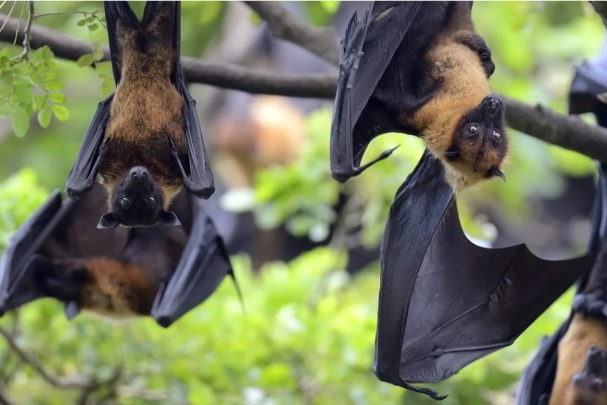
The Nipah virus, which can be transmitted from infected bats and other animals to humans, poses a major public health risk. Its transmission can also occur through contaminated food or direct person-to-person contact. Since it was first identified in 1998, outbreaks have been reported in several countries including Bangladesh, India, Malaysia, Philippines, and Singapore, with a fatality rate that fluctuates between 40% to 75%, according to the World Health Organization (WHO).
The joint development project is part of a broader strategy aimed at building rapid-response technology platforms that can effectively tackle infectious diseases with pandemic potential. This partnership will spearhead the research into a nanoparticle-based Nipah virus vaccine, which utilizes a consensus-based antigen and an immune adjuvant to provide extensive protection against various strains of the virus.
The program is set to run from April 2025 through December 2026, with the NIH playing a pivotal role. They will set vaccine development priorities, design antigens, and oversee project management and evaluation throughout all development stages. The decision to focus on a consensus antigen sequence, previously developed by the NIH, aims to ensure the vaccine can respond to multiple circulating strains and potentially future variants of the virus.
“The project is designed to provide broad protection against multiple circulating strains based on a consensus antigen sequence previously developed by the National Institute of Health,” EuBiologics stated in a recent announcement. “The development strategy also takes into account the potential emergence of future variants.”
As part of its research initiative, EuBiologics has already identified candidate antigens and is currently in the process of selecting vaccine formulations. The company is conducting nonclinical efficacy studies with the goal of confirming protective efficacy in animal models within the year. Following this phase, they plan to proceed to Good Laboratory Practice (GLP) toxicity studies and aim to advance the program toward clinical trials.
EuBiologics is leveraging its proprietary adjuvant platform technology, which has previously demonstrated clinical safety and immunogenicity in vaccine development programs targeting diseases such as COVID-19, respiratory syncytial virus (RSV), and herpes zoster (HZV). This experience may provide a robust foundation for developing an effective Nipah virus vaccine.
The urgency of this project cannot be understated. With Nipah virus designated as a priority pathogen by international health organizations like the WHO and the Coalition for Epidemic Preparedness Innovations (CEPI), the global health community is keenly aware of the potential risks posed by emerging infectious diseases.
The development of this vaccine candidate not only represents a significant scientific endeavor but also underscores the importance of international collaboration in combating infectious diseases. As public health preparedness continues to evolve, the outcomes of this project could play a crucial role in safeguarding global health against future pandemics.
Shocking Secrets Revealed: What Fox News is Hiding in Their March 3-10 Newsletter!
Child Vaccination Rates Plummet: Are Your Kids at Risk? Shocking Stats Inside!

European Union's Shocking Move: What They Discovered in Peru's Election Will Blow Your Mind!

Wisconsin's Childhood Vaccine Rates Plunge: Could Your Child Be at Risk? Shocking Numbers Inside!
Shocking Study Reveals Climate Change Could Cost Americans 2 Billion Days of Mental Health Struggles!

Why Salesforce CEO Marc Benioff Claims Thousands of Layoffs at Block Could Trigger a Major Tech Collapse!
You might also like: