Is This Start-Up’s Guilt-Free Millet Snack the Secret to Weight Loss? You Won’t Believe What’s Inside!

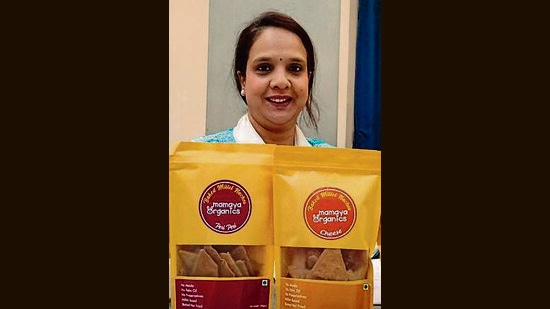
In a world where juggling family life and career can feel impossible, Priyamvada Mishra's journey is a testament to the power of entrepreneurial spirit. The mother of three, she found herself searching for healthier alternatives to the refined, sugar-laden snacks that dominated the market. It all began in 2021, when her youngest son was just eight months old. “I started experimenting with porridges for children,” she recalls. “I made it with millet and gave it to my son. And when it worked for him, I started selling it in packets.”
However, her initial venture into the baby food market fizzled out after a few months. Priyamvada observed that many first-time mothers were hesitant to introduce millet porridge to their children. “Mothers, especially of their firstborn, are very fastidious and hyper. They would not give their child time to get used to the millet porridge. So I stopped that business,” she explains.
Undeterred, she noticed a recurring problem in her home and among other families: the lack of healthy snack options. “I saw that families, including mine, were snacking every day on foods high in refined sugar and low in real nutrition, often without realizing the long-term impact,” she says. This common struggle led her to reflect on the choices available for her own children. “Everyone wanted healthier snacks, especially for their children, but nothing felt good enough to say yes to every day,” she adds.
📰 Table of Contents
Identifying a Market Gap
It was then that Priyamvada recognized a significant gap in the market for clean, millet-based snacks that were both nutritious and tasty. “I realized that clean, millet-based snacks that are tasty, trustworthy, and fit into everyday family life simply didn’t exist,” she states. Existing options were often deep-fried and, therefore, lacked nutritional value or were prohibitively expensive. “Why can’t we have millet-based snacks that are not fried yet delicious and also comfortably priced?” she thought. This epiphany led to the founding of Mamaya in 2023.
The task ahead was daunting; she needed to ensure that her millet snacks were both delicious and appealing to children. “We focused on taste first as that would help people accept it easily,” Priyamvada explains. Through small batch trials, she experimented with roasting, seasoning, and incorporating familiar Indian flavors to elevate the natural crunch and flavor of millets. Feedback from families was crucial. “If they enjoyed it without being told it was ‘healthy,’ we knew we were on the right track. In simple terms, we made healthy snacks taste better,” she adds.
Once she perfected her recipes in her kitchen, Priyamvada faced the challenge of scaling up production. “I was on the lookout for a contract manufacturer, but they all have huge minimum order quantities that start with one ton!” she laments. Fortunately, she connected with Preeti Deshmukh, founder of Food Nest, who was also launching her own brand. “Since she also needed business at the time, she told me that she would meet my requirements no matter the scale,” Priyamvada shares. Food Nest now helps Mamaya produce batches as small as 20 kilograms per flavor, catering to market demand.
To enter the market, Priyamvada initially started with exhibitions, which provided her with invaluable customer feedback. “While they may not be a great place to get big sales, I find it very useful to get customer feedback. It helps me form a strategy based on the insights that I get,” she notes. For example, the idea of a coffee-flavored snack flopped, saving her from a costly inventory mistake.
Initially using brown paper packaging, she soon realized she needed to enhance her branding. “I wanted people to see Mamaya as a premium, trusted brand,” she explains. Investing ₹3.5 lakh in a complete packaging redesign, she even took a loan from a friend to facilitate the transformation. Now, Mamaya produces 250 boxes per week, with room to scale up as needed.
Embracing Offline Marketing
In an era where online marketing is often viewed as essential, Priyamvada chose to focus on offline sales. “I started with exhibitions from where I got my database. I followed that up with WhatsApp sales, and then for Mamaya, LinkedIn posts got me bulk orders,” she recounts. Despite her attempts at social media marketing, she found that the return on investment was not justifiable for her small company. “For a small company like mine, they charge quite exorbitantly. It’s not the right thing for me to do at the moment,” she reflects, indicating that online strategies might be explored later.
So far, Priyamvada has invested ₹12 lakh of her own savings into Mamaya, yielding a revenue of ₹10 lakh last year, despite a loss of ₹2.5 lakh the previous year. “It may be a little disheartening, but as an entrepreneur, one has to be ready to take this in one’s stride,” she asserts. Looking ahead, she plans to expand her reach within Pune before venturing into cities like Bengaluru and Navi Mumbai. “The Pune market is huge. Once I do that, then this can act as a reference point for the rest of India,” she concludes, highlighting Mamaya's journey from porridges to nutritious snacks.
India's Shocking IMO Council Win: What This Means for Global Ocean Control!

You Won’t Believe the Shocking Plot Twists Coming in 2026’s Most Anticipated Shows!

Trump's Health Crisis: What the White House Isn't Telling You Could Change Everything!

Is Your Child’s Holiday Sugar Fix Harming Their Health? Shocking Truths Revealed!

Is the White House Secretly Hiding 7 Titles That Could Change Everything? You Won't Believe What They Are!

“This Revolutionary Vaccine Could Change Everything for Triple-Negative Breast Cancer—Find Out How!”
You might also like: