
Is This $105 Million Head Coach About to Make College Football History or Face Total Backlash?

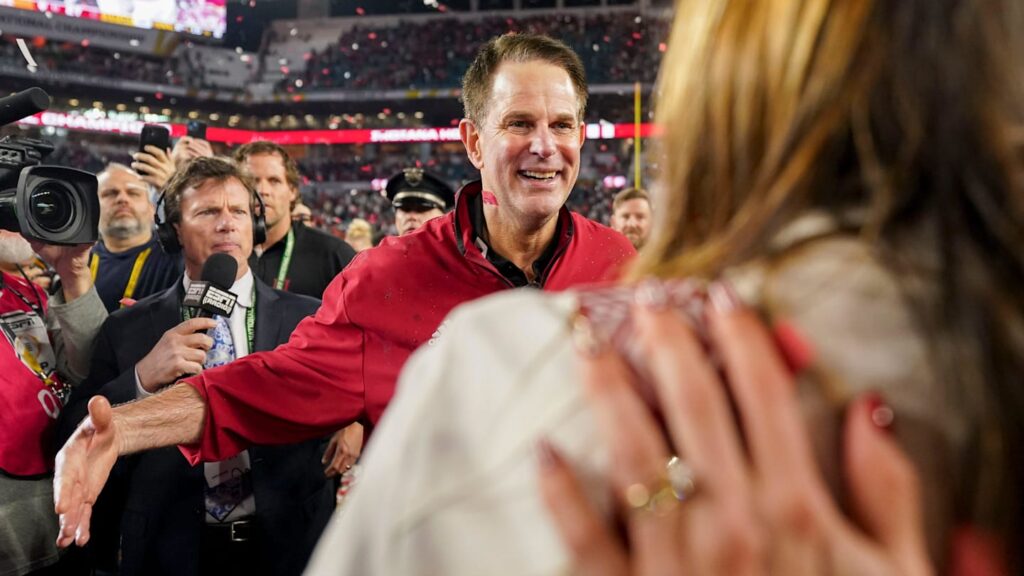
In a stunning turn of events that has captivated college football fans nationwide, Fox Sports analyst Joel Klatt has declared that the debate over who holds the title of the best coach in college football is officially over. Following an extraordinary 2025 season where Indiana University achieved a perfect 16-0 record and clinched its first national championship, Klatt has positioned Indiana’s head coach, Curt Cignetti, at the top of his coaching rankings.
Klatt argues that transforming a program with more historical losses than any other into an undefeated champion is nothing short of the greatest coaching feat in history. This remarkable achievement has not only redefined expectations for the Hoosiers but has also led to significant financial recognition for Cignetti. The coach is now under a lucrative contract extension worth a staggering $105 million, translating to an annual salary of $13.2 million through 2033, with additional performance bonuses projected to elevate his total compensation to around $14 million.
Cignetti's Rise to Prominence
The discourse around the best leaders in college football had previously been dominated by names such as Kirby Smart and Ryan Day. However, the narrative shifted dramatically after Indiana's thrilling victory over Miami, securing the national title with a 27-21 win at Hard Rock Stadium. Klatt has crowned Cignetti with the title of the number one head coach in the nation, stating that this ranking is now based on objective results rather than subjective opinions.
Klatt's analysis extends beyond just Cignetti; he also evaluates the standing of coaches like Dabo Swinney, alongside rising stars Dan Lanning and Marcus Freeman. He reflects on the impact of new arrivals, including Lane Kiffin at LSU and Kyle Whittingham at Michigan, highlighting the evolving landscape of college football coaching.
What sets Cignetti apart is not merely the championship victory, but the impressive statistics that accompany it. In his tenure at Indiana, he holds a record of 27-2, with both losses coming in challenging away games against Ohio State and Notre Dame—teams that went on to compete for the national championship in those seasons. This kind of performance is indicative of a coach who can consistently lead a team to success, even when faced with formidable opponents.
In a bid to secure Cignetti's future with the program, Indiana acted swiftly to restructure his deal three times in just two seasons, ensuring he ranks among the highest-paid coaches in the nation. The contract includes a unique escalator clause designed to keep him within the top three salaries, a safeguard that was activated after Indiana's remarkable run to the College Football Playoff semifinals followed by the national title. Cignetti's financial journey is impressive; he ascended from earning less than $700,000 at James Madison to the current annual figure of $13.2 million at Indiana.
This meteoric rise has ignited discussions about the changing dynamics of college football programs. Cignetti's success, achieved with a talent pool that lags behind traditional powerhouses, challenges the conventional wisdom about what is required for a program to thrive. It raises questions about how coaching strategies, recruitment, and program development will adapt as more schools strive to replicate Indiana's success.
As the college football landscape continues to evolve, Cignetti’s leadership and Indiana's recent triumph will be closely watched by both fans and fellow coaches alike. The Hoosiers are set to showcase their new prowess during their annual spring game on April 23, and anticipation is already building for the impact Cignetti will continue to have on the program.
You Won't Believe What HUAWEI's New Fitness Trackers Can Do—And They Last 14 Days!

Indiana's Shocking Sweepstakes Bill Could Change Your Lottery Dreams Forever—Find Out How!
College Football's Shocking Rule Changes: Why These 5 Changes Could Ruin the Game Forever!

How One Pet Can Save Your Life—But It Might Cost You $1,000 a Year!

Warriors Poised to Shock Everyone: Could This Be LeBron's Last Chance at Glory?

Credit Union Power Players Drop BOMBSHELL Priorities at White House: You Won't Believe What They Demanded!
You might also like: