
Is the Samsung Galaxy Z TriFold the Ultimate Game Changer? Shocking Surprises Inside!

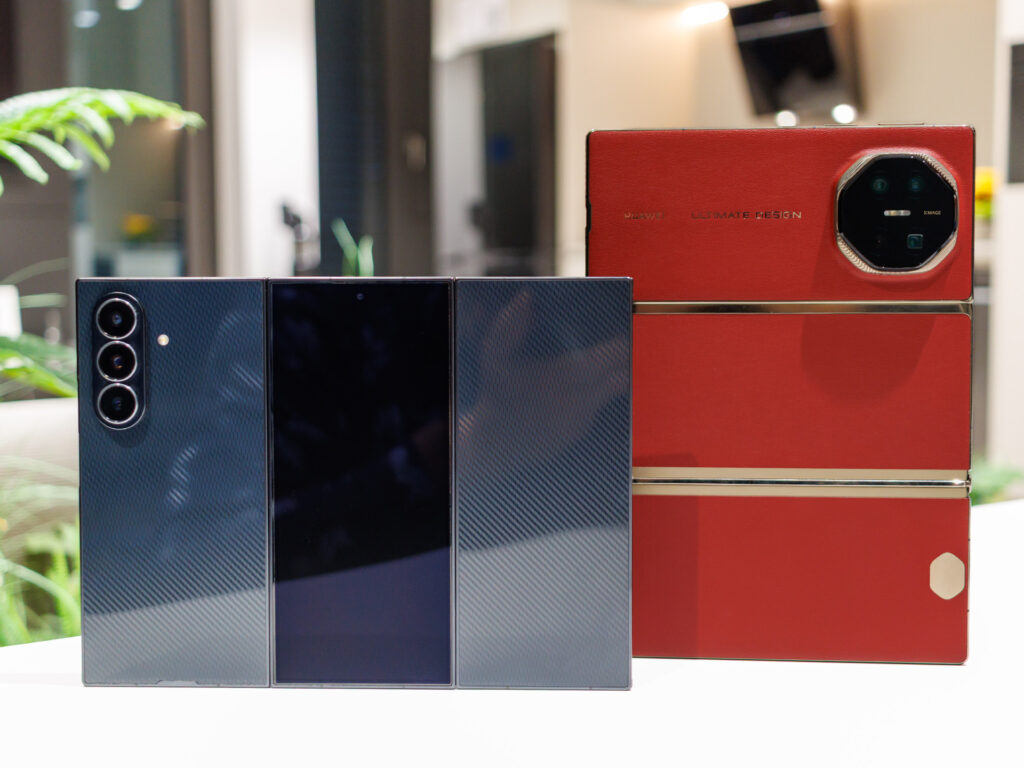
The competitive landscape of foldable smartphones is heating up, with the recent comparisons of Samsung's Galaxy Z TriFold and Huawei's Mate XT showcasing distinct advantages and trade-offs that will resonate with different user preferences. At the heart of this competition is the performance difference between the two brands' processors. The Snapdragon 8 Elite for Galaxy, built on a 3 nm process, not only excels in efficiency but also significantly outperforms Huawei's Kirin 9010, which, at 7 nm, appears somewhat outdated in comparison. This technological edge may appeal to productivity users who rely heavily on speed and efficiency.
Camera capabilities are another battleground where both devices show their strengths. Samsung's flagship boasts a remarkable 200 MP main sensor paired with a 3x telephoto lens, setting a high standard for resolution. Meanwhile, Huawei counters with its 50 MP camera system, which includes a 5.5x periscope telephoto lens and a variable aperture, making it particularly appealing for photography enthusiasts. Both devices house robust 5,600 mAh batteries, but their charging speeds differ significantly. Huawei offers faster charging options with 66 W wired and 50 W wireless, while Samsung's charging capabilities are slightly slower at 45 W wired and 15 W wireless.
In terms of design, Huawei presents a more innovative and flexible approach, catering to various usage scenarios. However, Samsung's offerings are generally regarded as more polished, particularly in display quality and software maturity. The Galaxy Z TriFold is particularly well-suited for users who thrive within the Android ecosystem, while the Mate XT may attract design aficionados and photography lovers willing to embrace its pricing and uncertainty surrounding HarmonyOS updates. Notably, Huawei has introduced an upgraded version of the Mate XT, the Kirin 9020, which promises enhancements in both camera technology and overall performance.
When evaluating modern connectivity features, Samsung's Galaxy Z TriFold clearly takes the lead. The Mate XT lacks support for 6 GHz Wi-Fi and UWB, alongside the absence of 5G capabilities. Additionally, while the Mate XT's display refresh rate is capped at 90 Hz, it does incorporate PWM dimming at 1,440 Hz, which can be less straining on the eyes compared to Samsung's offerings.
The question of availability also looms large over this comparison. As both companies continue to innovate, potential buyers must consider not only the technical specifications but also their own specific needs and preferences. The Galaxy Z TriFold may appeal more to productivity-oriented users, while the Mate XT could be an enticing choice for those captivated by cutting-edge design and advanced photography features.
Nasdaq Plummets! Is Tech's $70K Bitcoin Collapse Just the Beginning? Shocking Market Moves Inside!
Bitcoin's Shocking 36% Sale Odds: What This BTC Price Drop Means for Your Wallet!

You Won't Believe What Christina Voigt Reveals in Stockholm Series #8 - Shocking Secrets Inside!

Lou Ferrigno’s Chilling New Horror Movie: Will You Survive ‘The Hermit’ Premiere? Find Out Now!
You Won't Believe What Happens When You Try to Access This Forbidden Page—Shocking Consequences Revealed!

Bitcoin's Hashprice Plummets to Historic Low—What This Shocking Drop Means for YOUR Wallet!
You might also like: