
Is the Pacific's $500 billion economy on the brink of collapse due to climate change? Find out now!

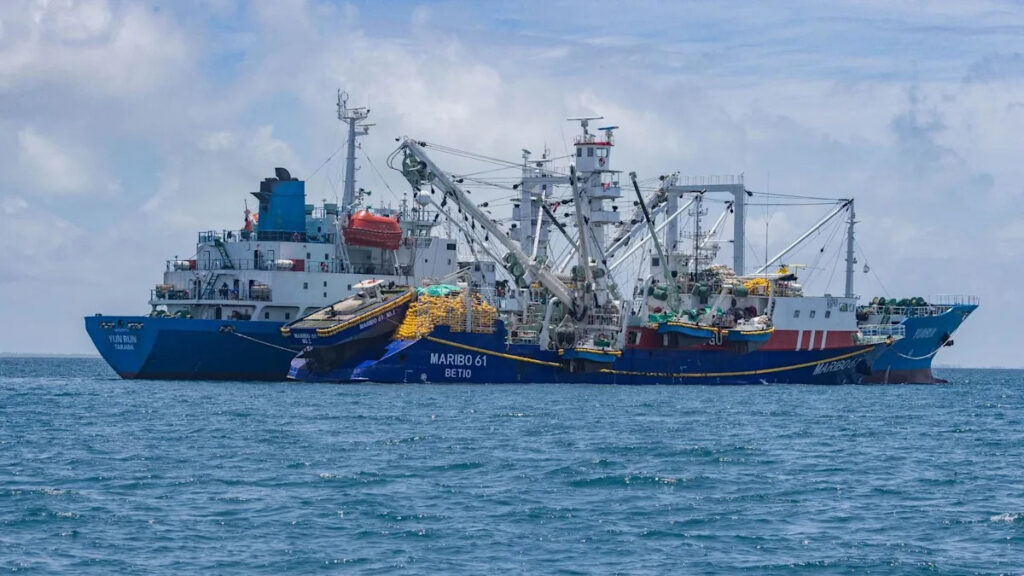
The vast Pacific Ocean, with its rich marine biodiversity, is home to over half of the world's tuna. At the heart of this thriving fishing ground lies Kiribati, an island nation composed of 33 small islands scattered across an expanse of over 3.4 million square kilometers (1.3 million square miles). To put this in perspective, Kiribati's total land mass is about the size of New York City, yet its Exclusive Economic Zone (EEZ) is larger than India.
For Kiribati, tuna fishing is not just a way of life; it is the backbone of its economy, contributing more than 70% of government revenues from fishing license sales to foreign fleets. This figure represents the highest proportion of any nation globally. In 2024 alone, Kiribati generated $137 million (£102 million) from these licenses. Riibeta Abeta, permanent secretary for the country's Ministry of Fisheries, describes this income as a "critical financial lifeline." Between 2018 and 2022, fishing licenses accounted for nearly three-quarters of the government’s income, which equates to about two-fifths of the country’s GDP, according to the International Monetary Fund.
The global tuna market is valued at over $44 billion annually. To fish in Kiribati's waters, foreign fleets, including those from Japan, China, the United States, and the European Union, must obtain licenses, pay requisite fees, and adhere to strict regulations regarding catch limits and reporting. However, this lucrative resource is under threat from climate change. Warming ocean temperatures pose a significant risk to local tuna populations, potentially driving them away from Kiribati's EEZ to cooler waters to the east.
The implications are dire. As Simon Diffey, a fisheries specialist with over 30 years of experience covering Kiribati, notes, tuna are particularly sensitive to temperature changes, reacting to variations as minor as one-tenth of a degree Celsius. As the Pacific waters warm, the migration of tuna away from Kiribati could drastically reduce demand for its fishing licenses, threatening the nation’s economic stability.
Recent studies indicate that Kiribati is predicted to be one of the worst-affected regions as tuna stocks shift. The Pacific Community issued a report last November warning that Kiribati could lose more than $10 million annually in fishing access fees by 2050 if greenhouse gas emissions remain high. Conversely, the Ministry of Fisheries suggests that under a scenario of lower emissions, there may be no decrease in tuna biomass within its EEZ.
Local fishermen are also facing challenges. According to the Pacific Community, even under favorable emissions scenarios, catches are expected to decline. The Line Islands, one of Kiribati’s three island groups, are projected to suffer the most, with losses of up to two-thirds of their fish stocks under a low-emission scenario. This issue is compounded by a growing population of around 130,000, particularly in the capital, Tarawa, where rapid urbanization is straining limited resources.
As the local fish supplies dwindle, food security becomes increasingly precarious. The UN's Food and Agriculture Organization warns that reliance on imported foods is rising, especially in outer island communities where fish has traditionally been the main source of protein. The average person in Kiribati consumes about 100 kilograms of fish annually, a stark contrast to just 9 kilograms in the United States and 22 kilograms in Japan.
In response to these mounting challenges, initiatives are being launched to bolster the resilience of tuna-dependent communities. The United Nations' Green Climate Fund has initiated a $156.8 million project aimed at adapting Pacific Island economies to climate change. This project seeks to enhance food security through improved data and warning systems that will help predict the redistribution of tuna stocks and their economic impacts.
Additionally, the Kiribati government is working to expand its own tuna processing and canning facilities, rather than solely relying on selling licenses to foreign fleets. Abeta indicates that the administration is also exploring ocean farming of species such as milkfish, snapper, and sea cucumbers to diversify exports and enhance domestic food security.
Despite the existential threat that climate change poses to Kiribati, the government remains optimistic. Abeta emphasizes the potential for strategic opportunities in diversifying the economy beyond the fishing industry, including tourism and renewable energy initiatives. However, as the nation grapples with these complex challenges, the specter of climate change looms large, demanding urgent action and adaptation.
Discover the Shocking Truth Behind 'Nonnamaxxing'—Is Your Health at Risk? 5 Secrets You MUST Know!

You Won't Believe How We Scored Our Dream Family Home for Just $600K—A Shocking Twist!

OnePlus Ace 6 Ultra: Is This the Gaming Smartphone That Could Change Everything? Find Out Now!

Shocking Predictions: Will the Michigan Trio Make or Break the 2026 NBA Draft?

Kids in Miami Discover SECRET Mental Health Benefits at Shocking World Cup Soccer Clinic – Don't Miss Out!

You Won't Believe Your Android Can Replace These 5 Gadgets – Discover the Shocking Truth!
You might also like: