
Is Thawing Permafrost About to Unleash a Climate Catastrophe? Discover the Shocking Truth!

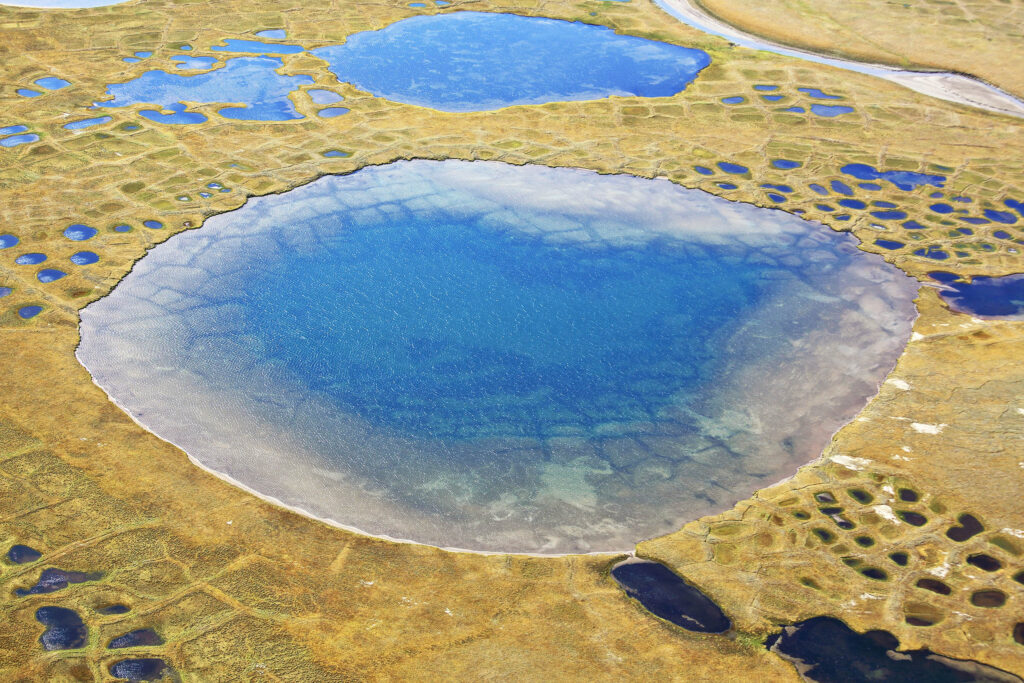
The Arctic permafrost has long served as a critical barrier against climate change, acting like a giant frozen lid that locks away carbon-rich soils and prevents greenhouse gases from escaping into the atmosphere. However, new laboratory experiments conducted by researchers at the University of Leeds indicate that as this permafrost thaws, its ability to contain these gases diminishes significantly, leading to an alarming increase in greenhouse gas emissions.
The findings reveal that thawing permafrost can become between 25 to 100 times more permeable. This means that as the temperature rises, gases such as carbon dioxide and methane can move through the soil with far greater ease than when it is frozen. This shift could have profound implications for the global climate, as melting permafrost is projected to release vast quantities of carbon that have accumulated in Arctic soils over millennia.
📰 Table of Contents
Understanding the Risks of Thawing Permafrost
Permafrost, which covers substantial areas of the Arctic, has been frozen for long periods, allowing organic materials to accumulate without fully decomposing. Globally, it is estimated that permafrost holds about 1,700 billion tons of carbon, which is roughly three times the amount currently present in the atmosphere. The concern among scientists is that warming temperatures will trigger a feedback loop: as the permafrost thaws, it releases gases that contribute to further warming.
“It is now widely recognized that climate change is leading to significant thawing of permafrost, with a 42% expected loss of permafrost in the Arctic Circumpolar Permafrost Region (ACPR) by 2050,” said Paul Glover, the Chair of Petrophysics at the University of Leeds. “The release of huge amounts of carbon stored in previously frozen soils, predominantly in the Arctic, represents a very real danger, especially as it is known that climate change is warming the Arctic regions four times faster than elsewhere.”
The experiments at the University of Leeds involved controlled environments where researchers gradually warmed model permafrost samples from -18°C to +5°C. They measured gas release and permeability at each temperature increment. The most dramatic changes in permeability occurred near the freezing point, particularly between -5°C and 1°C. This range is critical because many Arctic regions experience temperatures within this range for parts of the year, meaning that even slight increases in temperature could lead to significant changes in gas flow.
Interestingly, the techniques used for these measurements were originally developed for studying fluid movement in rocks, often applied in oil and gas research. “While these are significant results in themselves, showing how we are beginning to understand the mechanisms behind some aspects of climate change, they are also important because the measurements were only made possible by the adoption of methodologies previously developed for use predominantly by the fossil fuel industry,” noted Roger Clark, a Senior Lecturer at Leeds.
As researchers continue to collect data, Glover emphasizes the need for caution. The behavior of permafrost in natural environments is complex, influenced by various factors such as soil types, ice structures, and microbial communities. However, the basic mechanism highlighted in the study—that thawing makes soils significantly more permeable—could amplify other effects of climate change.
Emerging Health Risks Linked to Thawing
The study also points to additional risks that may not always be discussed in the context of permafrost thaw. As the ground becomes more permeable, it could also facilitate the movement of radon, a naturally occurring radioactive gas linked to increased cancer risks. With rising permeability, radon could pose health threats in Arctic and sub-Arctic communities, an important consideration as these regions grapple with the effects of climate change.
While the conversation around permafrost often centers on biological processes—such as microbes waking up and organic material decomposing—this study adds a vital physical dimension: thawing does not merely “activate” carbon; it fundamentally alters soil structure, making it easier for gases to escape. If permafrost becomes significantly more permeable, the Arctic may not only emerge as a larger source of greenhouse gases but also a faster one, contributing to the self-reinforcing cycle of climate change.
Published in the journal Earth’s Future, these findings underscore the urgency of understanding the implications of thawing permafrost as climate change accelerates. As scientists continue to study this critical issue, it becomes increasingly clear that the consequences of a warming planet extend far beyond rising temperatures.
Is Your Favorite NBA Team in Danger? Shocking Playoff Predictions That Could Change Everything!

You Won't Believe Why Andy Reid Just Brought Justin Fields to the Chiefs—Shocking Details Inside!

Trump’s Shocking Move: Columbus at the White House Sparks Explosive History Debate! What Happens Next?

Is Mac McClung's G League MVP Award a Ticket to NBA Stardom or a Bulls Bench Warmer? Find Out Now!

You Won’t Believe What Happens in the Final Episode of Women of the Bible—Here’s How to Watch It NOW!

Seattle Mariners Shock Fans with Surprising New Healthy Snack! You Won't Believe What It Is!
You might also like: