
Is Singapore’s Sweltering Heat About to Become Unbearable? Discover the Shocking Cost of the Energy Crisis!

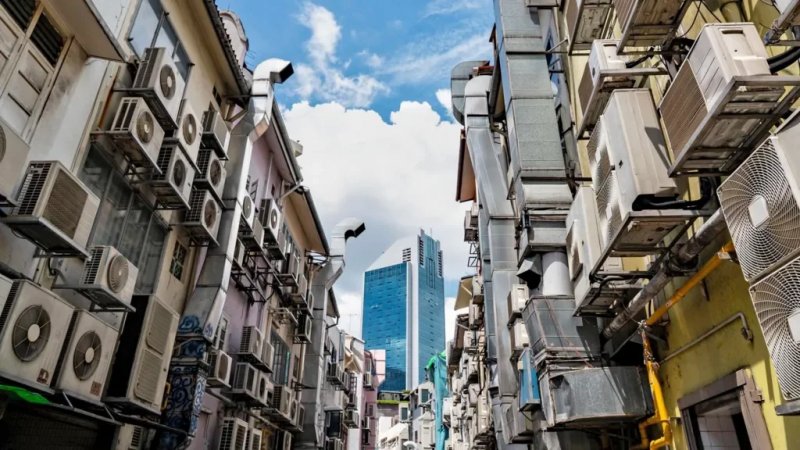
Singapore, a city-state renowned for its extensive use of air-conditioning, has mandated that government offices maintain indoor temperatures of at least 25°C (77°F) as a response to rising energy prices exacerbated by the ongoing conflict in Iran. This initiative aims to mitigate the financial strain on energy resources and is a part of a broader strategy to enhance sustainability in the face of fluctuating global oil prices.
According to reports from News.Az and the BBC, Singapore's public offices will also embrace energy-efficient technologies such as LED lighting and smart sensors to help in conserving energy. The initiative is not isolated; it joins similar efforts by other Southeast Asian nations, including Thailand, which has advised residents to set their air-conditioning units to 26-27°C.
The situation is dire, with much of Southeast Asia heavily dependent on oil and gas shipments that traverse the Strait of Hormuz, a crucial route that has been effectively disrupted since the war began. Singapore's Ministry of Sustainability and the Environment stated on April 8 that the government is "taking the lead" in energy-saving efforts due to the impact of the Iranian conflict on global fuel supply chains.
In a historical perspective, the late Lee Kuan Yew, often regarded as the founding father of modern Singapore, once claimed that air-conditioning had significantly "changed the lives of people in tropical regions." Upon assuming office as Prime Minister, one of his first actions was to install air-conditioning in government buildings to boost public efficiency. His legacy lives on, as today, almost every office in Singapore is equipped with air-conditioning, often at very low temperatures. It's common for employees to don sweaters or cardigans during work hours due to the chill.
Interestingly, unlike many Southeast Asian cities that feature open-air shopping streets, Singapore's malls are predominantly air-conditioned. This has led to a peculiar phenomenon where pedestrians often experience a sudden blast of cold air as they walk past entrances to these shopping complexes. Public transportation in Singapore, including buses and trains, also benefits from air-conditioning, further embedding this reliance on climate control in daily life.
As energy prices continue to rise, the Singaporean government has advised its workforce to adopt practices that further conserve energy. Government employees are encouraged not only to set their air-conditioning to the new temperature guidelines but also to monitor their usage closely. Each degree raised, according to the Ministry, can reduce energy consumption by around 10%. Workers are also urged to utilize ceiling fans and opt for public transportation to further minimize fuel use.
Fuel prices in Singapore have noticeably escalated, prompting authorities to prepare the public for potential economic disruptions stemming from the Middle Eastern conflict. While the republic has yet to tap into its fuel reserves or introduce rationing, it remains vulnerable, given that approximately two-thirds of Singapore's crude oil imports are sourced from Middle Eastern countries, as detailed by the U.S. Energy Information Administration.
Elsewhere in Asia, nations more reliant on Gulf oil have scrambled to adapt. For example, the Philippines, which imports an astonishing 98% of its oil from the Middle East, has implemented a shorter workweek for government offices as part of its energy conservation strategy. This has led the country to declare a national energy emergency, an unprecedented move made in March after petrol prices soared. Thailand has also initiated urgent measures, advising public office employees to work from home and to conserve fuel through carpooling or the use of public transport.
In response, South Korea, which imports over two-thirds of its energy from the Gulf, has launched an energy-saving campaign encouraging citizens to take shorter showers and to use washing machines only on weekends. The economic fallout from the Iranian conflict is being described as the "Asian crisis," highlighting the unique challenges faced by developing nations, particularly those reliant on petrol and gas.
As the events unfold, experts like Ichiro Kutani from Japan's Institute of Energy Economics suggest that this crisis may serve as a crucial lesson for Asia, emphasizing the need for improved oil efficiency and diversified energy sources. The longer the war continues, the more pressing it becomes for nations across the region to adapt to these energy challenges and develop sustainable practices for the future.
You Won’t Believe How Yasmin Karachiwala’s Sweet Potato Chips Can Transform Your Snack Game—Try It Before It’s Too Late!

Texas Senate Candidate's Bold Plan Could Force Kids to Learn THIS Shocking Climate Truth – Are You Ready?

Is Your Dream Home Now Out of Reach? Shocking Price Dispersion Could Reveal the Truth!

Shocking Truth: How 1 in 10 Babies Are Left Vulnerable to Deadly Measles – Don’t Let Your Child Be Next!
Is Your Browser Putting You at Risk? Discover the Shocking Truth Before It's Too Late!

Discover the 10 New Balance Activewear Picks Everyone's Raving About – #7 Will Shock You!
You might also like: