
Is Israel Using 7,000 Bots to Manipulate Your Social Media Feed? Discover the Shocking Truth Now!

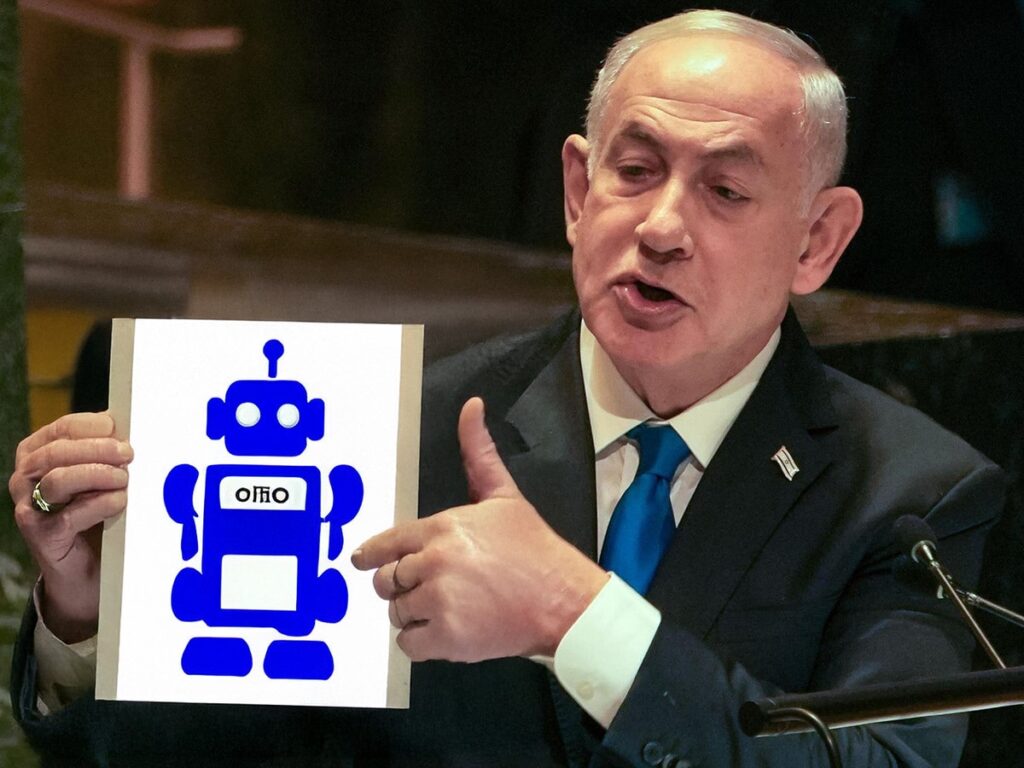
A recent investigation by Channel 12 News has unveiled a troubling aspect of social media influence in Israeli politics: approximately half of all politically active accounts linked to Israel are reportedly bots. This alarming revelation includes numerous accounts that amplify posts from Prime Minister Benjamin Netanyahu and members of his government, which has been labeled by some critics as a "terrorist government."
The report highlights how these bot accounts, many originating from foreign countries, rapidly like and share content from Israeli politicians, often without any genuine engagement. For instance, videos that would normally require several minutes to watch receive immediate engagement—an indication of artificial manipulation rather than authentic interaction. This tactic appears to be part of a broader strategy to artificially inflate support for certain political narratives, thereby skewing the perception of public opinion.
In some instances, these campaigns have combined human influencers who initiate engagement with bots that maintain the momentum. Such tactics can lead to overwhelmingly positive responses on posts that would typically draw criticism, thus influencing social media algorithms to recommend this content to more users.
The Channel 12 News documentary also pointed out that not only the ruling party but also opposition leaders are employing similar methods, indicating that the use of bots is a widespread practice within Israeli politics. The investigation estimated that around 50% of all political accounts in Israel align with global trends that suggest a significant prevalence of bot accounts in political engagement worldwide.
While some bots are easily identifiable, others employ advanced artificial intelligence (AI) to mimic real users more convincingly, complicating the task of discerning authentic accounts from automated ones. This blend of technology presents a significant challenge for users trying to navigate the digital landscape of political discourse.
This issue is far from new. In 2024, the Israeli Ministry of Diaspora Affairs orchestrated a paid influence campaign targeting both U.S. lawmakers and the American public. This campaign, designed to promote pro-Israeli messaging, aimed to garner support for military actions in Gaza and cost around $2 million. The ministry hired the Israeli political marketing firm STOIC to execute this operation. However, attempts by STOIC to manipulate political conversations on platforms like OpenAI and Meta were disrupted when these companies identified and banned accounts associated with the firm, labeling it a “for-hire Israeli threat actor.”
The revelation that Israel is using bots on social media may not come as a shock to many observers. Numerous individuals have experienced firsthand the aggressive online backlash from pro-Israeli accounts simply for voicing skepticism or criticism of Israeli policies. This environment fosters a digital space where dissenting voices can be drowned out by a barrage of automated support designed to create the illusion of consensus.
By acknowledging that half of these accounts are bots, concerns arise about the authenticity of political dialogue and engagement online. If only half of the pro-Israel accounts are operated by genuine users, the other half could be seen as contributing to a distortion of public opinion, with some critics even labeling them as "genocide-loving terrorists." This rhetoric underscores the high stakes of online political influence and the pressing need for transparency in digital political engagement.
As our reliance on social media for information continues to grow, the implications of automated political influence become increasingly serious. Understanding the role of bots—both benign and malicious—in shaping narratives is crucial for navigating today’s complex digital landscape. The findings from Channel 12 News offer a critical lens through which to examine the intersection of technology and politics in Israel and beyond, raising essential questions about the integrity of digital engagement and the future of online discourse.
Discover 5 Hidden St. Louis Gems Where Winter's Chill Can't Touch You—#3 Will Shock You!

Startups Are Paying Employees in Stablecoins—Find Out Why This Shocking Trend Could Change Your Paycheck Forever!

Is Your Dream Home Slipping Away? Houlihan Lawrence Unveils Shocking 2025 Market Trends!

You Won't Believe How Liberty Girls Soccer Dominated Vista del Lago 5-0—The Shocking Moments Revealed!

You Won't Believe How to Stream the Miami vs. Ole Miss Fiesta Bowl FREE—Secrets Inside!
Trump's Shocking Move: 66 Global Organizations He’s Abandoning—What This Means for America!
You might also like: