
Is Indiana's Shocking College Football Rise Too Good to Last? Can SMU Steal Their Thunder in 2026?

In the annals of college football history, few stories resonate as profoundly as Indiana's remarkable achievement of a 16-0 national championship season. This feat has drawn comparisons to the legendary upset of Texas Western over Kentucky in the men’s basketball championship of 1966. However, the implications of Indiana’s triumph stretch beyond the field, marking a pivotal moment in a university traditionally overshadowed by its basketball legacy.
For context, Indiana football has long been considered an afterthought in a state where basketball reigns supreme. The program's history is largely characterized by struggles, with the Hoosiers posting a conference record of just 5-39-1 in the seven years leading up to their 1967 Rose Bowl appearance, where they faced off against O.J. Simpson and the USC Trojans. Since that time, Indiana has only managed to finish above .500 in Big Ten play eight times in the last 55 seasons. However, the extraordinary journey that culminated in their national championship victory has sparked a renewed conversation about the potential for change and success in a program once mired in mediocrity.
Coach Curt Cignetti, who led the Hoosiers to their historic win, expressed that it was indeed possible to achieve greatness in Indiana, a school that has long been synonymous with basketball. Notably, Indiana is recognized as the only team to win a national title without a single five-star recruit on its roster. This is not to say that they didn’t invest in their talent; their roster features numerous four- and five-year players, as well as transfers, indicating a strategic approach to building a competitive team.
In the realm of NCAA football, comparisons to previous powerhouse teams are inevitable, but Cignetti’s success with Indiana stands on its own merit. The Hoosiers’ path to the title included significant victories over traditional powerhouses such as Ohio State, Alabama, Oregon, and a resurgent Miami team. This accomplishment has sent shockwaves throughout college football, prompting discussions of similar potential among programs like SMU, which faces its own hurdles after a tumultuous history.
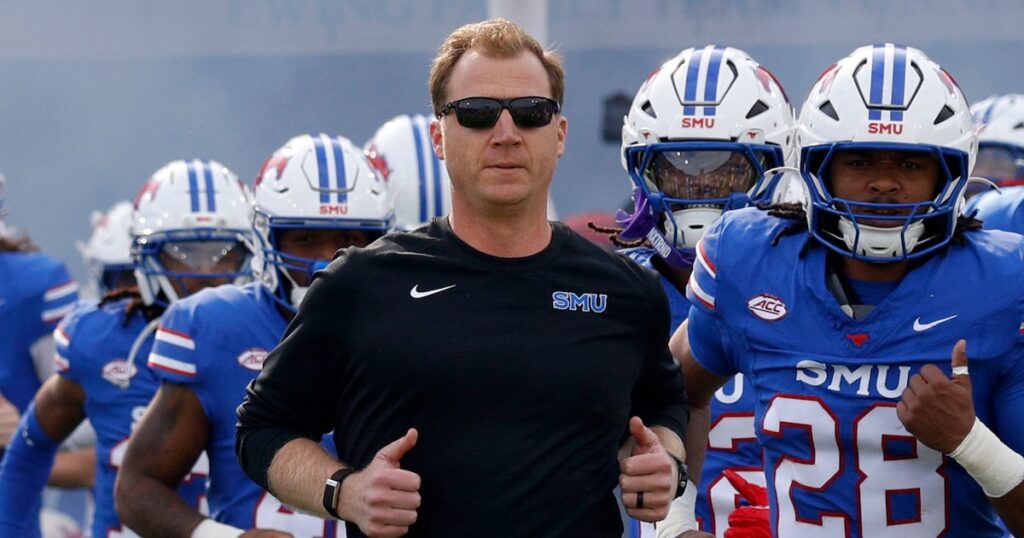
SMU, once rocked by the NCAA’s Death Penalty, has faced a 30-year journey striving for stability and relevance in college football. Its recent elevation to the Atlantic Coast Conference (ACC) illustrates a path toward recovery. Looking ahead, SMU aims to replicate Indiana’s success, especially as they strive to become the first team to go undefeated in a major conference after being promoted from the Group of Five. The Mustangs’ recent performance, including a notable victory against Miami earlier in the season, underscores their potential to surprise and compete at higher levels.
As college football undergoes continual transformation, the success of Indiana and the potential resurgence of SMU highlight a broader narrative: in this new landscape of NCAA football, the improbable can become reality. With a talented roster led by quarterback Kevin Jennings returning for another year, the Mustangs may very well be on the brink of their own historic moment.
What Indiana's championship signifies is not merely an end to decades of underperformance but a beacon of hope for programs that have long struggled. It serves as a reminder that in college football, where tradition often dictates success, the tides can change rapidly. As fans look forward to the upcoming season, the landscape of college football may soon see new contenders emerge, proving that anything is possible in this brave new world.
X: @TimCowlishaw
Find more SMU coverage from The Dallas Morning News here.
Find more college sports coverage from The Dallas Morning News here.
You Won't Believe What This Top Doctor Says About 5 Common Snacks That Sabotage Your Waistline!

Can You Ace These 9 Shocking Vocabulary Words? Most Americans Can't! Find Out Now!

Ukraine's Shocking AI Defense Strategy: What They Discovered on the Frontlines Will Leave You Speechless!

Luxury Real Estate Tycoons on Trial: Shocking Abuse Allegations Exposed – Will Justice Prevail?

Android Shock: Major Phone Maker Drops New Models—What This Means for 100 Million Users!

Is Laika Partnering with Fathom Entertainment for a Shocking New Venture? Find Out What’s at Stake!
You might also like: