
Is Illinois About to Go Green? Pritzker's Shocking $1 Billion Clean Energy Gamble Revealed!

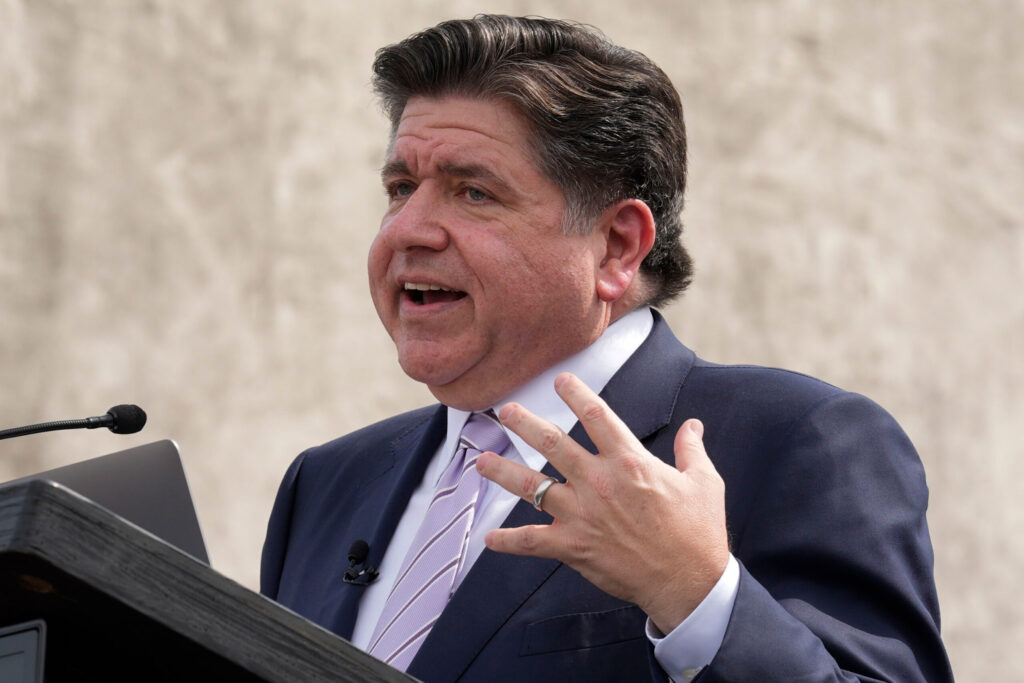
Illinois Governor J.B. Pritzker is doubling down on his commitment to an affordable and sustainable energy future, focusing on nuclear and renewable energy expansion as key components of his strategy.
During his recent budget address, Pritzker highlighted the increasing burden of electricity costs on Illinois families, stating, “too much for electricity, too much to live. Everything is just too damned expensive.” His remarks underscore a reality that many residents are grappling with—Illinois electricity costs surged approximately 15% from 2024 to 2025, a figure that is more than triple the national average of 4.5%.
The governor identified several contributors to these rising costs, including insufficient supply, outdated infrastructure, and the growing energy demand, particularly from data centers. To address these challenges, Pritzker has set an ambitious goal: by 2050, he aims for all of Illinois' energy to be renewable, a transition that hinges significantly on expanding the state's nuclear capabilities.
Nuclear power currently accounts for 54% of Illinois’ electricity supply, making it a cornerstone of Pritzker's energy agenda. Following the passage of the Clean and Reliable Grid Affordability Act, which lifted the moratorium on new nuclear reactors, the governor has expressed a desire to expedite the development of nuclear facilities. However, he acknowledges that achieving this will require streamlining permitting and financing processes to facilitate the construction of new projects.
In his fiscal 2027 budget, Pritzker proposed allocating $14 million for electric vehicle rebates and $328 million for low-income weatherization initiatives, further building on the groundwork laid by the Climate and Equitable Jobs Act (CEJA). He also noted that families will benefit from $803 million in credits on their electricity bills in fiscal 2026, in addition to the $1.3 billion already provided under CEJA.
These initiatives rely heavily on public subsidies and government incentives, raising questions about their long-term financial viability. If these projects were indeed sustainable without state support, the private sector would likely pursue them independently. This reliance on government backing means that costs and risks are effectively shifted onto consumers.
In an effort to stabilize electricity prices, Pritzker pointed to price caps implemented by PJM Interconnection, the regional grid operator. These caps are designed to moderate capacity market costs, ensuring that energy prices do not exceed a preset ceiling. According to Pritzker, these measures are projected to save consumers in the 13-state region a combined $45 billion by 2030. However, while these price controls may offer immediate relief, they do not address underlying supply-demand imbalances and could deter long-term investment in the energy sector.
Pritzker also spotlighted the significant energy usage of data centers as a contributing factor to rising electricity costs. He has proposed that these facilities should cover their capacity resources, thereby alleviating some of the financial pressure on consumers. In a notable move, the governor has suggested temporarily pausing tax credits for new data centers, reflecting a growing concern over the impact of large electricity consumers on the state's grid.
Although data centers currently account for only 5.4% of Illinois' electricity consumption, the state ranks fourth nationally in terms of the number of such facilities. The debate surrounding the welcoming of more data centers extends beyond immediate concerns about electricity use; it raises broader questions about the state's approach to economic incentives and whether it should favor certain industries over others.
Notably, data centers provide substantial benefits, including investment, property tax revenue, and job creation. They are expected to generate around 4,900 permanent jobs as of 2024, along with numerous short-term construction jobs. Thus, while they contribute to rising energy demand, they also play a significant role in the local economy.
Pritzker's fiscal 2027 energy plan addresses the pressing issue of rising power costs while simultaneously continuing the transition to clean energy. The ultimate effectiveness of this plan will depend on various factors, including the speed at which new energy resources are brought online, how costs are distributed among consumers, and whether the reliability of the energy supply can keep pace with growing demand. As Illinois navigates the balance between affordability, reliability, environmental goals, and competitiveness, the governor's vision for a sustainable energy future will be closely watched.
You Won't Believe How FOSSiBOT's New Mini Smartphone Could Change Your Life—Grab Yours Before They're Gone!

Trump’s Unexpected White House Showdown Over EPA’s Biofuels Decision: What You Need to Know NOW!
TikTok's Astounding 49% Engagement Surge Leaves Instagram and Facebook in the Dust—Are You Missing the Trend?

“Shocking Financials: Atour Lifestyle Holdings' 2025 Results Will Leave You Speechless!”
Is Bitcoin's $75,000 Dream About to Shatter? Shocking Fed Meeting Secrets Revealed!

March Madness Alert: Discover 9 NBA Draft Prospects You Won’t Believe Are Game-Changers!
You might also like: