
Is Donald Trump on the Brink? Shocking Minnesota ICE Shootings Spark National Crisis!

Has the United States entered what some are calling the darkest period of Donald Trump’s second term? Recent events suggest a troubling escalation in the administration’s approach to immigration, characterized by a harsh crackdown that has already led to imprisonments, deaths, and deportations. The alarming trend of immigration agents fatally shooting U.S. citizens in the streets marks a painful new chapter.
The government’s response to the recent shootings of Renee Good and Alex Pretti, two individuals killed in Minneapolis less than three weeks apart, has only intensified the atmosphere of fear. Despite video evidence showing that Pretti was holding a phone, not a gun, when he was shot, senior officials have labeled him a "would-be assassin." Stephen Miller, a prominent figure in the Trump administration, referred to Pretti as “a domestic terrorist who tried to assassinate law enforcement.” Meanwhile, Gregory Bovino, a senior U.S. border patrol official, claimed that border agents were the true victims in this scenario, not Pretti. Kristi Noem, the U.S. Secretary of Homeland Security, echoed this sentiment, suggesting that Pretti’s actions amounted to “domestic terrorism.”
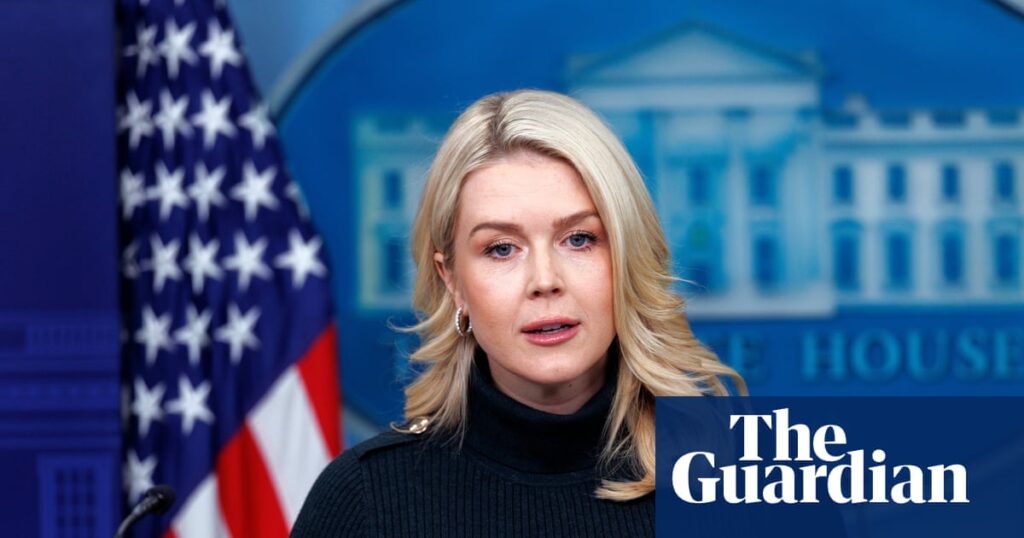
However, in the wake of public outcry, the White House has slightly moderated its messaging. Karoline Leavitt, the White House press secretary, called Pretti’s death a “tragedy.” In a notable shift, Trump himself stated he did not agree with the characterization of Pretti as an assassin and acknowledged the need for a review of the incident.
This shift in tone does not necessarily indicate a change in policy, however. Trump is clearly attuned to public sentiment; a Reuters/Ipsos poll conducted around the time of Pretti’s death revealed that 58% of Americans believe Immigration and Customs Enforcement (ICE) agents have "gone too far." Preceding surveys by the New York Times and the Wall Street Journal echoed this dissatisfaction, while a CNN poll found that a majority considered the shooting of Renee Good to be an "inappropriate use of force." Even Fox News, often seen as a bastion of support for Trump, acknowledged a decline in backing for his immigration policies.
Internally, there are signs of discontent within the Republican Party regarding the administration's approach. James Comer, a congressman from Kentucky, has called for ICE to withdraw from Minnesota, while Bill Cassidy, a senator from Louisiana, is advocating for a joint investigation into Pretti’s death. This growing unease likely contributed to the White House's softer rhetoric.
Despite these adjustments, it would be naive to think that Trump’s core stance on immigration has fundamentally changed. While he distanced himself from the "assassin" label attributed to Pretti, he reiterated that “you can’t walk in with guns,” despite the fact that U.S. law generally allows for gun ownership. The video evidence does not show Pretti wielding a firearm prior to his death, complicating the narrative put forth by administration officials. This contradiction is further highlighted by the right’s praise for Kyle Rittenhouse, who was acquitted after killing two men during protests in 2020 while armed with an assault rifle.
In a related development, Gregory Bovino has been replaced by Tom Homan, Trump’s border czar. While Bovino’s controversial approach drew ire, Homan’s past statements suggest he may not offer a more lenient stance. Homan, a former ICE director, has previously stated his intention to run “the biggest deportation force this country has ever seen” if Trump returns to office. He has also characterized President Biden’s immigration policies as “national suicide.”
Homan’s aggressive rhetoric was evident during a conversation with then-New York Mayor Eric Adams, where he emphasized his intention to ensure compliance with ICE directives, indicating a willingness to confront local governments directly. This raises concerns about the future of immigration enforcement under an administration that increasingly views its agents as embattled defenders against domestic threats.
The implications of these developments are significant. As the Trump administration navigates a landscape of public discontent and internal party dissent, the rhetoric surrounding immigration policy may shift, but the underlying strategies could remain as severe as ever. The administration's ability to adapt its language in response to public sentiment does not necessarily translate into a more humane or just approach to immigration enforcement. As the situation continues to unfold, one thing remains clear: the stakes are high, both for those caught in the crosshairs of these policies and for the broader discussions surrounding immigration in America.
Browns Shock NFL with Monken Hire: What This MEANS for Their 2026 Playoff Chances!

Tesla's Cybervan Didn't Happen, But This Russian Startup's Shocking $50K Version Will Blow Your Mind!

Unlock the Secrets: How CIQ's Startup Program Transformed 100+ Early Innovators Overnight!

Revealed: The Shocking $45M Deal That Could Change the Future of College Football QBs Forever!

You Won't Believe What Happens Next: The NBA's Most Shocking Season Twist Revealed!

You Won't Believe What Lee Tilghman Discovered About Social Media—It Will Change Everything!
You might also like: