
Is Climate Change Secretly Shifting Global Power? Shocking Revelations You Can't Ignore!

Elemental: The New Geography of Climate Change and How We Survive It by Arthur Snell is a timely exploration of the intricate relationship between climate change and global geopolitics. With an ISBN of 9781035412952 and published by Wildfire at a guideline price of £25, this book delves into a subject that is increasingly relevant amid the cacophony of contemporary global conflicts.
As the world grapples with rising tensions—from ongoing wars to economic instability—the underlying climate crisis looms larger than ever. Snell's work offers a nuanced look at how climate change serves as both a catalyst and a mitigator for international conflict. He illustrates this complex interplay through compelling examples, such as how food scarcity played a role in Russia's invasion of Ukraine, while simultaneously serving as a deterrent to conflict in the case of China and Taiwan.
Divided into four sections—earth, air, fire, and water—the structure of Elemental may seem simplistic at first glance, but it offers a comprehensive framework to discuss how these elements influence geopolitical landscapes. The author presents evidence-based arguments while making bold projections, asserting that food will assume a central role in the 21st century, supplanting energy as the primary driver of geopolitical dynamics. He also posits that global migration will increasingly address the demographic challenges faced by advanced economies.
One particularly striking section focuses on a region in China that is vulnerable to humid heat, which is projected to become uninhabitable sooner than other areas due to climate change. This region borders Russia, home to some of the most extensive uninhabitable land on Earth. Snell speculates about the potential for mass displacement of millions of Chinese into Siberia, questioning how this shifting demographic landscape might affect the ongoing partnership between China and Russia.
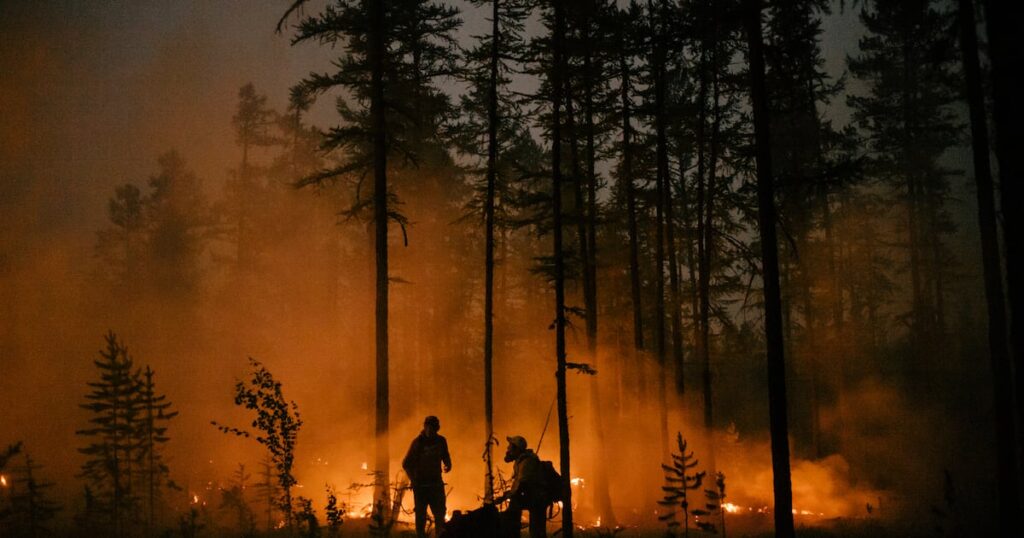
A key takeaway from Snell's analysis is that the actions of individual nation-states increasingly have ramifications on the global climate crisis. Whether driven by war, agriculture, or industry, it is no longer feasible for nations to pursue their ambitions without considering the far-reaching impacts of climate change. The book suggests that the influence of climate change will not only shape policies but also dictate who wields power on the global stage.
As the climate crisis intensifies, understanding these interconnected dynamics becomes essential for comprehending the future of international relations. Snell’s Elemental offers a critical lens through which to view the evolving landscape of geopolitical power, making it a must-read for anyone interested in the intersections of climate, politics, and society.
Lombardo vs. Ford: Shocking Poll Shows a Neck-and-Neck Battle for Nevada Governor—Who Will Prevail?

Burt Jones: Candidate or Controversy? Shocking Accusations Emerge as Election Countdown Begins!
You Won’t Believe What the TECNO SPARK 50 5G Can Do! Discover the Shocking Features Before It’s Gone!

Are Crypto Startups Facing a $20 Billion Drought? Discover the Shocking VC Cash Crisis!

Are We Losing a Generation? Shocking Study Reveals 80% of Kids Can't Focus Because of Phones!
You Won't Believe What Happens When Access is Denied: Shocking Consequences Revealed!
You might also like: