
Is Climate Change Really Triggering a 200% Surge in Underwater Volcanoes? Find Out Now!

In a significant study conducted by scientists from the National Institute of Oceanography (CSIR-NIO) in Goa, researchers are shedding light on the complex link between climate change and underwater volcanic activity. Their research focuses on mid-ocean ridges (MORs), the vast underwater mountain ranges formed by the movement of tectonic plates, which play a critical role in the Earth's geological processes.
As the study highlights, while short-term hydrothermal dynamics at these ridges have been extensively researched, the long-term responses to glacial and interglacial sea-level changes remain less understood. The findings suggest that changes in polar ice volume and sea levels significantly influence the activity of underwater volcanoes.
Specifically, scientists examined the Carlsberg Ridge in the Indian Ocean, a slow-spreading ridge where new seafloor is created gradually, resulting in intermittent volcanic activity. To gauge the historical activity of this ridge, researchers collected a core sample of mud and rock. They discovered thin layers of rust-colored Fe-Mn oxyhydroxides—chemical compounds formed over time—which absorb elements from both seawater and hydrothermal vents.
The team analyzed the lead isotopes found in these coatings, noting that the isotopes associated with magma differ from those linked to terrestrial dust. When volcanic activity was high, the isotopic signature reflected this, indicating a correlation with past ice ages. Over the past 49,000 years, researchers found a strong connection between lower sea levels during the glacial periods, specifically around 60,000 years ago, and increased hydrothermal activity at the Carlsberg Ridge. This phenomenon occurred due to a decrease in hydrostatic pressure, which in turn triggered more volcanic activity, releasing additional heat and carbon dioxide into the ocean.
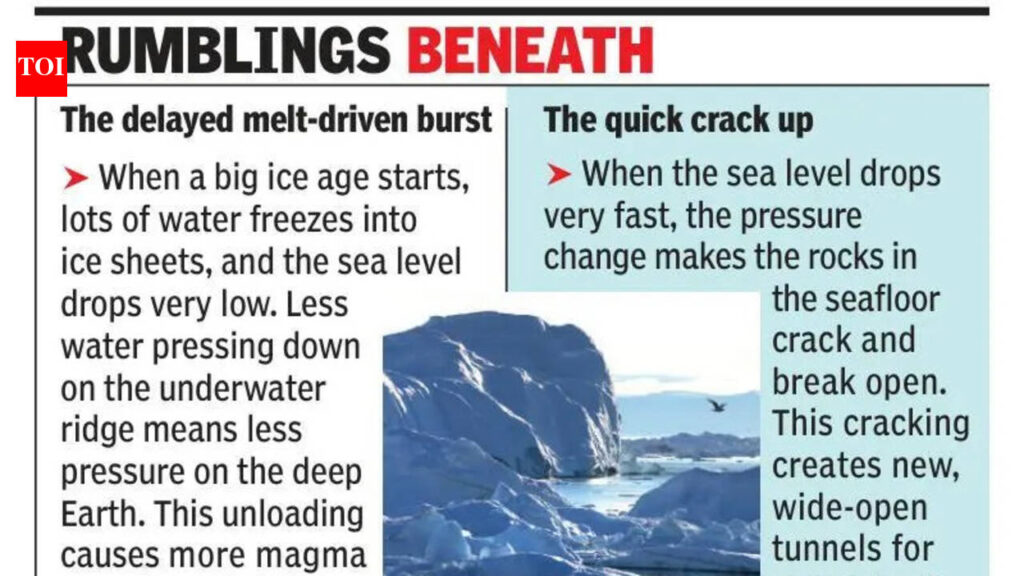
The study identified two primary mechanisms through which changing sea levels influence underwater volcanism: the "delayed melt-driven burst" and the "quick crack-up." These findings illustrate how sensitive the hydrothermal systems at slow-spreading ridges are to global climate changes, including the waxing and waning of ice ages.
These underwater hydrothermal systems are not merely geological curiosities; they play a vital role in the ocean's ecosystem. By releasing trace metals such as cobalt, nickel, and chromium into the deep ocean, they contribute to the nourishment of microscopic life forms, which form the foundation of marine food webs. The study posits that fluctuations in these metal concentrations could significantly impact ocean chemistry and biodiversity.
"Hydro-thermal systems at slow‐spreading ridges functioned as sensitive archives of past climatic forcing and played an active role in modulating deep ocean trace metal flux across glacial‐interglacial cycles," the study notes.
As climate change continues to reshape our planet, the implications of this research extend beyond academic inquiry. Understanding how underwater volcanism interacts with global climate could inform predictions about future oceanic conditions and biodiversity. This study underscores the need for further research into the intricate relationships between geological processes and climate dynamics, offering a glimpse into how our planet's past informs its future.
Shock Move: Haaland's Secret Deal with Real Madrid Could Change Everything – Vinicius Jr's Final Decision Revealed!

Discover the Shocking Truth: 10 High-Protein Snacks Every Woman Over 50 Needs to Avoid!

You Won't Believe What Happened When the Illinois Army National Guard Faced This Grueling Fitness Challenge!

Huge 80-Unit Senior Housing Project in Phoenix: Will It Solve the Affordable Crisis or Spark Controversy?

Bitcoin Cash Plummets 0.93%—Is This the Start of a Massive Market Collapse? Don’t Miss the Shocking Truth!

You Won't Believe These 5 Dollar Tree Pantry Items That Could Transform Your Health!
You might also like: