
Is Alaska's Arctic on the Brink? A Controversial Mining Road Could Spell Disaster!

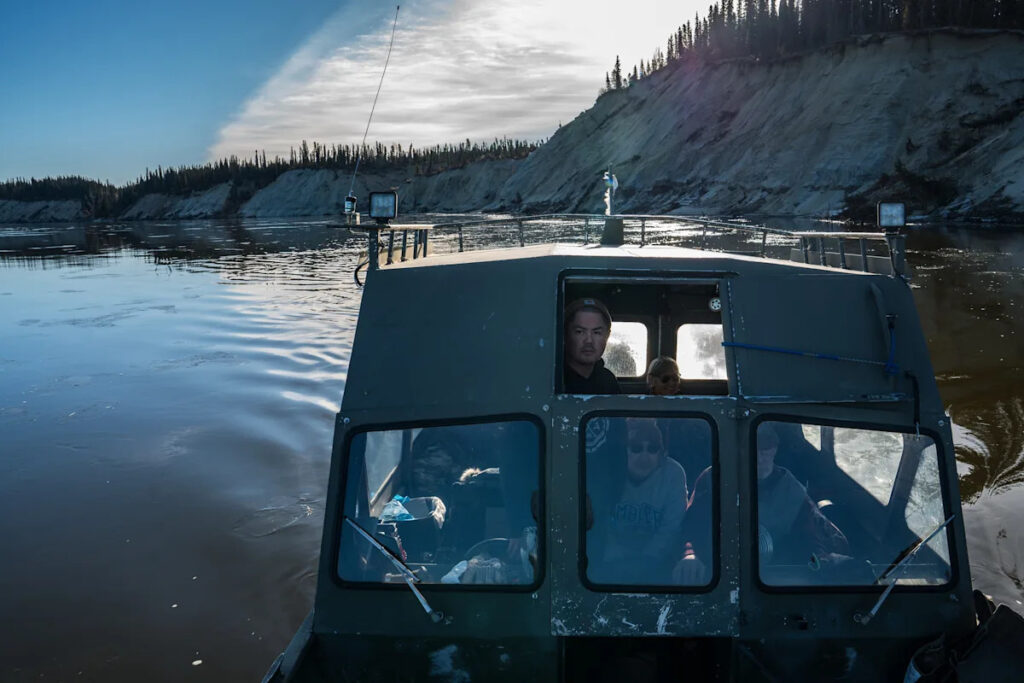
In Ambler, Alaska, the Kobuk River's banks should be bustling with caribou as September wanes, a sight familiar to local hunter Tristen Pattee. However, this year tells a different story. As Pattee, alongside his great uncle Ernest, scans the tranquil waters for signs of the migration, ice blocks float by, and the tundra remains eerily empty. The absence of caribou is alarming, especially as the Trump administration greenlights the construction of the Ambler Access Road, a 211-mile route set to traverse pristine wilderness to access significant copper deposits.
With approval underway and lawsuits looming, the push for this infrastructure comes amid catastrophic flooding in Northwest Alaska, where record rains have decimated fish spawning habitats and further strained Indigenous communities, already grappling with plummeting caribou and salmon populations.
Pattee, who co-owns a wilderness guiding company, faces a paradox. His cultural identity as an Inupiaq hunter deeply ties him to the land, yet he also recognizes the economic potential that the road could bring. “Everything takes money nowadays,” he states, highlighting a stark reality: with gasoline prices soaring to $17.50 a gallon, many locals struggle to afford hunting trips that can cost upwards of $400.
For Pattee, mining jobs could provide a crucial lifeline, potentially funding efforts to combat the very climate changes threatening his subsistence lifestyle. He reflects on the irony: beneath some of the continent's last untouched wilderness lie the minerals essential for transitioning to greener energy, even as that landscape bears the brunt of climate change, with temperatures rising four times faster than the global average.
Yet, as the Western Arctic Caribou Herd dwindles from nearly half a million to about 164,000 over the past two decades—a decline of 66%—the environmental implications of the proposed road loom large. Traditionally, late summer would see caribou migrate across the Kobuk River, providing sustenance for families like Pattee's. Now, delayed cold weather means many remain in the Brooks Range, elusive to hunters.
The challenges don't end there. After Pattee’s unsuccessful hunt, heavy rains hit, altering water conditions crucial for salmon. Rising water temperatures and sedimentation from intense storms can devastate fish populations, further complicating the subsistence lifestyle. A recent study indicated alarming levels of toxic metals in streams, likely due to thawing permafrost—an effect compounded by the record storms of this year.
The construction of the Ambler Road, while touted for its potential job creation, poses additional risks. It would require thousands of culverts and bridges, disrupting natural water flows and hindering fish passages critical for salmon and caribou. Concerns also arise from the possibility of traffic introducing naturally occurring asbestos into the environment, which could harm both water sources and local wildlife. In Kotzebue, where flooding led to an emergency declaration this fall, residents fear the contamination of traditional foods like fish and seals, further jeopardized by disappearing sea ice.
Karmen Monigold, an Inupiaq member of Protect the Kobuk, voiced her skepticism regarding the road's impact, emphasizing the risk of increased access for outside hunters that could deplete already vulnerable fish and caribou populations. She reflects on the cultural erosion tied to these resources, stating, “We lose so much every generation.”
While **Ambler Metals**, the company backing the mining project, assures that safety measures and water treatment protocols will be in place, skepticism remains among locals. They remember similar promises made for other Alaskan projects that ultimately opened access to the public, leading to detrimental outcomes for local ecosystems.
The debate around the Ambler Access Road encapsulates a broader dilemma in resource management. As global demand for critical minerals, including copper and zinc, is projected to rise, the urgency to balance economic development with environmental stewardship is paramount. Critics argue that framing this as a national security issue oversimplifies the complex realities Indigenous communities face, insisting that these lands primarily belong to the people who have long relied on them.
As the mayor of Ambler, Conrad Douglas recognizes the dire need for jobs in the village but fears that the companies involved may not prioritize local hiring. The stakes are high; he voices a sentiment echoed throughout the community: “I don’t really know how much the state of Alaska is willing to jeopardize our way of life.”
The landscape has changed dramatically over the decades. Nick Jans, a long-time resident, laments the transformation, arguing that the proposed road could be the final blow to an already vulnerable ecosystem. “This isn’t about my backyard — this is about your backyard. This is the world’s backyard,” he warns, emphasizing the need for collective action to preserve the environment before it’s too late.
As Pattee gathered with family over a rare meal of traditional foods, he couldn’t shake the feeling of loss. “We’re losing our community. We’re literally losing it,” he stated, reflecting on the struggle between cultural preservation and economic necessity in a rapidly changing world.
Is This AI Stock Predictor Really Making Millionaires Overnight? Discover the Shocking Truth!
Is Your City Ready? Shocking Public Health Crisis Looms as Feds Pull Back—Find Out What’s at Stake!

Mike Tomlin’s Shocking Exit? What This Could Mean for the Steelers and His Future in the NFL!

Markets in Chaos: Why Oracle's Shocking Earnings Could Decimate Your Investments!

Pat Spencer's Shocking Rise: Is Jonathan Kuminga's Future in Jeopardy? You Won't Believe the Details!

You Won't Believe What This Honest Farmer Discovered About K-Snacks Before Entering Vietnam!
You might also like: