
Is Africa's Cassava Crisis Coming? Shocking Study Warns of 50% Decline Due to Climate Change!

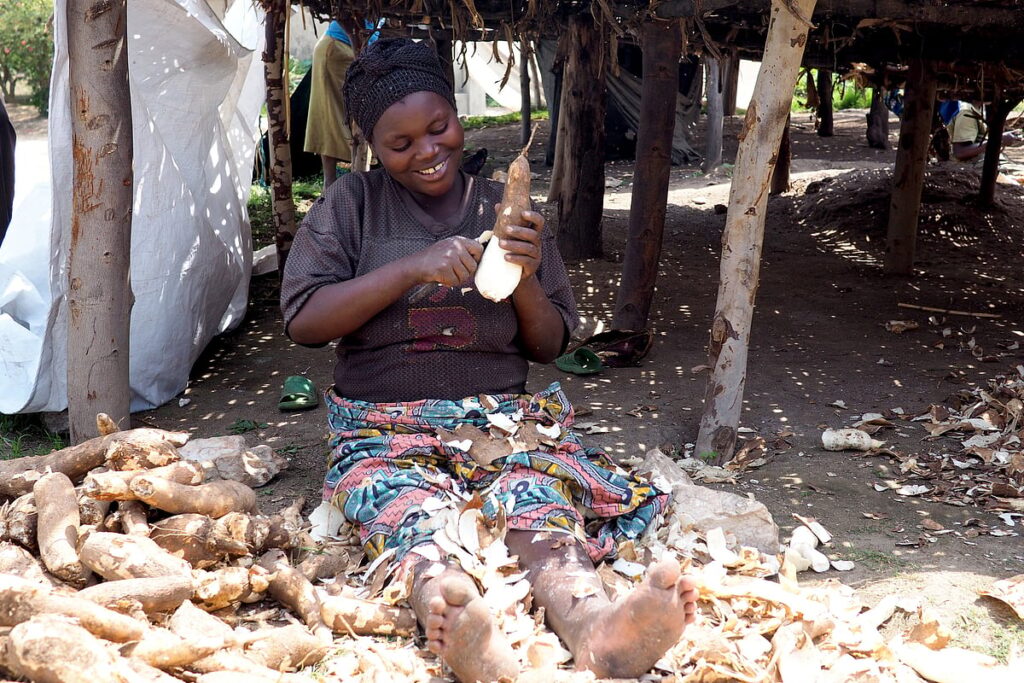
Cassava, a starchy tuberous root, has been a vital food source for over 800 million people globally, particularly in sub-Saharan Africa where it was introduced by Portuguese traders centuries ago. This resilient crop is particularly important in regions where soil quality is poor and rainfall is inconsistent, thriving in less-than-ideal conditions. Nigeria, a leading producer, alone accounts for over 20% of the world's cassava supply, making it the continent's second most crucial staple food crop.
The ability of cassava to withstand adversity is increasingly significant as climate change poses new challenges. While rising temperatures might expand the areas suitable for cassava cultivation, they also accelerate the spread of a devastating viral disease known as cassava brown streak disease (CBSD). This duality presents a complex challenge for food security across Africa.
A recent study led by a team that included Geofrey Wingi Sikazwe from the University of Dar es Salaam used computer models to predict the potential spread of cassava and CBSD from now until 2080. Their findings revealed that approximately 54.6% of Africa's land area—around 16.2 million square kilometers—is currently suitable for cassava cultivation. This number is expected to increase by 56% to 60% by 2050, potentially expanding cultivation areas to include countries like South Sudan, Sudan, and Somalia where data on cassava is currently limited.
However, the news is not all positive. CBSD currently affects about 33.7% of cassava production, with projections suggesting that 55% to 57% of Africa could be at risk by 2050. East Africa, particularly Tanzania, Uganda, and southeastern Democratic Republic of Congo, are among the regions most vulnerable to outbreaks. The study emphasizes that rising temperatures will allow populations of whiteflies, the primary vectors of the disease, to expand their range, further threatening food security.
Interestingly, while cassava's adaptability might offer a buffer against climate shocks that threaten other staple crops like maize and beans, the disease's spread complicates this picture. The researchers used data from the Global Biodiversity Information Facility to model where cassava could grow and where the disease might follow. They found that cassava could flourish in new territories along the eastern coast of Africa, from Mozambique to northern Madagascar, but only if proactive measures are taken.
Moving forward, the study calls for planting heat-tolerant and disease-resistant cassava varieties across all production regions. Areas currently free from CBSD, such as parts of the central Democratic Republic of the Congo and regions along the Sahel belt, could serve as strategic zones for growing improved cassava varieties. National and international controls on the movement of cassava planting material will also be essential to prevent the disease from spreading to unaffected areas.
Cassava has long served as a nutritional lifeboat in Africa, underpinning food security for centuries. As climate change intensifies its effects, the future of cassava production relies on a combination of its natural resilience and human ingenuity. Without significant intervention, the promise of this vital crop could be undermined by disease, jeopardizing the food security of millions.
Democrats Unleash SECRET Weapon: Will Trump's Tariffs Cost GOP Governorships? Shock Data Inside!

The Shocking Truth: 7 Popular Apps That Are Secretly Making You Miserable! Find Out Which Ones!

Shocking New Rules for College Basketball Teams: Are Your Favorites About to Disappear?

Amazon's Shocking Move: You Won't Believe What Robotics Startup They Just Acquired!

9-Year-Old’s Fatal Challenge: What Her Parents Want You to Know Before It’s Too Late!

You Won't Believe How Third-Seeded Illinois Shocked No. 14 Penn in a Heart-Stopping NCAA Upset!
You might also like: