
Is 2026 the Year Trump’s Policies and an AI Bubble Will Cause a Market Meltdown? Shocking Predictions Inside!

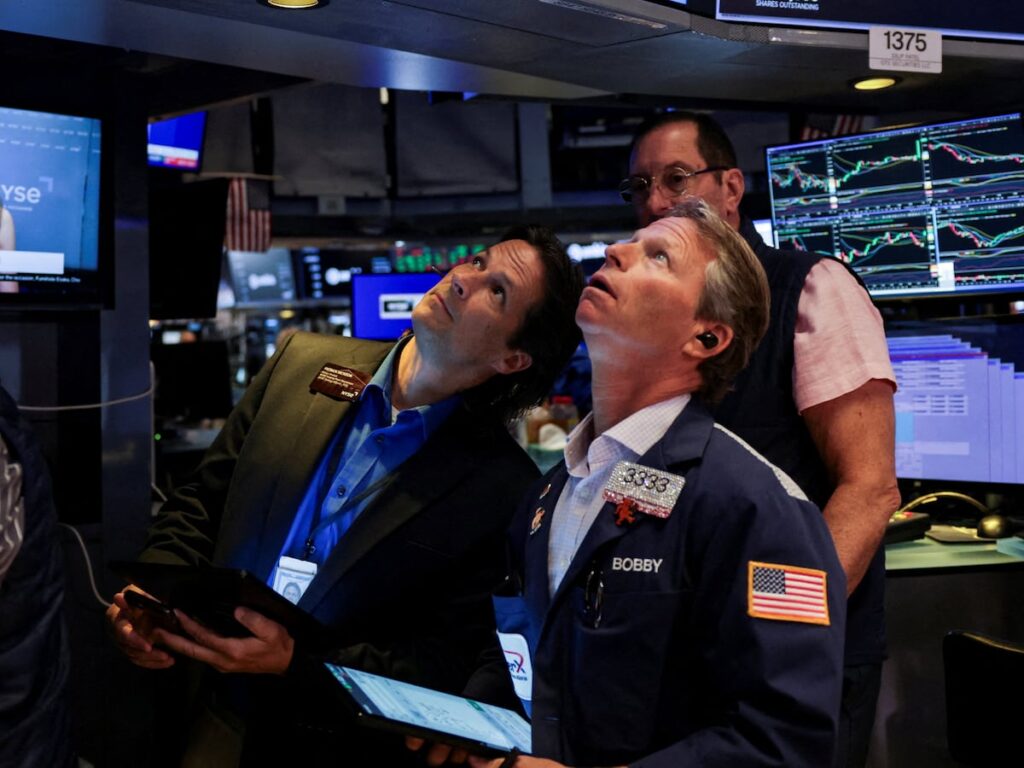
The world isn’t perfect, and neither is the market. As we enter 2026, U.S. and European stock markets are reaching all-time highs, but a closer look reveals a complex landscape marked by geopolitical tensions and economic uncertainty.
In the first days of this year, the U.S. military's involvement in Venezuela has stirred concerns, particularly following President Donald Trump's warnings directed at Colombia and Greenland. Such actions have created an atmosphere of unpredictability—something investors typically shy away from. The specter of potential invasion or annexation looms large, casting a shadow over financial markets.
Adding to the caution, discussions around an artificial intelligence (AI) bubble have intensified. For the first time, more than half of fund managers surveyed by Bank of America acknowledged the possibility of this bubble. With AI technologies rapidly evolving, many analysts are apprehensive about the sustainability of current valuations.
Meanwhile, the private lending market is under scrutiny. The bankruptcy of automotive parts manufacturer First Brands late last year triggered the downfall of **Tricolor** and **PrimaLend**, two significant players in the direct lending sector. J.P. Morgan CEO Jamie Dimon cautioned, “When you see one cockroach, there are probably more,” alluding to potential underlying issues in the market.
Additionally, Trump's evolving approach towards international trade is noteworthy. While the trade war has taken a backseat, the U.S. Supreme Court is poised to address the legality of tariffs that have significantly impacted agreements with the European Union and initiated a one-year truce with China. Analysts predict that the ripple effects of these tariffs will become more apparent starting in 2026.
📰 Table of Contents
Geopolitical Tensions and Market Reactions
Despite the geopolitical upheaval, defense-related stocks have thrived, especially in Europe, which has recorded its best start to the year in two decades. Analysts from **Morgan Stanley** noted that the U.S. dollar's reaction to these major events could lead to sustained price movements. In 2025, the dollar dropped almost 10% against other major currencies, its most significant decline in eight years. The current labor market also raises concerns; recent hiring statistics indicate that 2025 experienced the lowest employment growth since the pandemic's onset.
Moreover, 2026 will witness considerable changes at the Federal Reserve, with all regional governors—who collectively cast nearly half of the votes on interest rate decisions—replacing their positions. Jerome Powell’s likely departure as chairman, expected in May, opens the door for a Trump ally who may facilitate interest rate cuts. This shift raises alarms among some analysts, including Lale Akoner from **eToro**, who warned that looser monetary policy could inadvertently reignite inflation, which was measured at 2.7% in December—still above the desired 2% target.
As for the stock market, a consensus compiled by **Bloomberg** suggests that while the market will likely maintain its upward trajectory in 2026, it will do so at a more measured pace. Yet, concerns about volatility and potential corrections remain prevalent. Executives from **Goldman Sachs** and **Morgan Stanley** have projected a market correction exceeding 10% within the next two years, viewing it as an opportunity for reassessment.
After a fervent stretch for companies involved in AI, market analysts are becoming more discerning. Tech giants such as **Nvidia**, **Meta**, and **Oracle** recently experienced a year-end market correction as they increased their reliance on debt to finance investments with uncertain returns. In particular, Oracle is bracing for challenges as its major client, **OpenAI**, faces its first debt maturities in the latter half of 2026, which could send Oracle’s stock tumbling if defaults occur.
Private Lending Market Under the Microscope
The recent issues in the private lending market have raised eyebrows across the financial landscape. Following the fallout from First Brands, questions linger about whether these instances are isolated or indicative of broader vulnerabilities—what **Bank of England** Governor Andrew Bailey referred to as “the canary in the coal mine.” Private lending firms operate with less regulatory oversight, making their practices less transparent than traditional banks, which raises alarms for future stability.
Known as “shadow banking,” these entities have resurfaced in the lending landscape, echoing the risky practices that contributed to the 2008 financial crisis. Recent insights from the **European Central Bank** indicate that about 10% of banks’ assets in the Eurozone are exposed to private credit, with heightened risk levels noted particularly in Germany, France, the Netherlands, and Ireland.
Compounding these concerns are the impending changes in U.S. tariffs, which are expected to reverberate throughout the shipping industry and global supply chains. Researcher John McCown from the Center for Maritime Strategy has indicated that container supply chains have already begun to adapt to the tariff landscape. A ruling by the U.S. Supreme Court regarding these tariffs could have profound implications, potentially leading to a collapse in the U.S. debt market and a loss of over $2 trillion in revenue by 2035.
As the midterm elections approach, Trump's policies on immigration, tariffs, and labor will be put to the test. Analysts suggest that if Trump loses control of either congressional house, his political influence may diminish significantly. Outside the U.S., elections in emerging economies like Hungary, Brazil, and Colombia could further influence global economic dynamics.
Overall, as we navigate the complexities of 2026, investors and citizens alike will need to stay vigilant, continually reassessing the impact of geopolitical tensions, market fluctuations, and evolving economic policies on their financial futures.
Alabama's Cold Snap Is Here: 7 Deadly Mistakes That Could Cost You Everything!

JJ McCarthy's Shocking NFL Trade Rumors: Could This Former Michigan Star Become a $20M Bust?
You Won’t Believe How Frasers Centrepoint Trust’s Bold Move Could Change Your Investment Game!
Delaware's Shocking Winter Storm Emergency: 14 Inches of Snow Predicted! Are You Prepared?

8 Shocking Secrets About Happiness Boomers Know That Millennials Are Totally Missing Out On!
Senate Shocker: 3 Major Bills Passed in Days—What This Means for New Mexico's Future!
You might also like: