
Iran's Shocking Threat: Are Microsoft, Apple & Google Offices Safe? Startling Details Revealed!

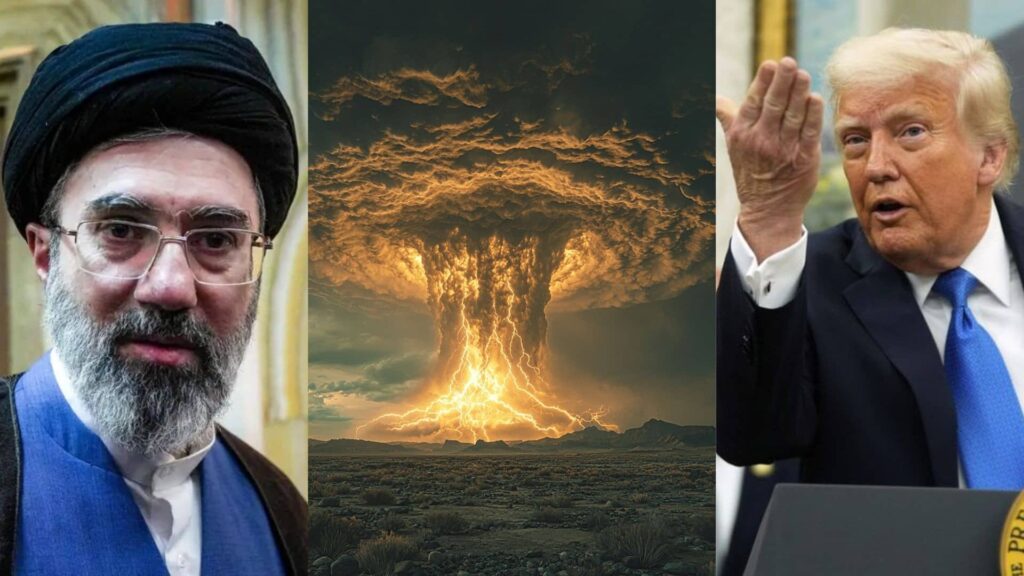
Tehran: The ongoing tensions between Iran and the United States are escalating, leading to a stark warning from Iran's Islamic Revolutionary Guard Corps (IRGC). The IRGC has labeled major U.S. technology companies—specifically Microsoft, Apple, Google, and Tesla—as "legitimate targets," claiming that these firms are complicit in "terrorist operations" allegedly orchestrated by the U.S. and Israel. This assertion has raised significant concerns about the safety of employees within these corporations, with the IRGC advising them to leave their workplaces and urging local residents to evacuate areas within a 1 km radius from their offices, effective from 8 PM Tehran time on April 1.
U.S. Defense Secretary Pete Hegseth responded to these threats with a warning of his own, emphasizing that Iran must negotiate a deal with the United States or risk facing intensified military action. Hegseth stated unequivocally that President Donald Trump "doesn't bluff" and "does not back down," urging Iran's new leadership to act wisely and responsibly. "The new regime should be wiser than the last," Hegseth remarked, indicating that the U.S. is ready to pursue greater military measures if diplomatic negotiations do not materialize.
In its statement, the IRGC accused American information and communication technology (ICT) and artificial intelligence (AI) companies of playing pivotal roles in planning and executing operations against Iran. They announced that for every act of "terror" committed against Iran, corresponding facilities belonging to these companies would be targeted. This aggressive stance adds a layer of complexity to the already fragile geopolitical landscape in West Asia.
Concerns About Global Implications
The IRGC's warning has implications that extend beyond the region. As it names high-profile global firms like Apple, Google, Microsoft, and Tesla, experts worry about the disruption of global data flows, financial transactions, and supply chains. Tech companies with substantial operations in the Middle East may need to reassess their security protocols, potentially leading to increased operational costs.
Moreover, while the immediate threat appears to be physical attacks, analysts suggest that the risk could also manifest in the form of large-scale cyberattacks aimed at crippling services. Cybersecurity experts have long warned about the possibility of retaliatory actions, particularly given the increasing reliance on technology for critical infrastructure and services worldwide.
In contrast, Iran has denied any official dialogue with the United States, asserting that it has only received "excessive, unreasonable demands via intermediaries." The Iranian Consulate General in Mumbai claimed that the conflict was initiated by the U.S. and has emphasized their unwillingness to engage in Pakistani-led mediation efforts.
As the situation unfolds, the potential for conflict between Iran and the United States looms larger. The IRGC’s threats pose a significant risk not only to the companies mentioned but also to the broader geopolitical stability in the region. With both sides signaling readiness for confrontation, the coming days could prove critical in determining the direction of U.S.-Iran relations and the safety of international companies operating in high-risk areas.
Wright County Boys Soccer's SHOCKING Last-Minute Victory: What Happened Against Iowa Falls-Alden?

Is Your Retirement Fund DOOMED by the Stock Market Crash of 2026? Discover the Shocking Truth NOW!

2026's New Covid Variant: What 80% of Americans Are Ignorantly Overlooking!
You Won’t Believe What’s Happening Behind the Scenes of New England’s Business Media – Find Out Now!

Ben Johnson's Shocking Warning to the NFL: Is Bears WR Luther Burden III the Next Superstar? You Won't Believe What He Can Do!

Japan's Alarming Survey: Are Smartphones Failing Us During Disasters? Shocking Truth Revealed!
You might also like: