
Iran’s Energy Crisis: How China Could Dominate Clean Tech and Leave the U.S. in the Dust!

As the world navigates the fallout from the ongoing conflict in Iran, China appears poised to capitalize on a significant shift in the global energy landscape. According to experts, the war is accelerating a movement away from fossil fuels and toward clean technologies and renewable power—a sector in which China has emerged as a global leader.
With the Strait of Hormuz—an essential route for oil shipments—largely shut down, countries in Asia are scrambling to conserve energy and shore up their dwindling reserves. This disruption has resulted in rising gasoline prices in both the United States and Europe. Although many Asian economies are feeling the strain, China's robust energy policies and manufacturing capabilities may position it to benefit from these disruptions, given its status as the world's largest buyer of Iranian oil.
China leads the world in the production of electric vehicles (EVs), batteries, and solar technologies. According to the International Energy Agency, China accounts for over 70% of global EV manufacturing and approximately 85% of battery cell production. Sam Reynolds from the U.S.-based Institute for Energy Economics and Financial Analysis noted that the current geopolitical climate has validated China's approach to energy sector development. “China’s approach to energy sector development and geopolitics has been completely validated by the Iran conflict,” he said.
In the years leading up to the Iran war, the U.S. energy strategy under President Donald Trump emphasized fossil fuels and energy exports, coining the phrase “energy dominance.” This focus has contrasted sharply with China's longer-term strategy, which has integrated energy security with national security under President Xi Jinping. China's current five-year plan, which extends to 2030, continues to prioritize renewable energy industries.
As the war unfolds, demand for renewable technologies is projected to rise significantly. China's exports of solar panels, batteries, and electric cars reached a record $22.3 billion in December 2026—an increase of nearly 47% year-over-year, according to the think tank Ember. This uptick is particularly notable as countries heavily reliant on energy imports, like those in Europe, are expected to ramp up investments in renewable power and battery storage.
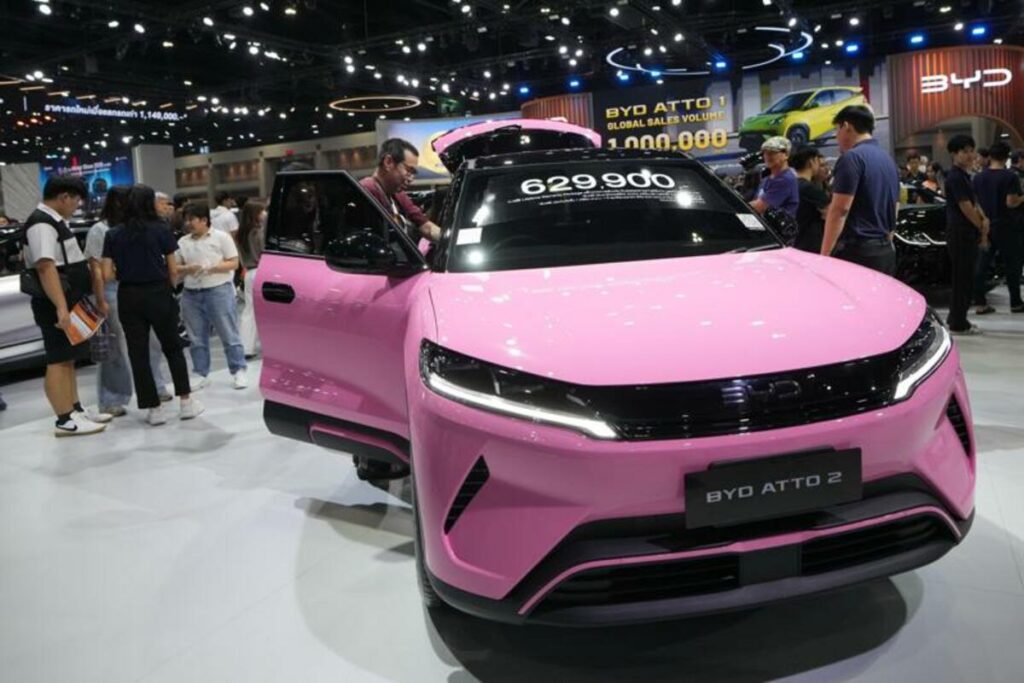
The implications for the automotive industry are profound. Major Chinese firms like BYD, a leading electric vehicle manufacturer, and CATL, a prominent battery producer, are well-positioned to absorb increased interest in low-emission energy products. Stock prices for these companies saw significant increases in March, with CATL shares rising around 24% and BYD's shares climbing about 11%.
In addition to the immediate economic impacts, the energy crisis is reshaping consumer preferences. Rising fuel costs are likely to accelerate the shift toward clean power solutions. For example, in the United Kingdom, demand for electric vehicle leasing surged more than 33% in March compared to February, as households grapple with higher energy bills. Similarly, in Indonesia—the world’s largest coal exporter—President Prabowo Subianto recently announced measures to promote electric vehicles, aiming to expand the country’s charging infrastructure.
China's role in this energy transition extends beyond its borders. Notably, countries like Pakistan have significantly increased their imports of Chinese solar panels, demonstrating a move toward renewable energy solutions. By December 2025, more than 50 gigawatts of Chinese solar panels were imported, showcasing the growing reliance on renewable technologies in the face of energy instability.
The Iranian conflict serves as a wake-up call for many nations, underscoring the fragile nature of fossil fuel dependencies. As higher energy prices affect household budgets, the transition to renewable energy may accelerate in regions that historically depended on oil and gas. For investors and companies in the renewable sector, this presents not just challenges, but also lucrative opportunities for growth.
As the energy landscape continues to evolve, the competition between superpowers like China and the U.S. will likely shape the future of global energy policy. The bifurcation of energy strategies—China's focus on renewables versus the U.S. emphasis on fossil fuels—leaves many countries to navigate their own paths. But one thing is clear: the ongoing disruptions caused by the Iran war may indeed serve as a catalyst for a cleaner, more sustainable energy future.
You Won't Believe What Happened in the Brazil-Chile Copa Libertadores Match Last Night! Shocking Twist Revealed!

You Won't Believe What Flight House Fitness Is Hiding in Their Massive New 50,000-Sq-Ft Facility!

Historic Fight Unfolds: Can This Unexpected Group Save 15,000 Missing White House Records?

$76 Million Coach Returns: What He Shockingly Revealed About His Controversial Exit!

IKEA’s Shocking New Meatball Lollipop: Are Aussies Ready for This Taste Explosion? You Won’t Believe What Happens Next!

Mark Wahlberg's 4 A.M. Secret Workout: The Shocking Truth Behind His Insane Routine!
You might also like: