
Iranian Women’s Soccer Team in Crisis: 10 More Players Risk Everything for Freedom!

In a surprising turn of events, seven members of the Iranian women's soccer team have chosen to remain in Australia, while the rest of the squad has returned to Iran following the Women's Asian Cup. This decision comes amid serious concerns for their safety should they return to their home country, where the political climate for women, especially athletes, has become increasingly fraught.
Australian Prime Minister Anthony Albanese confirmed earlier today that five players were granted humanitarian visas. A source close to the team indicated that an additional two members—a player and a staff member—have also sought asylum in Australia. This decision is a reflection of the escalating fears regarding the repercussions they might face back in Iran.
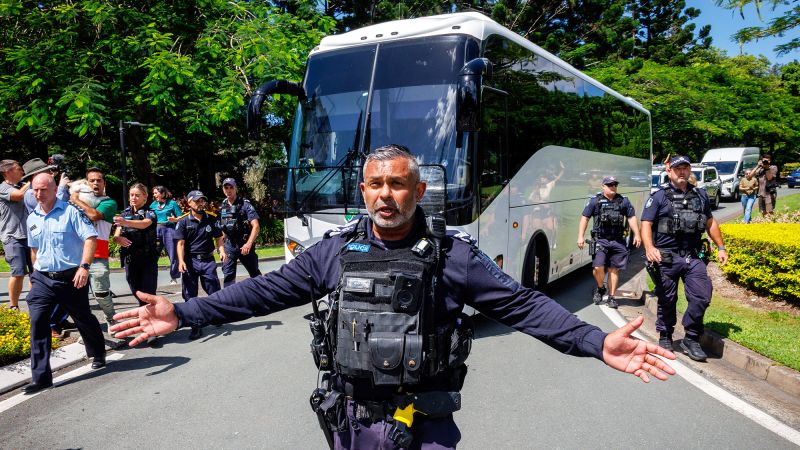
The remaining members of the squad have already departed from Australia, although the specific details of their travel route and arrival time in Iran remain unclear. Observers reported emotional scenes outside the hotel where the team was staying; some supporters attempted to stop the team bus from leaving for Gold Coast Airport. Witnesses noted that one player appeared to be crying as she was escorted onto the bus by security personnel.
During their stint in Australia for the Women’s Asian Cup, the team faced significant challenges on the field, losing all three of their group stage matches. Before their first match on March 2, the players stood in silence during the national anthem—a gesture that some hardliners in Iran interpreted as treasonous. Following this, sources have revealed that the team was allegedly coerced into singing the anthem in subsequent matches under threats to their families, heightening fears of potential persecution upon their return to Iran.
According to Iranian state media, the Attorney General’s office in Iran has urged the women’s team to return, stating that “some hardworking members of our women’s national football team—who are children of this very land—acted unintentionally.” The statement further invited the players to return home “with calm and confidence,” suggesting that doing so would ease their families’ concerns. Meanwhile, Iran’s Minister of Sports, Ahmad Donyamali, claimed that outside forces had attempted to distract the players with “tempting offers” to stay abroad.
The emotional intensity surrounding the team has been palpable, especially in the aftermath of their final match, where supporters gathered around the team bus, shouting, “Save our girls!” Reports indicate that at least three players inside the bus made the international hand signal for help. However, some observers express skepticism about whether the players were aware of the signal's significance.
Human rights advocates are closely monitoring the situation, with Hadi Karimi, a member of the local Iranian community, noting the visible distress among the players. The circumstances surrounding their stay in Australia have raised questions about the role of organizations such as the Asian Football Confederation (AFC), which organized the tournament and has a responsibility for the players' welfare. Former Australian international and human rights advocate Craig Foster has reported that many organizations attempted to communicate with the team during their time in Australia but were denied access.
This heart-wrenching saga highlights the intersection of sports and politics, as well as the ongoing struggles faced by athletes, particularly women, in oppressive regimes. As the Iranian women's soccer team navigates this perilous landscape, their actions and decisions resonate far beyond the soccer field, drawing international attention to the broader issues of human rights and freedom of expression.
You Won't Believe Which SEC Towns Are the Hidden Gems and Total Duds! Find Out Now!

Oil Prices Are on the Edge of Chaos—Are You Prepared for the Shocking Fallout?

NYC’s First Infrared Yoga Studio Promises Shocking Weight Loss Results—Find Out How!
Only 24 Hours Left: Local Vaccination Site Extended Hours—Are You Prepared for What's Coming?

Discover the ONE fruit that dietitians swear will skyrocket your fiber intake—don’t miss out!
Is Your Privacy at Risk? Milind Murli Deora’s Shocking Call for Social Media Accountability!
You might also like: