
Injury Shock! Will Daymion Sanford’s Setback Ruin Spring Game Hopes for 2023?

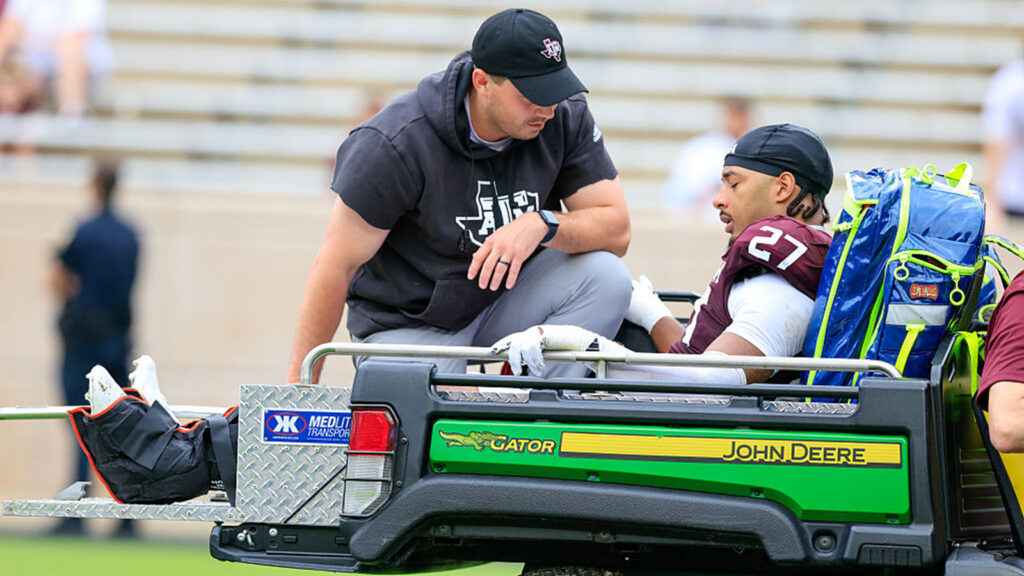
The world of college football is once again grappling with a pressing question: Are spring games worth the injury risk? This debate has intensified following a serious injury to Texas A&M linebacker Daymion Sanford during the Aggies' recent spring exhibition. As college programs reevaluate the necessity of these games, Sanford's unfortunate incident may serve as a crucial turning point.
On April 18, 2026, during the spring game at Kyle Field, Sanford was carted off the field after a painful collision. At 6-foot-2 and 222 pounds, the linebacker had been poised to take over as the team’s leader following the departure of veteran middle linebacker Taurean York, who declared for the NFL Draft after helping lead Texas A&M to its first-ever College Football Playoff appearance. Sanford had a standout season in 2025, recording 57 total tackles (25 solo), 3.5 sacks, two forced fumbles, and an interception. He was expected to slide into York’s role, but now his future is uncertain.
In the spring game, Sanford showcased his talent by leading the Maroon Team with four tackles and one quarterback hurry before going down with what appeared to be a severe lower leg injury. Eyewitness accounts suggest a potential broken ankle, with his foot turning in a distressing direction. As of now, an official diagnosis is still pending, but the implications of such an injury could sideline him for an extended period, raising concerns for the team's defensive strategy.
Here is a look at Texas A&M LB Daymion Sanford getting carted off the field. Air splint was on his lower left leg. Was able to get helped onto the cart, but rode it off. pic.twitter.com/5TP6GkQWHA
— 𝕋𝕣𝕒𝕧𝕚𝕤 𝕃. 𝔹𝕣𝕠𝕨𝕟 (@Travis_L_Brown) April 18, 2026
This incident renews an ongoing discussion among college football stakeholders regarding the value of spring games. In recent years, numerous programs have opted out of holding these exhibitions, citing the unnecessary risk of injury. Critics argue that these games serve primarily to entertain fans rather than to enhance player development. With players going full speed, the potential for injury is ever-present, and many are questioning whether the rewards justify the inherent dangers.
On the flip side, some contend that spring games are no different from practice sessions, where injuries can—and do—occur. Proponents argue that while the atmosphere may differ, the intensity of practice often mirrors that of a spring game. In fact, statistics show that injuries are approximately six times more likely to occur during actual games than in practice. This raises a critical question: Is it truly safer for players to compete in a controlled scrimmage in front of fans, or would they be better off avoiding the potential for injury altogether?
The statistics speak volumes. While some may be inclined to dismiss the risks associated with spring games, the reality is that injuries can alter the trajectory of a player's career. Sanford is now left facing an uncertain future, which is a harsh reminder of the unpredictability of sports. The debate over spring games may see a shift in the coming seasons, especially if more programs look to reduce the risks their players face.
As college football prepares for another season, the incident involving Daymion Sanford could prompt further examination of how teams approach the spring game tradition. Will we see a decline in these exhibitions, or will teams continue to prioritize fan engagement over player safety? For now, all eyes will be on Texas A&M as they await news on Sanford's condition and assess the broader implications for their upcoming season.
In a sport where every play counts and the stakes are high, the need for balance between player safety and fan experience has never been more relevant. As the 2026 season approaches, the conversation surrounding spring games could redefine how college football operates, with the well-being of players at the forefront of these discussions.
You Won't Believe What Happens When Anthony Edwards Faces Off Against the Nuggets Tonight!

You Won't Believe What Awaits at Loveland's Mind-Blowing Pickle Festival – 5 Events You Can't Miss!

Is This $300 Smartphone's Camera Better Than a $1,000 iPhone? You Won't Believe the Results!

Dukes of Hazzard Legend Catherine Bach, 72, Reveals Shocking Health Crisis After Hospitalization! You Won’t Believe What Happened Next!

Bitcoin Hits $76K But Shocking CME Options Data Reveals Hidden Risks You MUST Know!
Shocking Climate Report: 2026’s Unprecedented Disasters You Won’t Believe Are Coming!
You might also like: