
India Stuns World: How News Coverage Links Climate Change to Health Risks More Than the U.S. and China!

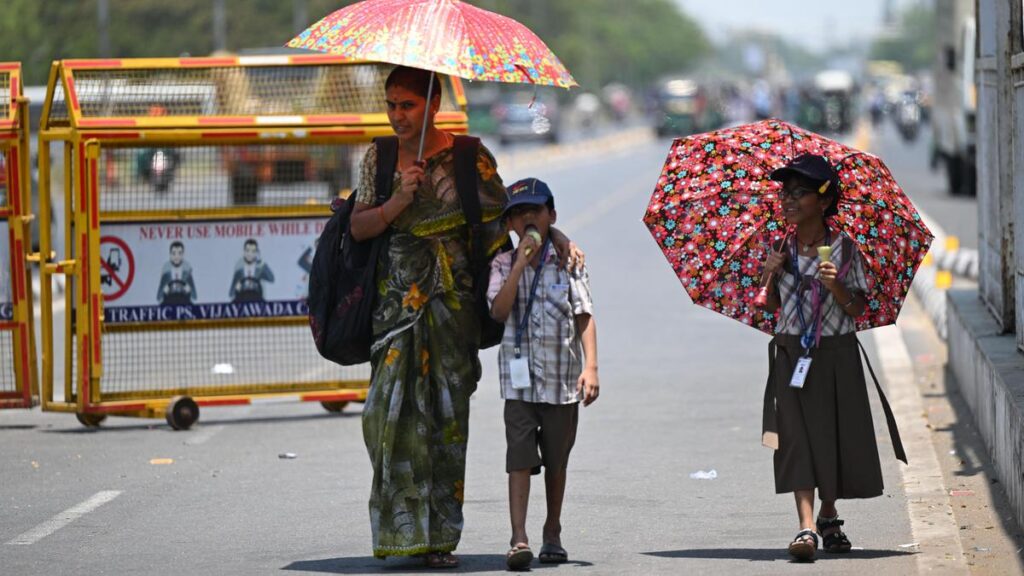
A recent study published in The Lancet Planetary Health reveals that Indian news outlets are leading the pack in substantive climate-health coverage, particularly when compared to their counterparts in the United States and China. Despite this notable finding, researchers warn that the overall media coverage linking climate change to public health remains alarmingly limited across all three countries.
The study, titled The evolution of news coverage about climate change as a health issue - a decadal analysis in China, India, and the USA, was co-authored by Professor Deepti Ganapathy, a Visiting Assistant Professor of Management Communication at the Indian Institute of Management Bangalore (IIM-B), along with several international collaborators. Their research focuses on how major newspapers in the world's three largest carbon-emitting nations have addressed the health impacts of climate change over an 11-year period from 2012 to 2023.
Analyzing a dataset of over 22.5 million newspaper articles published during this timeframe, the researchers found that only a small fraction—just 0.3%—mentioned climate change at all. Even more concerning, fewer than 0.1% of these articles provided substantive coverage of climate change as a public health issue. Among articles that did address climate change, explicit discussions of health impacts were notably scarce.
In the limited pool of articles that did connect climate change to health, Indian newspapers outperformed their peers. A validated sample showed that 46.4% of Indian articles that mentioned both climate change and health framed the issue through a public health lens. In contrast, only 31.3% of similar articles in the United States and a mere 17% in China took this substantive approach.
The most frequently covered health impacts in Indian media included extreme heat, severe weather events such as floods and storms, air pollution, food insecurity, and broader public health risks. Indian coverage was particularly adept at linking climate change to everyday experiences, such as heatwaves and urban air quality, making the issue more relatable to the general public.
Nevertheless, the study's authors noted significant gaps in reporting across all three countries. Often, articles lacked detailed engagement with vulnerable populations, medical professionals, and evidence-based strategies for adaptation or mitigation. By framing climate change primarily as a health issue rather than merely an environmental or political concern, media outlets have the potential to enhance public engagement and catalyze policy action.
While Indian coverage demonstrates a relatively stronger integration of health framing within climate change reporting, substantial gaps still exist globally. The authors advocate for clearer, more consistent reporting on health risks and solutions to help bridge the chasm between climate science and public understanding.
This study serves as a critical reminder of the important role media plays in shaping public perception and policy surrounding climate change and health. As countries grapple with the growing impacts of climate-related health issues, the need for informed, comprehensive reporting has never been more urgent.
You Won't Believe What Consilium's New Policy Could Mean for Your Real Estate Investments!

You Won't Believe How Adarsh and Sisco Snatched Victory in a Shocking ASG Presidency Race!

Shocking Secrets Unveiled: What This Governor Just Said at the TPUSA Forum Will Change Everything!

USMNT's World Cup Roster: Shocking Cuts and Rising Stars You Won't Believe! Who's In Danger?

You Won’t Believe How Sam Coffey Transformed Manchester City’s Midfield – Shocking Stats Inside!

AI's Shocking Blind Spot: Why 1.3 Billion Indians Are Left Behind—Discover the Hidden Truth!
You might also like: