
Hungary's Election Shock: Will Orban's Move Expose China's Hidden Grip on Europe?

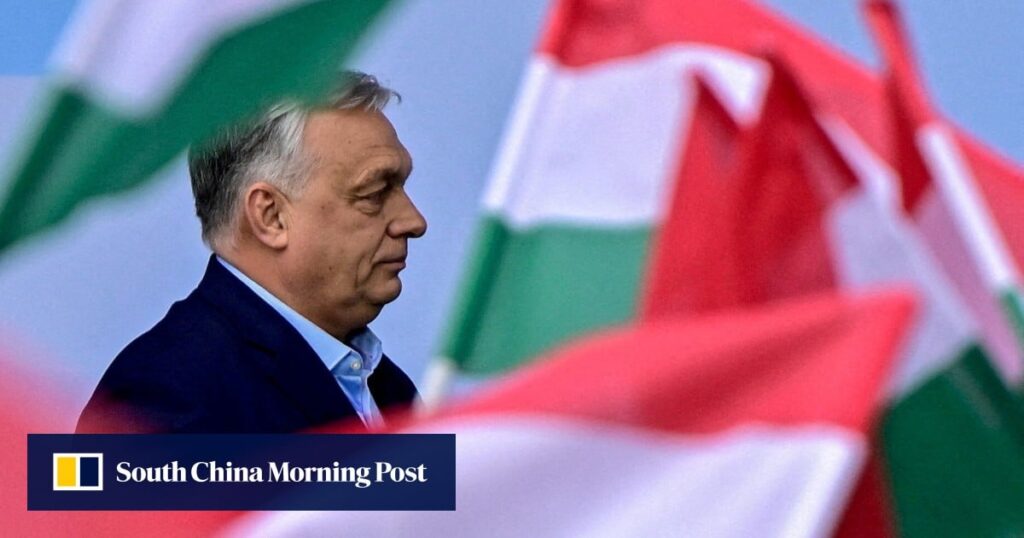
As Hungary approaches its pivotal election on Sunday, the stakes are high—not just for the nation but for Europe and its relationships with global powers such as China, Russia, and the United States. The election is widely seen as a referendum on the leadership of Viktor Orban, the self-styled "illiberal democrat" and head of the ruling Fidesz party. Recent polls suggest that Orban is trailing his main opponent, Peter Magyar of the Tisza Party, by a significant margin of 19 to 23 points among likely voters.
This upcoming vote is being described as “Europe’s most consequential,” with implications that extend beyond Hungary's borders. A defeat for Orban would mean the loss of a key ally for nations like China and Russia, which have benefited from Orban’s resistance to EU sanctions targeting their political actions and human rights records. His government’s opposition to parts of the EU’s social and environmental agenda has also positioned him as an important player for these nations within the European Union framework.
For Brussels, a Magyar victory could signal a shift back towards EU cohesion, raising hopes that Budapest would align more closely with the bloc’s values. Magyar is expected to advocate for a more active role in sanctioning Russia and China, contrasting sharply with Orban’s track record of blocking such measures.
In a show of support for Orban, U.S. Vice President J.D. Vance is slated to visit Hungary this week. This visit underscores the ideological ties between Orban and the MAGA movement, with Orban being characterized as a poster boy for this American political faction. This partnership complicates the European political landscape, as it intertwines local elections with broader international dynamics.
“Hungary is a small but proud country – people say our elections are the most consequential in Europe and I agree,” said Tamas Matura, an associate professor specializing in China at Corvinus University of Budapest.
The implications of this election stretch far beyond the immediate political landscape in Hungary. Should Magyar emerge victorious, observers anticipate a potential pivot towards a more cooperative relationship with the EU, potentially altering the current balance of power not just in Hungary, but also in how the EU navigates its foreign policy with both China and Russia.
As the election draws near, the eyes of the world will undoubtedly be on Hungary, where voters are being asked to determine the future course of their nation and its place within the wider European context. The outcomes could influence everything from EU sanctions to the ideological underpinnings of political alliances on the continent.
You Won't Believe Which 5 Unsung Heroes Sparked the Soccer Revolution in Denver Before Messi!

MENA Startup Funding Plummets to Shocking $48.3 Million – What This Means for Your Investments!

Jim Cramer Reveals the Shocking Truth: Ciena's Explosive Gains Could Change Your Portfolio Forever!

NFL Expert Drops BOMBSHELL on Rueben Bain Jr.'s Draft Future—What You MUST Know Before It's Too Late!

Doc Rivers on the Hot Seat? Shocking New Details About His Future with the Bucks After 2026 Playoff Disaster!

Shocking Comeback: This Rare Disease, Last Seen 10 Years Ago, is Spreading—Are You at Risk?
You might also like: