
Huawei's Shocking Comeback: How They Overtook Apple to Become China’s No. 1—What It Means for You!

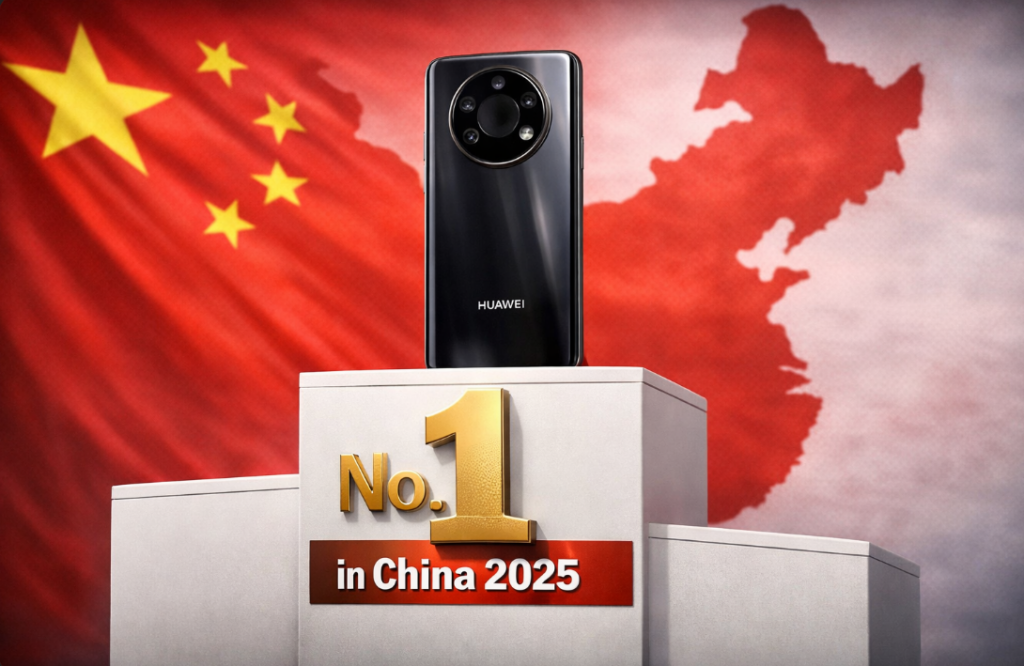
Huawei has made a significant comeback in the competitive landscape of China's smartphone market, reclaiming the No. 1 position in 2025. This marks its first full-year leadership since 2020, following years of challenges stemming from US sanctions. According to data from the International Data Corporation (IDC), Huawei captured a 16.4% market share, with shipments of 46.7 million units, narrowly edging out Apple, which held 16.2%.
The recovery of Huawei signals a notable shift in the world's largest smartphone market. This comeback was largely fueled by its return to 5G technology, the increasing use of its in-house Kirin chips, and a robust premium lineup featuring models like the Mate and Pura series. IDC emphasized that enhanced domestic chip production has played a crucial role in boosting these shipments, showcasing China's technological advancements amidst external pressures.
Apple, while finishing a close second overall, saw strong demand for its iPhone 17 series and even ranked as the top seller in China during the fourth quarter, boasting a 21% market share. Following Huawei and Apple, Vivo took the third spot, with Xiaomi and Oppo following behind. Notably, Honor has dropped out of the top five, highlighting the intense competition within the sector.
Despite the fierce rivalry at the top, the overall smartphone market in China is facing hurdles. Total smartphone shipments declined by 0.6% year-on-year, totaling approximately 285 million units. Factors such as rising component costs, including memory chip prices, and slower upgrade cycles are creating a more challenging environment for brands heading into 2026. Many companies are forced to either raise prices or delay product launches to navigate these rising costs.
Looking ahead, analysts caution that the landscape in 2026 could be even more daunting. With slower upgrade cycles, higher production costs, and an increasingly saturated market, Huawei's hard-fought title may prove difficult to maintain. The intense competition and shifting consumer preferences will likely play pivotal roles in shaping the future of the smartphone market in China.
The implications of Huawei's resurgence and Apple's close competition are significant, not just for the companies involved but for the global tech industry as a whole. As companies adapt to new market dynamics, the strategies they employ will offer valuable insights into the challenges and opportunities that lie ahead in the ever-evolving smartphone arena.
Cubs Shock Fans by Signing Alex Bregman: What This Means for the 2024 Season!
Is Xiaomi's Redmi Turbo 5 Max Set to Break Records with the Mind-Blowing Dimensity 9500s? You Won't Believe What It Can Do!
What Happens When 5 Million Users Get Locked Out? You Won’t Believe the Consequences!

$718 BILLION Bitcoin Crisis: New Startup Unveils SHOCKING Solution—Will It Save Your Investment?

Ben Roethlisberger's Shocking Tribute to Mike Tomlin: What He Revealed After the Stunning Resignation!

You Won't Believe Why Baxter Health's Angela Powell Was Named Pharmacist of the Year—Shocking Details Inside!
You might also like: