
Howard University Football's Shocking Move: Are They Really Relying on a Legend to Save Their Season?

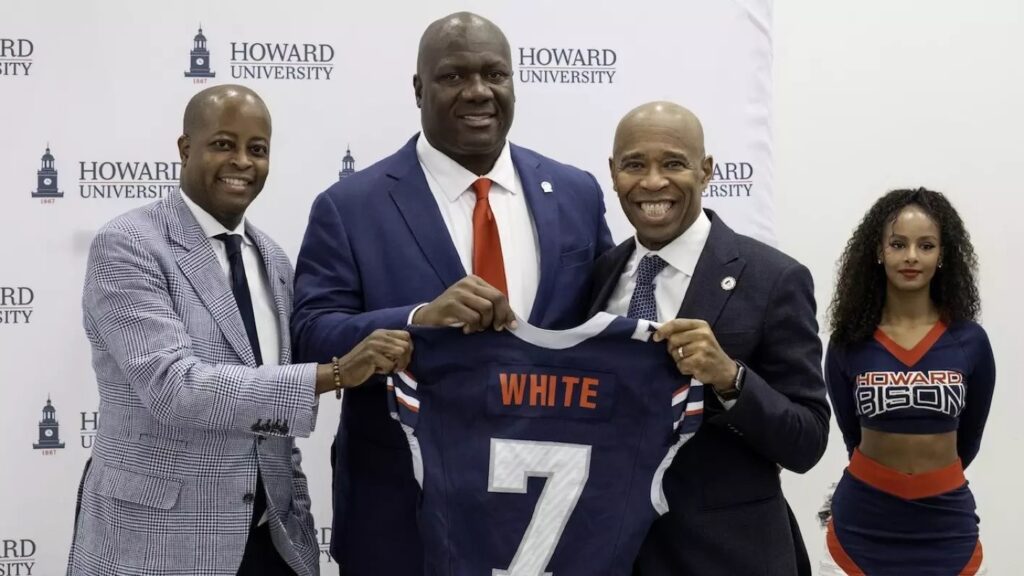
When Howard University announced the hiring of Ted White as its new head football coach, it sent a powerful message about the program's identity and future direction. At a time when football at historically black colleges and universities (HBCUs) is increasingly demanding visibility and credibility, Howard made a bold choice for continuity in leadership and tradition.
“I’m home,” White proclaimed at his introductory press conference, an emotional statement that encapsulated the significance of his return to the program where he once shone as a star quarterback. This isn't just a hiring; it's a homecoming that reignites a legacy intertwined with Howard's football history.
📰 Table of Contents
Homecoming and Legacy
White's return is heavily laden with meaning. As a record-setting quarterback in the late 1990s, he left an indelible mark on Howard football, becoming a touchstone for alumni and a beacon for potential recruits. His legacy is not merely nostalgic; it serves as a powerful motivator for those within the program.
Unlike previous coaching appointments, which often sought outsiders to revitalize the program, Howard's decision to bring White back aligns closely with its storied history and sets a clear expectation for the future. This commitment to tradition is particularly crucial in an era where HBCU football is becoming a focal point in the broader college football landscape.
A Record-Setter Turned Program Leader
White’s journey began not in the limelight of Howard's campus, but at Glen Oaks High School in Baton Rouge, Louisiana, where he excelled as a multi-sport athlete. Initially expected to attend Southern University, he chose Howard, where his career flourished. After redshirting in 1995, he took the league by storm from 1996 to 1998, finishing as the Mid-Eastern Athletic Conference (MEAC) and Howard's all-time leader in passing yards (9,908), completions (638), and passing touchdowns (92). His standout performance on October 17, 1998, against Florida A&M, where he threw for a MEAC-record 561 yards and eight touchdowns, remains a legendary event in HBCU football history. In 1996, he earned accolades such as MEAC Player of the Year and Black College Football Player of the Year.
White's impressive playing career established him as a beloved figure, but his coaching experience has further honed his leadership. In a statement following his hiring, White emphasized that this opportunity transcends nostalgia:
“I am deeply honored to be named head football coach at Howard University…Howard is more than a university — it is a legacy,”
he stated. He detailed his commitment to building a program grounded in discipline, unity, and pride, while striving to compete at the highest level.
As Jared Simmons, a journalist who covers HBCU football, noted, the transition from elite quarterback to head coach is a natural one. “Quarterbacks are conditioned to manage complexity, and that often carries over into leadership roles,” he explained. This experience is crucial in today's landscape of college football, where coaches must navigate the intricacies of recruiting and team management.
A Résumé Built Beyond the Yard
What elevates White's hiring beyond sentimentality is his rigorous preparation for this role. He brings extensive coaching experience across multiple levels of football, including HBCU programs, Power Five schools, and even professional teams. This wide-ranging background is invaluable for modern roster management and player development.
“Our student-athletes will be developed as leaders, scholars, and champions who represent this institution with distinction,” White promised. These words resonate deeply with Howard’s long-standing emphasis on academic excellence alongside athletic achievement.
Strategically, Howard football stands to gain considerable momentum from this decision. The engagement of alumni strengthens, and the messaging around recruiting becomes clearer. White's appointment aligns with a broader movement within HBCU football, as trusted leaders return to their roots to build with purpose. This is not merely a sentimental return; it's a strategic leverage play aimed at revitalizing the program.
Moving forward, the first year under White's leadership will be assessed not just through wins and losses but also through the cultivation of a strong team culture and direction. With White back on The Yard, there is a renewed sense of belief and hope for the future of Howard football.
UK Set to Unleash Radical Australia-Style Social Media Ban for Kids—What Parents Must Know NOW!

Is Your Child's Screen Time Harming Their Mental Health? Shocking Stats You Need to See!
Cooper Flagg's Shocking Ankle Injury: What This Means for His Future in the NBA!

Is Our Future at Risk? Discover How Young Rainforests Are Starving for Nitrogen to Combat Climate Change!

You Won't Believe What $51.5 Million in Funding Means for Your Cybersecurity Future!

Shocking Move: Medical Groups Demand Court Block CDC's Controversial Vaccine Guidelines – What You MUST Know!
You might also like: