
Hispanic Voters Turned the Tide for Trump—Now They’re Regretting It Big Time! What Changed?

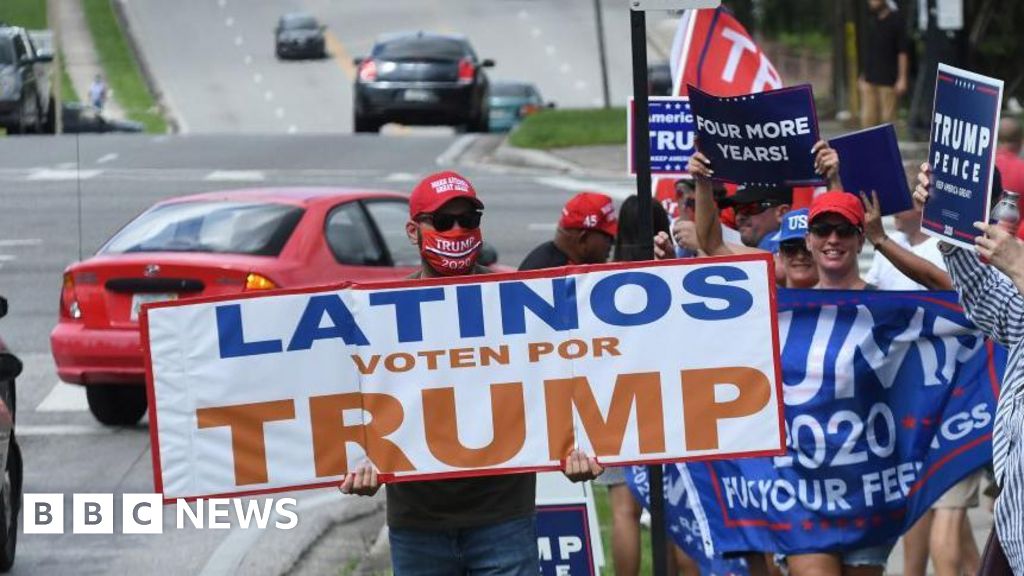
As the 2024 election unfolded, many voters turned their attention to a familiar figure: Donald Trump. Among them was Sam Negron, a former Democrat who became a notable Republican supporter in Allentown, Pennsylvania, a city with a significant Latino population. When Negron cast his vote, he emphasized a central concern: the economy. "I didn't like paying $7 for eggs," he remarked, highlighting his focus on economic strength and national pride.
This sentiment resonated widely, contributing to Trump's remarkable success in the election. He secured the backing of 46% of Latino voters, marking a historic high for a Republican candidate. This level of support was unprecedented, driven largely by frustrations over economic conditions during the later years of the Biden administration.
However, just one year into his term, cracks in Trump's Latino support have begun to surface. Recent polling from CBS News shows a decline in approval among Latino voters, dropping to 38% from a peak of 49% early in his presidency. The Latino electorate, encompassing over 36 million individuals with diverse backgrounds and economic statuses, is critically important in American politics.
Concerns regarding the economy remain paramount. A Pew Research poll indicated that 93% of Latinos who voted for Trump identified economic issues as their top priority, with crime and immigration trailing far behind. Yet, a recent CBS poll reveals that 61% of Latino respondents disapprove of Trump's economic handling, and 69% are dissatisfied with his approach to inflation. Many voters assess the performance of the economy primarily through their experiences with prices, and current inflation levels have not eased their worries.
Mike Madrid, a Republican strategist and observer of Latino political trends, believes these shifts signal a broader discontent. He suggests that Latino voters are increasingly turning away from Trump over economic issues, reflecting a similar crisis that Democrats faced in the 2024 elections. “The Latino shift right was more a function of Latinos leaving the Democratic Party due to the economy than it was a function of being compelled by the Republican Party,” he explained.
In communities like North Philadelphia, residents voiced similar concerns. Moses Santana noted that many locals had initially supported Trump due to perceived stagnation under Biden, but as prices continued to rise, disillusionment grew. He said, "A lot of people around here voted for Trump this go around, because nothing was happening with Biden... But things are still getting tight," pointing to ongoing economic pressures faced by low-income families.
John Acevedo, a realtor in Pasadena, California, echoed these sentiments: "The economy is not doing well. The prices are up. He promised they would come down. They haven't.” Despite claims from White House officials about lower gas prices and foreign investments, the most pressing issues for many Americans—including rising food and housing costs—remain unresolved. As of December, inflation was reported at 2.7%, indicating a slowing rate rather than a decline in prices, contrary to Trump's assertions.
While Trump has consistently blamed lingering economic challenges on Biden, some of his Latino supporters appear willing to consider the administration's performance more critically. Lydia Dominguez, a member of the Clark County School Board in Las Vegas, acknowledged the difficulties the current administration faces in stabilizing the economy while recognizing efforts to attract businesses back to the U.S.
Among Trump’s staunch supporters, economic concerns continue to lead to mixed feelings. Amanda Garcia, a cattle rancher in Texas, expressed her satisfaction with Trump's immigration policies but noted the adverse effects of his tariffs on ranchers like herself. "It really does affect the economy, and it impacts us on another level," she remarked, highlighting the interconnectedness of Trump's policies and local economies.
Additionally, Trump's immigration enforcement strategies have sparked concern within the Latino community. Many disapprove of the comprehensive approach, which has included extensive ICE raids and a significant number of deportations—over 600,000 individuals in less than a year. Rebeca Perez, a restaurant worker in California, articulated her opposition, saying, "This is supposed to be a free country for everybody, but it isn't.” The CBS poll found that 70% of Latino voters disapprove of Trump’s immigration policies, a figure that rises significantly above the national average of 58%.
As the administration approaches critical midterm elections, the challenge of maintaining Latino support amid economic dissatisfaction looms large. Observers like Mike Madrid warn that Latino voters, historically less tied to party loyalty, could easily shift their allegiances if they feel overlooked by either party. "We [Latinos] have the weakest partisan anchor of any group and can reject both parties when they fail them or just aren't honest with them,” he stated.
For Trump and his administration, addressing these critical concerns will be essential if they hope to sustain and rebuild support among Latino voters. As economic conditions evolve and community sentiments shift, the political landscape remains fluid, signaling a need for a responsive and strategic approach as the next electoral cycle approaches.
Is This Year’s Flu Season the Worst in a Decade? Startling Facts You MUST Know!
White House's Bold Move: Are You Prepared for the Shocking Consequences?

Why Did DLA Japan's Real Estate Co-Head Make a Shocking Move to White & Case? You Won't Believe What’s Next!

Unlock Your Content Goldmine: This 5-Minute Weekly Plan Will Transform Your Engagement—Don't Miss Out!

Washington's Shocking Move! Are Builder Buybacks Behind a 5-Year Low in Home Starts? Find Out Now!

You Won't Believe Which NBA Stars Are Playing on Martin Luther King Jr. Day – Shocking Matchups Revealed!
You might also like: