Heart-Stopping Moment: How Villanova's Trainers Rescued Coach Josh Steinbach in a Life-or-Death Crisis!

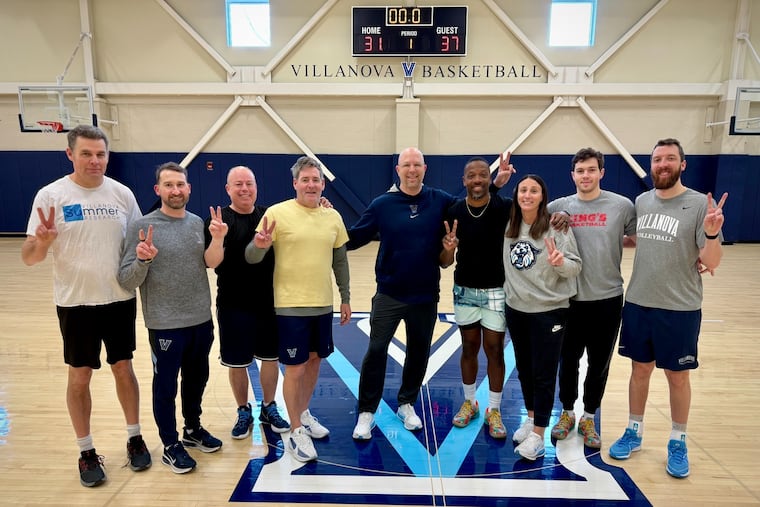
On a seemingly ordinary Monday in June, Villanova Athletics staff gathered for their routine "Noon Hoops" game at the Davis Center, the practice facility for men's and women's basketball. Among them was women’s volleyball coach Josh Steinbach, who was actively participating when an unexpected and life-altering event unfolded. While hustling for a rebound, Steinbach suddenly dropped to one knee, leading others to suspect an ankle injury. However, he was actually experiencing cardiac arrest.
Fortunately, Steinbach was surrounded by trained staff, as CPR and AED training is mandatory for the athletics department at Villanova. This preparedness played a crucial role in his survival. Approximately 10 months later, Steinbach reflects on the incident with gratitude, having successfully coached the entire 2025 volleyball season. “People will say, ‘Hey, life is fleeting. It’s delicate. Be careful and take care of your moments,’ and I think it points out how true that is,” he shared, marking the milestone of his 19th season in November.
The "Noon Hoops" games at Villanova have been a staple long before Steinbach joined the university. These sessions occur every Monday, Wednesday, and Friday and include coaches, trainers, media relations staff, and other athletes. On June 2, 2025, during the first game of the day, Steinbach, then 53 years old, was matched up against a younger player training members of the men’s basketball team. “I was gassed. My heart rate was high. I could feel it,” he recalled. Feeling lightheaded but thinking it was just fatigue, Steinbach took a break to hydrate.
Little did he know, tingling sensations began in his fingers and toes, a precursor to the collapse that followed shortly after. Minutes into the second game, he went for a rebound and lost consciousness. He has no recollection of the moments leading up to his cardiac arrest, but he regained consciousness later in an ambulance, having been revived by an automated external defibrillator (AED) just 90 seconds after 911 was called. It is worth noting that a few weeks prior to this incident, Villanova had conducted CPR and AED training for its coaches and trainers, which Steinbach credits with saving his life. “I wouldn’t be talking to you otherwise,” he said emphatically.
On the day before his cardiac event, Steinbach had enjoyed a four-mile hike at Ridley Creek State Park. “I was really fortunate that it happened during basketball and not when I was on the trails,” he acknowledged, expressing relief that he was in a controlled environment during the incident.
After spending several days in Bryn Mawr Hospital, Steinbach had the summer to recuperate before his volleyball team’s first game of the regular season at the end of August. Yet, the transition back to coaching was daunting. He was restricted from heavy lifting and extensive cardio workouts, concerns that weighed heavily on him since coaching is an intense and physically demanding role. Steinbach utilized a WHOOP band, a device that tracks heart rate, sleep, and recovery data, to provide insight into his health, even sharing data from a thrilling match where his heart rate peaked at 147 beats per minute.
“I pulled my heart rate down from that match and took it to my cardiologists. I just wanted them to understand that this is my job,” he explained, relieved when they reassured him that his heart rate during coaching was not a cause for concern. However, anxiety loomed over him during his recovery, especially when he worried about the possibility of not being able to continue coaching. The emotional toll was heightened, as Steinbach admitted, “I don’t think I made it through a national anthem without crying for the first two to three weeks of playing.”
Despite these challenges, Steinbach returned to coaching and led his team to an impressive 8-0 start in the 2025 season, finishing with a record of 20-8 and an 11-5 mark in the Big East, narrowly missing out on NCAA Tournament qualification. His near-death experience has not only reinforced his passion for coaching but also altered his perspective on life. “It’s funny because I got really cranky about some stuff around the office here the past couple of weeks,” he remarked, indicating a newfound appreciation for the little moments. “Now it’s just part of my life. It’s a thing that happened, and I remind myself.”
In a twist of fate, a playful team celebration that once involved a player pretending to go into cardiac arrest has taken on a new significance for Steinbach and his team. “You could have a conversation with him, and he’ll crack jokes, but then when it’s go time, he kind of flips a switch,” noted associate head coach Joe Portland, highlighting Steinbach's ability to transition from a lighthearted leader to a fierce competitor when needed.
As Steinbach continues to navigate his coaching career with a heart monitor implanted to manage his health, he remains focused on the present, embracing both the challenges and victories that come with his role. His story serves as a poignant reminder of the fragility of life and the importance of being prepared—whether on the court or in everyday life.
You Won't Believe What I Discovered About the Garmin Forerunner 970—#3 Will Shock You!

Wealth Firm Shockingly Sells 50% of Its Stake in Controversial Oklo Nuclear Startup – What’s Next?

Is This Shocking Trade the Only Hope to Save Ja Morant's Career by 2026?

You Won’t Believe What Bitget’s New VIP Program Could Mean for Your Crypto Gains!

Olivia Rodrigo's Shocking Secret About Her Third Album: What She Revealed Will Leave You Speechless!

$246M in BTC Shorts Could Explode—Are You Prepared for the $67K+ Shockwave?
You might also like: