
Governor Murphy's Shocking New Law: How It Could Change Your Vaccine Costs Forever!

New Jersey Takes Charge on Vaccination Policy
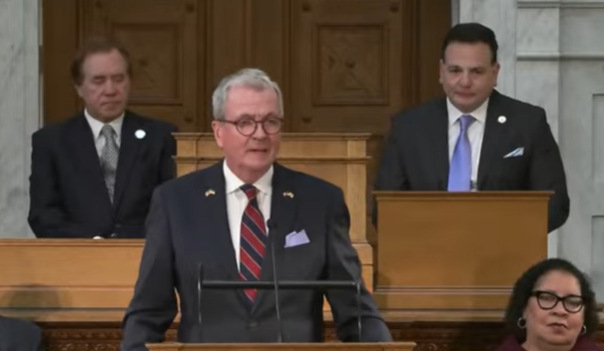
TRENTON – On January 18, 2026, New Jersey Governor Phil Murphy signed a significant piece of legislation aimed at enhancing access to vaccinations and ensuring their affordability throughout the state. The newly minted law, S4894/A6166, mandates that health insurers and health benefit plans cover immunizations recommended by the New Jersey Department of Health (NJDOH) without any cost-sharing, a move that comes amidst growing concerns about public trust in vaccines.
This legislation shifts New Jersey’s immunization guidance from reliance on the federal Advisory Committee on Immunization Practices (ACIP) to state-level recommendations. Governor Murphy expressed grave concerns about the recent inconsistencies in federal vaccine guidance, stating, “This year, we have seen the federal government diverge and waffle on evidence-based recommendations from trusted health professionals – rewriting federal vaccine guidance to the detriment of our communities and putting our most vulnerable residents at risk.”
The law empowers NJDOH to incorporate insights from various medical organizations, including the American Academy of Pediatrics (AAP) and the American College of Obstetricians and Gynecologists (ACOG), allowing for a more localized and responsive approach to immunization policy. This is particularly relevant given the alarming rise in vaccine-preventable diseases; for example, cases of measles in the U.S. have surged to levels unseen since 1992.
Acting Health Commissioner Jeff Brown emphasized the importance of this legislation, asserting, “At the Department of Health, we are doing everything in our power to protect public health and to keep our vaccination infrastructure safe, effective, and based solely on evidence and science.” By aligning state guidance with the most reliable scientific research, NJDOH aims to restore public confidence amid a climate of skepticism fueled by misinformation and changing federal guidance.
Specifically, the law requires all health insurers—including NJ FamilyCare and various health benefit plans—to ensure that vaccines recommended by NJDOH are accessible without financial barriers. This means that residents can receive necessary vaccinations without the burden of cost-sharing, thereby promoting equitable access to healthcare.
Justin Zimmerman, Commissioner of the New Jersey Department of Banking and Insurance, stated, “Under the Murphy Administration, New Jersey has been guided by the principle that health care is a right and not a privilege.” He added that this new law reflects ongoing efforts to improve health care access across the state. The legislation not only protects public health but also aligns with the broader national conversation surrounding vaccine access and affordability.
The timing of this legislation could not be more crucial. With the recent upheavals in federal vaccine policies, including a controversial realignment of hepatitis B vaccine guidance, New Jersey’s proactive stance aims to insulate its residents from potential lapses in immunization recommendations that could arise from shifting federal policies. Senators Joseph Vitale and Andrew Zwicker, along with Assemblywoman Carol Murphy, were key sponsors of the bill, underscoring the importance of maintaining high immunization standards based on scientific consensus.
This legislation also accompanies updates to the New Jersey Administrative Code Title 8 - Health, Chapter 57 – Communicable Diseases, which will modernize how health care professionals report communicable diseases and update standards for the New Jersey Immunization Information System. These changes are set to take effect on January 20, 2026, aligning vaccination standards for educational institutions with the latest public health best practices.
As New Jersey embarks on this updated path, the Murphy Administration remains committed to enhancing public health preparedness. Recent initiatives, such as convening the Interagency Vaccine Workgroup, further illustrate the state’s prioritization of vaccine accessibility and public health education. The workgroup aims to unify efforts across various governmental departments, ensuring a coordinated response to vaccine distribution and public messaging regarding their safety and efficacy.
Public health advocates have lauded this legislative action. Chrissy Buteas, President and CEO of the HealthCare Institute of New Jersey (HINJ), remarked, “Vaccines are the safest and most cost-effective ways to keep children and adults healthy.” Furthermore, public health expert Dr. Eddy A. Bresnitz noted that by aligning insurance coverage with departmental recommendations grounded in scientific research, New Jersey is fortifying its public health framework against vaccine-preventable diseases.
As skepticism around vaccines continues to rise, New Jersey's decisive legislative actions represent a critical step in addressing public health needs and ensuring that families can access life-saving immunizations without financial hindrance. The state’s commitment to evidence-based vaccine policy marks a pivotal moment in the ongoing fight for public health integrity.
You Won't Believe What the XIAOMI Redmi Note 15 Pro+ 5G Can Do—Is Your Smartphone Holding You Back?

You Won't Believe What Healthy Snacks Are Taking Over Grocery Aisles in 2026 – Get Ready for a Shocking Change!

Kevin Durant and Dirk Nowitzki’s SHOCKING Messages After Rockets Star BREAKS Scoring Record! You Won't Believe What They Said!

Asus Shocks the Tech World: What Their Bold Move to Ditch Smartphones Means for Your Future!

San Diego Wave FC Shocker: Delphine Cascarino's Sudden Exit Reveals Jaw-Dropping Reasons!

You Won't Believe Which NFL Coaches Were Shockingly Fired This Week! Find Out Now!
You might also like: