
GOP Governor Candidate Claims Islam Threatens America—You Won't Believe the Backlash!

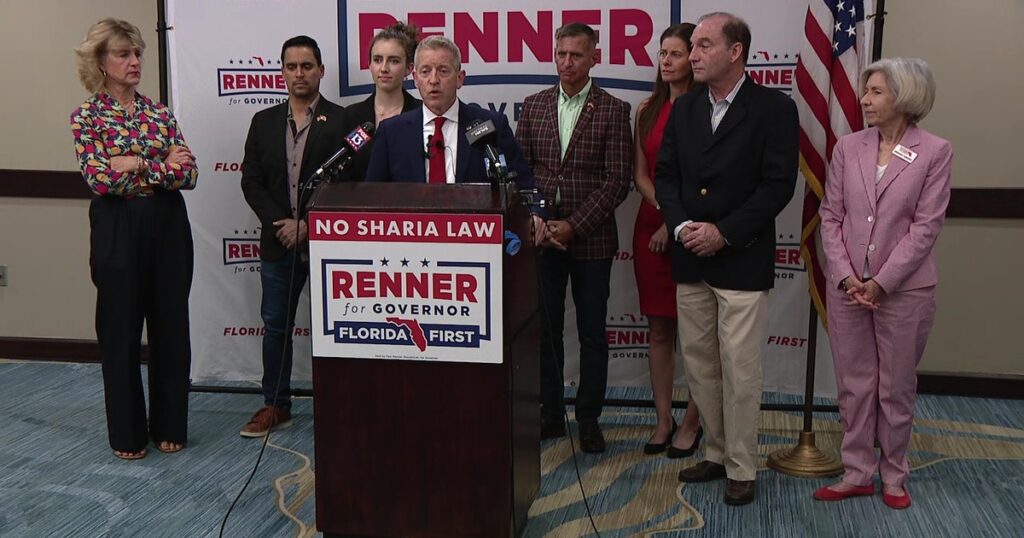
TALLAHASSEE, Fla. - The political landscape in Florida is heating up as Republican gubernatorial candidate Paul Renner makes controversial statements regarding Islam and its presence in the state. Renner, the former House Speaker, held a press conference recently where he asserted that Islam, practiced by an estimated 127,000 Floridians, is fundamentally incompatible with American values.
Renner's remarks come as he trails in the polls behind the Trump-endorsed candidate, Byron Donalds. His declaration that "Islam is not compatible with American life" has drawn sharp criticism from civil rights organizations and advocates for religious tolerance. Renner's comments appear to be rooted in references to terrorist attacks, including the September 11 attacks, the Pulse nightclub shooting, and the Pensacola naval base incident, which he claims are linked to extremist interpretations of Islam. It’s essential to note that religious leaders widely contest these extremist views as misrepresentations of the faith.
During the press conference, Renner stood next to a sign that read, "No Sharia Law," while emphasizing that Florida should block funding for any schools promoting Sharia law and should scrutinize Halal markets for health violations. Additionally, he suggested that the federal government should prevent Muslim immigration altogether. These proposals have incited outrage from various civil rights groups.
“They completely misrepresent our faith,” said Hiba Rahim, the executive director of CAIR Florida. “No one talks about bringing Sharia into the United States. Nobody talks about imposing it in our Constitution, which is not even possible because of our Supremacy Clause and our First Amendment.”
Notably, Muslims make up approximately 2% of the American population, with Florida housing a vibrant community that has been part of the state's cultural fabric for years. Renner acknowledged in his statements that if elected governor, he would protect the constitutional rights of Muslims in Florida. However, the juxtaposition of his proposals and his assurances raises questions about the genuineness of these promises.
Renner further stated, “We should absolutely remain friends with Muslim nations around the world... But we will not hesitate to call the conflict what it is, which is long-term incompatible with our system.” This rhetoric underscores a growing trend in some political circles where fear of minority communities is used as a strategy to galvanize support.
His call for designating the Council on American-Islamic Relations (CAIR) as a terrorist organization further complicates his stance. CAIR has long been a target for those who oppose Muslim advocacy in America, yet many see it as a vital voice for the rights of American Muslims. CAIR Florida rebuked Renner’s allegations, describing them as divisive and reflective of an agenda that seeks to pit Americans against one another.
The implications of Renner’s statements extend beyond just political rhetoric. They reflect broader concerns about the rise of Islamophobia and the stigmatization of Muslim communities in America. Historically, Islam has been part of the American landscape since the arrival of enslaved Africans, many of whom practiced Islam. Today, the Muslim community continues to contribute to the socio-economic fabric of the nation, challenging the notion that any religion or culture is inherently at odds with American values.
As Renner continues his campaign, his rhetoric will likely draw scrutiny. With significant numbers of Floridians identifying as Muslim, how he navigates this demographic could have lasting effects on his political aspirations and the broader societal discourse surrounding religion and tolerance in America.
The upcoming election will test not only Renner’s proposals but also the resilience of Florida's diverse communities to stand against divisive politics.
Portland Police Uncover Shocking $1 Million Copper Theft Ring—What They Found Will Leave You Speechless!
Shocking Lyme Disease Vaccine Results: 70% Efficacy Could Change Everything—Will You Be Protected?
Is Your Vote Safe? Shocking Tactics Uncovered: MAGA's Secret Plan to Watch You at Polls!

Is the New Meadow Smartphone the Secret to a Happier Life? You Won't Believe What It's Missing!

Is the Whoop 5.0 Really Worth $199 a Year? Shocking Truth Revealed!

Shocking PlayStation Store Update: 50+ Games Disappearing March 24—Are You Ready to Lose Everything?
You might also like: