
Giant Gold Bars in White House? What Trump Didn't Want You to See During This Meeting!

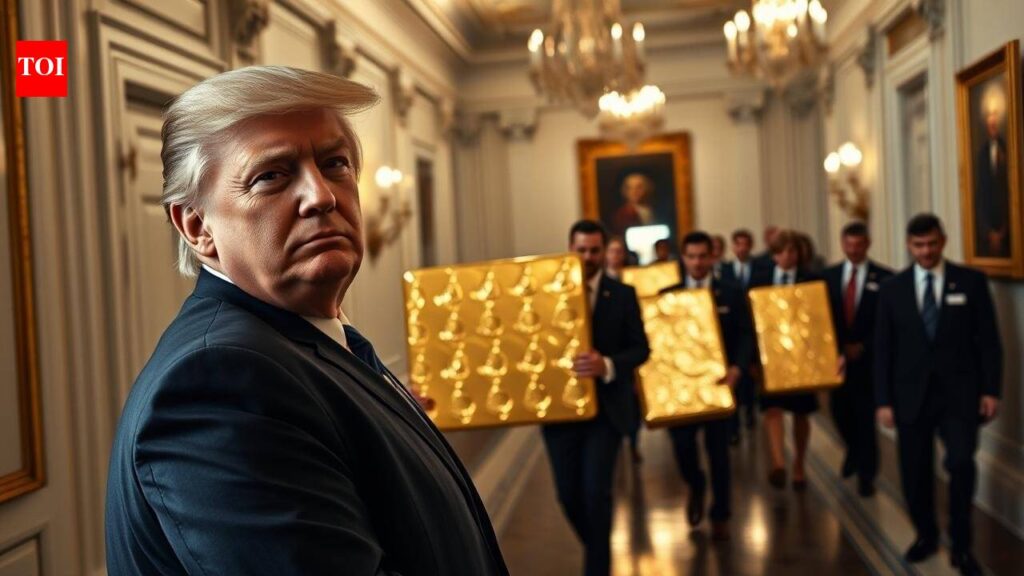
In a curious turn of events last Friday, a spectacle unfolded in the corridors of the White House. As former President Donald Trump was signing executive orders related to Iran, men in dark suits were spotted pushing a cart laden with large gold bars, reminiscent of those often seen in films like Goldfinger. These weren't your typical one-ounce bars; they were hefty, foot-long pieces of gold that would require both hands to lift. The sight raised eyebrows and questions: what was the story behind these gleaming ingots?
According to reports from the New York Post and its "On The Money" section, the men, referred to as “G-Men,” claimed they were delivering part of a stash seized from former Venezuelan President Nicolás Maduro. Maduro was arrested earlier this year on charges of narco-terrorism and is known to have hoarded tens of millions in gold that he kept locked away. However, further investigation revealed that while the gold did originate from Venezuela, the narrative surrounding Maduro's secret stash was likely embellishment.
In reality, the gold bars were part of a licensing deal recently finalized by Interior Secretary Doug Burgum with Minerven, a Venezuelan state-owned gold mining company. This agreement allows Minerven to sell physical gold to the Trafigura Group, a commodities trading firm that deals in gold on U.S. markets. This transaction is part of the White House's broader strategy to reintegrate Venezuela into the global economy—a stark contrast to previous policies aimed at isolating the country under Maduro's regime.
The gold bars were paraded around the White House as a symbolic gesture, marking a potential thaw in U.S.-Venezuelan relations due to Trump's incarceration of Maduro. The White House asserted that this historic gold deal was orchestrated under Trump's directive. The statement emphasized that “Secretary Burgum’s trip to Venezuela with the President’s National Energy Dominance Council sealed the deal. We are helping Venezuela restore their mining sector, which will help American industry get the minerals we need.”
In a Fox News interview, Burgum elaborated, stating that "$100 million of gold came from Venezuela to the United States" and highlighted Venezuela's vast mineral resources, estimated at around "$500 billion." He expressed optimism about the enthusiasm among Venezuelans regarding their country's future. Despite Venezuela's historical reputation for its oil reserves, it is also rich in minerals, making it a potential gold mine for investors as it strives to recover from years of economic turmoil under Maduro and his predecessor, Hugo Chávez.
For much of the past two decades, Venezuela's economy has been in decline, driven largely by the exodus of foreign investment in both the oil and mining sectors. This decline has resulted in widespread poverty and economic deprivation, which the Trump administration now aims to reverse by engaging with a new government led by Delcy Rodríguez, a known ally of Maduro.
The recent discussions between Burgum and Venezuelan mining and energy executives indicate that there is renewed interest in U.S.-Venezuelan economic cooperation. Burgum noted that executives were eager to explore “great opportunities available” in Venezuela, suggesting a shift in the narrative surrounding the nation from a pariah to a potential partner.
This unfolding situation represents a significant pivot in U.S. foreign policy towards Venezuela, a nation long viewed through a lens of hostility. If successful, this strategy could open new channels for American businesses and alleviate some of the economic strife afflicting Venezuelans. Burgum even mentioned that there are plans for a statue dedicated to Trump in Venezuela, signaling a potential shift in public sentiment towards the former president as he is viewed as a catalyst for economic revival.
As the story develops, it remains crucial for American readers to stay informed about the implications of these gold dealings—not just for the U.S. economy but also for the Venezuelan people, who have endured years of hardship. The potential reintegration of Venezuela into the global economy could signal the beginning of a new chapter for both nations, one that is rooted in cooperation rather than conflict.
5 Shocking College Football Playoff Exits: You Won't Believe Who's Out for Good!

Could This Shocking Partnership Transform Civic Engagement in Youth Sports Forever?
Is Your Retirement at Risk? Shocking Stock Market Trends You MUST Know NOW!

Bethenny Frankel’s Shocking Beauty Tool Accident: Watch Her Slice Open Her Face in THIS Viral Video!
This Shocking Page Denied Access Reveals the Secrets Big Tech Doesn’t Want You to Know!

You Won't Believe How Nate Ament Shocked Scouts; Henri Veesaar's Jaw-Dropping Stats That Could Change the NBA!
You might also like: