
Gary Vee's Shocking Secrets to Success: 5 Strategies That Could Make You a Millionaire Overnight!

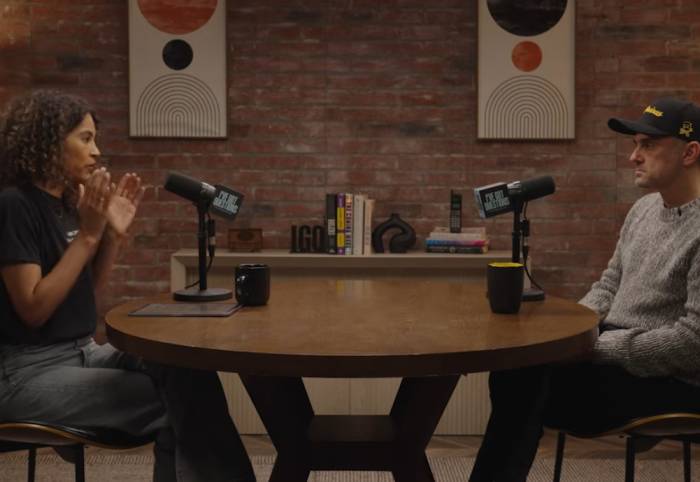
In an enlightening conversation between marketing guru Gary Vaynerchuk and tech expert Sinead Bovell, the future trajectory of marketing and technology was dissected, revealing a paradigm shift characterized by the rise of voice technology and augmented reality. Vaynerchuk emphasized that marketing should never be viewed in isolation but rather as a tool for driving business success. “This is not art class,” he remarked. “We have to drive this insurance company’s business.”
As the discussion progressed, the concept of a “voice-first revolution” emerged as a game-changer for consumer interaction. Vaynerchuk noted that his fascination with voice technology dates back to 2016, expressing confidence that advancements in voice interfaces could redefine how consumers engage with content. “I only prompt in voice now,” he shared, underlining the growing trend of voice-activated commands in everyday life.
Bovell added that entire businesses are now operating on a voice-first model, with startups favoring conversation over typing. This shift signals a more natural way of human communication and engagement, which could reshape the marketing landscape. “Voice could break that loop of open phone and watch something,” Bovell suggested, indicating a potential decline in traditional screen time.
The Role of Augmented Reality
The conversation then pivoted to augmented reality (AR) and its potential to transform consumer experiences. Vaynerchuk posited that AR technologies, particularly through the integration of smart glasses, could revolutionize how people consume content. “I believe glasses is the most obvious thing brewing that is going to do to phone what phone did to television,” he asserted. The implications of this shift are profound, as AR has the potential to create immersive experiences that blend digital and physical realities.
This evolution was further emphasized when Bovell discussed the integration of AI capabilities in devices like Apple’s AirPods, which recently introduced AI-powered translation features. “This is the beginning of that behavior—AI in ear, talking to AI,” she indicated, highlighting the seamless interaction between technology and day-to-day life that could emerge from such innovations.
As both experts examined the competitive landscape, they noted that social media platforms are now vying for attention against AI interactions, with brands needing to establish resonance in a crowded market. “They’re all competing,” Vaynerchuk stated, illustrating the fierce competition for consumer attention in today’s digital age.
Despite these technological advancements, both Vaynerchuk and Bovell acknowledged the importance of genuine human experiences. Vaynerchuk argued that technology has been a “gateway drug to in real life,” referencing how online interactions often lead to real-life connections, such as the dating experiences initiated through apps. “Do you know how many people are going to go out on a date tonight that started in their phone?” he asked, emphasizing the blending of digital and physical realms in modern social interactions.
However, they also noted a growing fatigue with constant online engagement, particularly among younger generations like Gen Alpha. Bovell stated, “They’re physically not getting the same phones and they’re not signing up on the same platforms.” This shift hints at a desire for more authentic, offline experiences, signaling a potential recalibration of how technology fits into daily life.
As they explored future trends, Vaynerchuk expressed his belief that early adopters of new technologies often face awkward phases. “A lot of the early executions will be silly,” he remarked, comparing it to early television commercials that simply replicated radio ads. Over time, as people adjust to new technologies, the applications will become more sophisticated and aligned with consumer expectations.
The conversation concluded on a hopeful note, with Vaynerchuk emphasizing the resilience of human innovation. “I think we’re in an incredible place,” he said, noting that technology, despite its challenges, has historically proven to be a net good for society. From penicillin to electricity, the advancements have reshaped human life for the better.
As Vaynerchuk wisely pointed out, “The tech will win.” The blend of emerging technologies, from voice interfaces to augmented reality, is set to redefine consumer experiences and marketing strategies in the coming years. The challenge for businesses will be to adapt and resonate authentically with consumers in this rapidly evolving landscape.
You Won't Believe How This $60 Million Investment Is Changing Women's Soccer Forever!

Karoline Leavitt Drops BOMBSHELL at White House Briefing – You Won't Believe What She Revealed!

Luka Dončić's SHOCKING Injury: What Happens Next Against Lakers Could CHANGE Everything!

You Won't Believe How $12M Could Make Chiral the Next ASML – Are You Prepared to Miss Out?

You Won’t Believe Who the Celtics Just Acquired – Their Bold Move After the 2026 Trade Deadline Will Change Everything!

Wisconsin's Bold Move: Are New Kiosk Laws About to Crush Your Crypto Dreams? Find Out Why!
You might also like: