
Fayette County’s Future Hangs in the Balance: Will This Bill Change Everything for Your Kids?

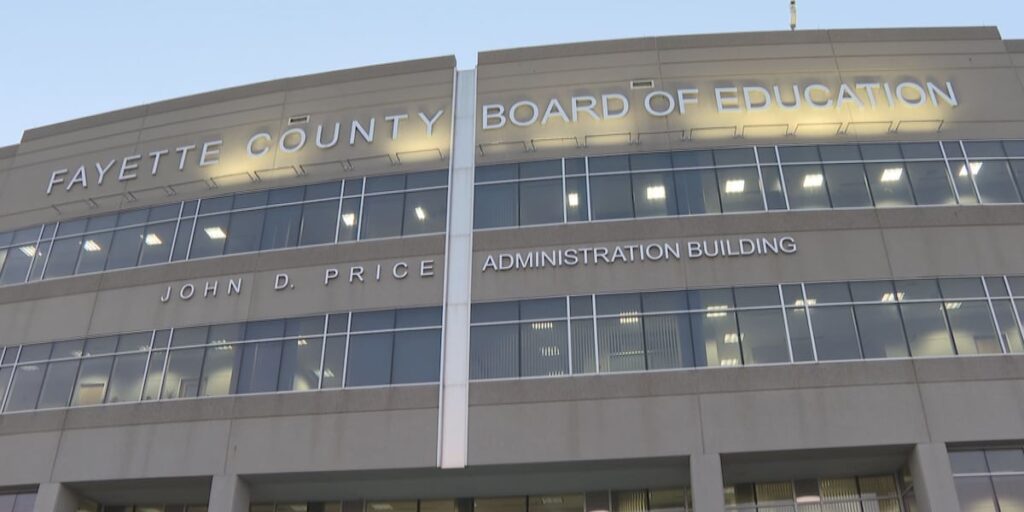
LEXINGTON, Ky. (WKYT) - A new legislative bill poised to reshape the composition of school boards in Fayette County is making its way to the governor's desk. Senate Bill 4 aims to prevent individuals who work for a school district for more than 100 days per year from serving on the school boards in Fayette and Jefferson counties, the latter being Kentucky's largest metropolitan areas by population.
The bill, which has drawn significant opposition, reflects a growing divide among lawmakers regarding the representation of educators in school governance. Several representatives from both the House and Senate expressed concerns about the implications of Senate Bill 4 during its final vote. “I have serious concerns about Senate Bill 4,” stated Senator Gerald Neal, a Democrat representing District 33.
Key Changes and Controversies
Originally introduced to establish a principal leadership development program, Senate Bill 4 underwent substantial revisions in committee, leading to changes in school board eligibility and board size specifically for Fayette and Jefferson counties. Under the new regulations, anyone employed with a school district for over 100 days annually would be ineligible to serve on the school boards.
This bill directly impacts notable figures such as Fayette County School Board Chair Tyler Murphy, who teaches in Boyle County. Murphy criticized the legislation, calling it “a slap in the face to voters” in one of Kentucky's most diverse communities, where he has been elected twice. “If the people of that county, when they vote in their school board elections, don’t want to elect that person because they teach in a different county, by all means, that’s what elections are for,” added Rep. Adam Moore, a Democrat from District 45. He articulated concerns about barring qualified candidates simply based on their employment status across county lines.
In addition to eligibility changes, the bill proposes to reduce the size of the Jefferson County Public Schools board from seven to five members, with all five seats set for election in November. While lawmakers have established new district lines for the 2026 elections, they stated that the Jefferson County Public Schools will redraw its maps in the future.
Senator Reggie Thomas, representing District 13, voiced his apprehensions regarding the bill's implications, labeling it as a potential “dangerous precedent” for codifying specific districts and regulations. The potential impact of these changes on local governance and educational policy remains a pressing concern for many legislators.
Senate Bill 4 successfully passed through both the House and Senate, and now awaits the governor's signature for final approval. Governor Andy Beshear has expressed his reservations, remarking, “A board of education that doesn’t allow an educator to sit on it, I think that’s bad policy.” However, if the governor chooses to veto the bill, lawmakers have indicated they will attempt to override his decision, ensuring that the bill could still become law.
The bill’s sponsor, Senator Stephen West, has clarified that while Tyler Murphy can complete his term, which ends in 2026, he will not be eligible to seek reelection thereafter. This raises questions about the value of educator representation on school boards, particularly in contexts where educational professionals are often the best advocates for student needs.
In response to the legislative actions, Murphy stated, “My students learn the value of civic engagement and involvement every day in my classroom. Tonight, a majority of the legislature told them that my voice as an educator has no merit on the school board in the community where I live and pay taxes.” He emphasized the critical need for educators' insights in shaping policy, urging legislators to focus on pressing issues like education funding, housing affordability, and healthcare access for vulnerable families.
As the situation develops, the implications of Senate Bill 4 will likely resonate through the communities it affects, potentially shaping the future of educational governance in Kentucky’s largest counties.
You Won’t Believe How Often You Should Wash Your Pillow Protectors—The Shocking Truth Will Change Your Sleep!

Ripple's Shocking Move: Treasury Goes Onchain! Is This the Key to XRP's Explosive Future?

Why PMGC's Shocking New Subsidiary Could Change the Defense Game Forever!

You Won't Believe Which 5 Google Pixel Models Can Finally Use AirDrop—Find Out Before It's Too Late!

Shocking Comment on Kelsey Fitzsimmons Case Sparks Police Investigation—What Did They Find?

Meet the Atlanta Startup That's Racing to Unleash Robotic Warriors—Will This Change Warfare Forever?
You might also like: