
Explosive Emails Expose Shocking Truth About RFK Jr.'s 2019 Samoa Trip—You Won't Believe What They Reveal!

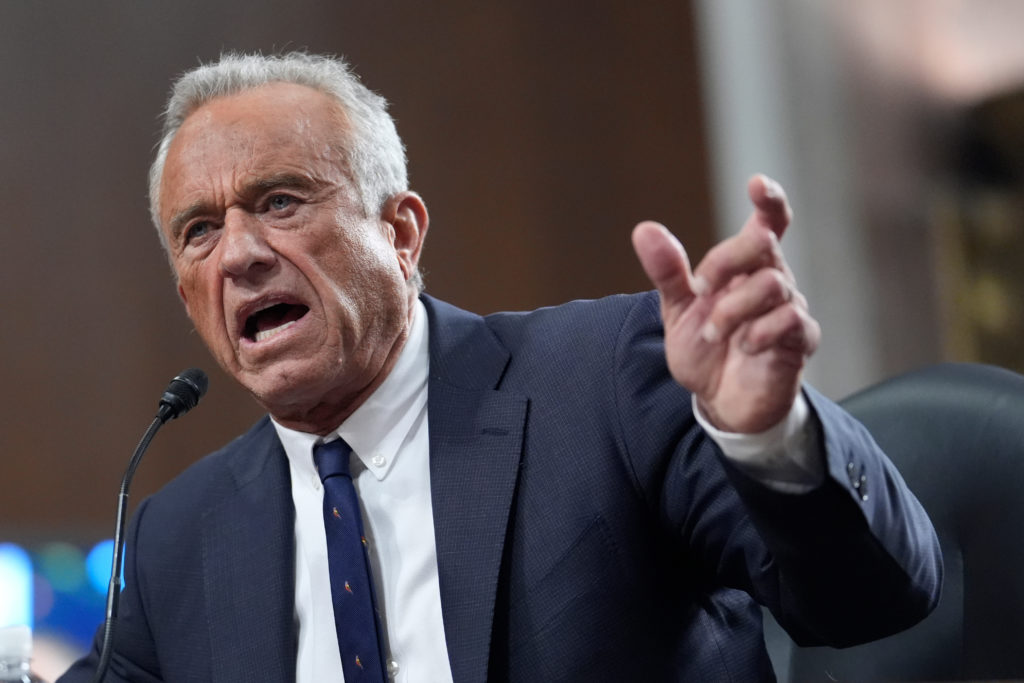
During his Senate confirmation hearings last year, Robert F. Kennedy Jr. repeatedly asserted that his 2019 trip to Samoa, which occurred before a significant measles outbreak, was unrelated to vaccines. However, newly obtained documents challenge this claim, revealing that Kennedy's concerns about vaccine safety likely motivated the visit.
Emails from U.S. Embassy staff and the United Nations, acquired by The Guardian and the Associated Press, provide a detailed account of Kennedy's trip. These communications suggest that his presence in Samoa may have emboldened anti-vaccine activists, contributing to the outbreak that ultimately sickened thousands and resulted in 83 fatalities, primarily among children under five.
These revelations have raised serious questions among lawmakers, including Democratic Senator Ron Wyden of Oregon, who stated, "Kennedy's anti-vaccine agenda is directly responsible for the deaths of innocent children." Wyden emphasized that lying to Congress about such a critical issue only underscores the dangers posed by Kennedy's influence on U.S. health policy.
The documents reveal that a staffer from the U.S. Embassy facilitated Kennedy's connections with Samoan officials. At the time, Kennedy was leading his anti-vaccine organization, Children's Health Defense. He has since claimed his trip was for purposes unrelated to vaccines, stating, "I ended up having conversations with people, some of whom I never intended to meet." Nevertheless, he met with anti-vaccine activists and government health officials, where he expressed doubts about vaccine safety.
In January 2019, prior to Kennedy's visit, an email from Lyn Redwood, then president of Children's Health Defense, indicated attempts to connect Kennedy with the Samoan Prime Minister. Following a tragic incident in July 2018, where two infants died after receiving improperly prepared measles, mumps, and rubella (MMR) vaccines, Samoa's vaccination program was halted for ten months, leading to plummeting vaccination rates.
During Kennedy's visit in June 2019, he met with Prime Minister Tuilaepa Aiono Sailele Malielegaoi, as well as various government health officials and anti-vaccine activists, including Edwin Tamasese. Despite his insistence that he did not influence vaccination decisions in Samoa, Kennedy later insinuated without evidence that the measles infections were due to vaccine defects in a letter to the Samoan Prime Minister during the outbreak.
Critics argue that Kennedy's actions may have exacerbated public skepticism about vaccines at a critical time. As measles outbreaks occur across the U.S., resulting in more than 875 cases in South Carolina alone, Kennedy's ascent in health policy raises alarms about the potential rollback of immunization successes achieved over decades.
The U.S. State Department provided these heavily redacted emails following a records lawsuit supported by the Reporters Committee for Freedom of the Press. Observers are concerned that Kennedy's position as health secretary could lead to significant changes in national immunization policy and public perceptions of vaccine safety. His anti-vaccine stance has drawn widespread criticism, particularly as health officials grapple with increasing outbreaks of preventable diseases.
As Kennedy continues to assert that his visit had no relation to vaccines, the documents suggest a more complicated narrative, raising ethical questions about transparency and accountability in public health discussions. Ultimately, the implications of these revelations could resonate far beyond Samoa, impacting the health policies that govern vaccinations across the United States.
Is AI the Secret Weapon Against Climate Change? Discover What Harvard's Shocking New Program Reveals!
NASA's Shocking Smartphone Experiment: Will Our Future in Space Be Controlled by Your Phone?
Is Your Browser Putting You at Risk? Discover the Shocking Truth Before It's Too Late!
JJ Redick Drops a Bombshell on Lakers' Trade: Is This Move a Game-Changer or a Total Bust?
Gary Vee's Shocking Secrets to Success: 5 Strategies That Could Make You a Millionaire Overnight!
You Won't Believe How This $60 Million Investment Is Changing Women's Soccer Forever!
You might also like: