
EPA’s Shocking Move: How Revoking This Key Rule Could Cost Us $100 Billion in Climate Defense!

In a significant policy shift, the Trump administration has revoked a crucial scientific finding that served as the basis for U.S. regulations on greenhouse gas emissions. This decision marks one of the most aggressive moves by the Republican president to roll back environmental protections aimed at combating climate change.
The Environmental Protection Agency (EPA) has finalized a rule that rescinds the 2009 "endangerment finding," a declaration established under the Obama administration. This finding classified carbon dioxide and other greenhouse gases as threats to public health and welfare, thereby underpinning nearly all climate regulations enforced through the Clean Air Act. Experts warn that this repeal not only eliminates greenhouse gas emissions standards for cars and trucks but could also lead to a broader dismantling of climate regulations concerning stationary sources such as power plants and oil and gas facilities.
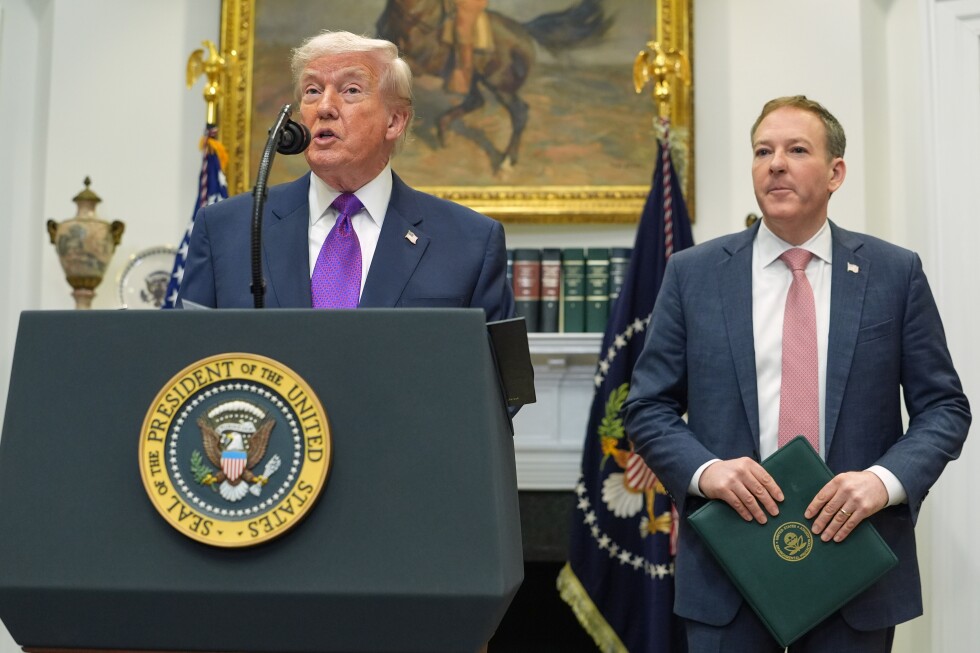
President Donald Trump characterized the repeal as “the single largest deregulatory action in American history, by far.” EPA Administrator Lee Zeldin echoed this sentiment, labeling the endangerment finding as “the Holy Grail of federal regulatory overreach.” Trump dismissed the finding as “one of the greatest scams in history,” asserting that it lacked any factual basis. He claimed that fossil fuels have historically contributed to saving lives and alleviating poverty, despite overwhelming scientific consensus that greenhouse gases are driving severe climate impacts like heatwaves, storms, and rising sea levels.
Environmental groups have sharply criticized the repeal, viewing it as a historically unprecedented attack on federal authority to combat climate change. They argue that evidence supporting the endangerment finding has only strengthened over the last 17 years. “This action will only lead to more climate pollution, and that will lead to higher costs and real harms for American families,” stated Fred Krupp, president of the Environmental Defense Fund. He emphasized that the consequences would extend to health, property values, and water supply, among other issues.
The EPA's recent actions also include proposing a two-year delay on a Biden-era rule aimed at restricting greenhouse gas emissions from cars and light trucks. Additionally, the agency has decided to end incentives for automakers who implement automatic start-stop ignition systems, which are designed to reduce emissions but have been criticized by Zeldin as unpopular among consumers.
In the broader context, the repeal of the endangerment finding comes after a 2007 Supreme Court ruling that confirmed greenhouse gases are classified as air pollutants under the Clean Air Act. This decision arose from the case Massachusetts v. EPA, and subsequent court rulings have consistently upheld the endangerment finding, including a 2023 decision by the U.S. Court of Appeals for the District of Columbia Circuit. Thus, the endangerment finding is widely viewed as the legal foundation for numerous regulations designed to mitigate climate threats, such as deadly floods and extreme weather events.
Gina McCarthy, a former EPA administrator who served as White House climate adviser under President Biden, condemned the move as reckless. She stated, “This EPA would rather spend its time in court working for the fossil fuel industry than protecting us from pollution and the escalating impacts of climate change.” Former President Barack Obama also weighed in, asserting that the repeal would make Americans “less safe, less healthy, and less able to fight climate change—all for the benefit of the fossil fuel industry.”
Health experts have raised alarms over the potential consequences of this policy shift. Dr. Lisa Patel, a pediatrician and executive director of the Medical Society Consortium on Climate and Health, warned that the repeal prioritizes profits for oil and gas companies over public health, stating, “As a result of this repeal, I’m going to see more sick kids come into the Emergency Department having asthma attacks and more babies born prematurely.”
Trump's administration has framed the repeal as a necessary step to restore what they describe as “energy and economic sanity.” Myron Ebell, a conservative activist who has questioned climate science, expressed support for the repeal, viewing it as a pivotal move against regulations deemed overly restrictive.
The Trump administration's actions signify a major pivot in U.S. climate policy, one that could influence emissions standards and regulations for years to come. As this debate unfolds, the implications for American families and the environment will likely be profound, raising questions about the future of climate action in the country.
Unveiling the Titan 2 Elite: Is This the Smartphone That Will Change Everything? Don't Miss Out!

Ohio Libertarians Are SHOCKING Voters: Will They Turn the Election Upside Down? Find Out!

Amazon’s Bold Exodus: 500 Employees Ditch Jobs for Startups – What’s the Shocking RTO Secret?

Why Mehmet Oz's Last-Minute Vaccine Plea Could Change Everything - Are You Prepared?

White House's Shocking Move: How the CLARITY Act Could Change Your Life—Don't Miss Out!

You Won't Believe the 7 Valentine's Day Movies That Will Change Your Love Life Forever!
You might also like: