
Endless Rains and Shocking El Niño: Is This the End of Seasonal Weather as We Know It?

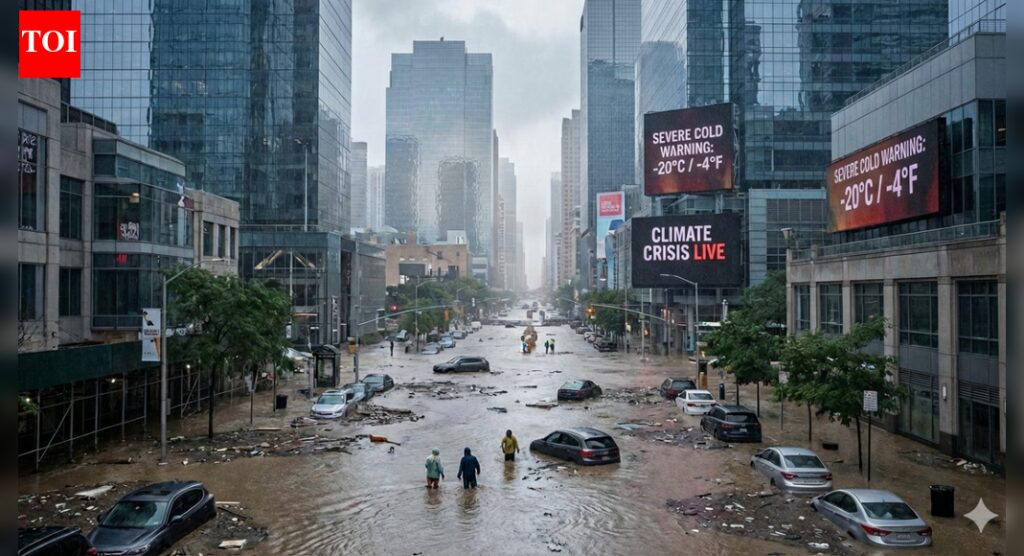
The traditional rhythm of seasons—once predictable and reliable—has begun to falter, marking a significant shift in how we experience time and weather. Recently, Delhi celebrated Christmas with an average temperature of 14°C, only to be met with the coldest New Year’s Eve in five years. Such erratic weather patterns highlight a broader trend: climate change is disrupting the familiar cadence of seasonal changes that have shaped human life for centuries.
Human existence has long been intertwined with seasonal rhythms, from the cool promises of winter to the vibrant renewals of spring. These transitions serve as a natural timetable for ecosystems and societies alike. Dr. Milap Punia, a geography professor at Jawaharlal Nehru University (JNU), emphasizes that “nature's timetable” helps both human societies and ecosystems function smoothly. For many species, seasonal cues dictate critical life events such as flowering, migration, and reproduction, aligning their life cycles with the availability of food and resources.
📰 Table of Contents
The Disappearing Seasons
The familiar four-part division of the year is dissolving. Winters are becoming milder, summer arrives earlier, and rainfall patterns have turned erratic. In many regions, the “seasonal clock” that communities have depended on for generations is breaking down. For example, in Kashmir, the springtime rainy season known as "sonth" has largely vanished, replaced by prolonged dry spells and earlier-than-usual snowmelt. This disruption poses a serious challenge to agriculture, food security, and livelihoods in a country where cultural traditions are deeply tied to seasonal rhythms.
According to Dr. Punia, shifts in seasonal patterns are not just minor inconveniences; they jeopardize food security and health. He likens the functioning of seasonal rhythms to a traffic signal system—when everything works as it should, life flows smoothly. However, when the signals fail or change unexpectedly, confusion and disruption ensue across both nature and society.
Data suggests that by 2040, significant land submergence could impact coastal cities like Mumbai, Panaji, and Chennai due to rising sea levels. Additionally, extreme weather is becoming the norm; for instance, 99% of days from January to September 2025 experienced extreme weather events in India. With about 60% of districts facing high-to-very-high heatwave risk, the implications for human health and agriculture are dire.
Erratic rainfall patterns further complicate matters. Monsoons are no longer predictable, leading to greater uncertainty for farmers and water managers. Rising temperatures are contributing to longer heatwaves, as evidenced by a severe heatwave that began unusually early in April 2025, with temperatures reaching far above normal seasonal averages.
The Science Behind the Shift
This shift in seasonal behavior is largely attributed to global warming, primarily driven by the burning of fossil fuels and rising greenhouse gas concentrations. Over decades, data has demonstrated that Earth's average surface temperatures have risen significantly beyond pre-industrial levels. Such changes are disturbing the natural heat balance, leading to earlier springs and shorter winters, while extreme weather events become more frequent and intense.
In the tropics, including India, warming oceans play a significant role. Rising temperatures in the Indian Ocean enhance convection, altering atmospheric circulation and redirecting moisture-laden winds. This has contributed to a rise in extreme weather events and a shift in rainfall patterns, particularly affecting traditionally productive agricultural regions.
The impact on agriculture is particularly severe in agrarian economies. Changes in seasonal timing can disrupt planting and harvesting schedules, leading to increased pest pressures and reduced yields. Farmers are responding by intensifying irrigation and adjusting cropping calendars, increasing their vulnerability, particularly for small and marginal farmers. In regions like semi-arid Rajasthan, biodiversity and ecosystem functions are closely tied to narrow seasonal cycles. Disrupted seasonality exacerbates water scarcity, affecting both agricultural productivity and overall livelihoods.
The collapse of clear seasons affects nearly every facet of human life. Festivals, cultural practices, and agricultural cycles are increasingly at risk due to the blurring of seasonal boundaries. When seasons no longer follow predictable patterns, communities may need to adapt or lose essential cultural contexts.
The situation is urgent. Dr. Punia encapsulates the gravity of the climate crisis by comparing it to a ship that has struck an iceberg: while it has not completely sunk, water is flooding the lower decks, and the time for preventing a catastrophic failure is dwindling. The implications for the future are profound, as scientists predict that if greenhouse gas emissions continue on current trajectories, seasonal disruptions will only worsen.
In conclusion, the disappearance of traditional seasons is not merely a climatic oddity but a pressing reality that demands immediate attention. Recognizing these changes is the first step toward adaptation and mitigation in a world where the climate no longer adheres to the patterns we once took for granted.
You Won't Believe These 3 Healthy Snacks Are Just 5 Minutes Away From Becoming Your New Obsession!

Why Are 80% of Apple Watch Users Crushing Their Fitness Goals? Shocking Study Reveals the Secret!

First Traitor Exposed and Banished! Who's the Secret Saboteur Ready to Strike Next?

Venezuela's Shocking U.S. Capture: How Trump's Bold Move Could Change Everything!

Davidson's Stunning Comeback: You Won't Believe How They Defied the Odds Against Saint Joseph's!

Senator Katie Boyd Britt's Shocking $158K Stock Market Loss—Is Her Financial Future at Risk?
You might also like: