
Elon Musk's Shocking War Warning: Is Nvidia the Trigger for Global Chaos? Don’t Miss This!

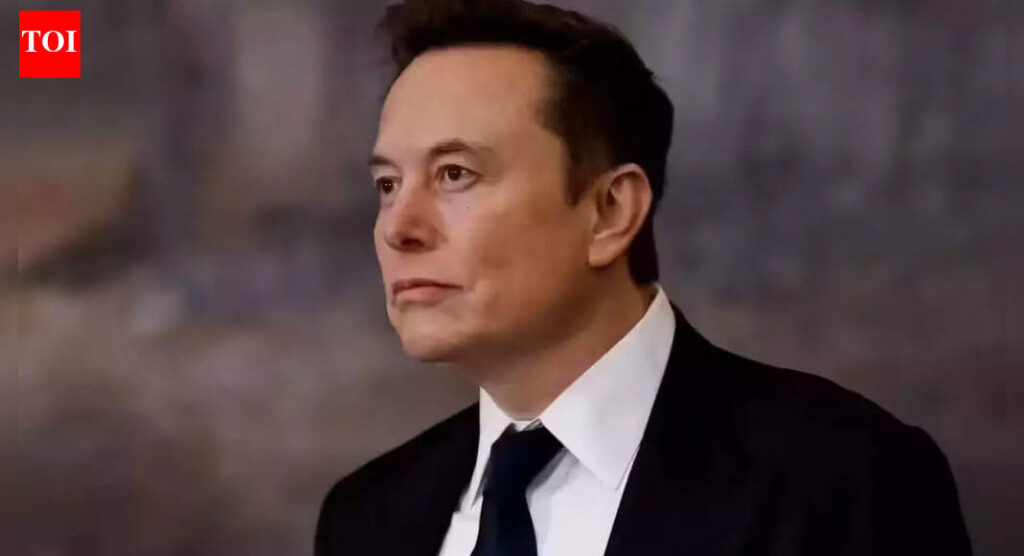
Tesla CEO Elon Musk has sounded the alarm over what he describes as an impending “all-out war” in the realm of artificial intelligence hardware, a conflict he believes will be significantly fueled by Nvidia’s next-generation Blackwell chips. This stark warning came in response to remarks by investor Gavin Baker during the Invest Like the Best podcast, where he discussed the burgeoning competition among major players in AI infrastructure. Baker emphasized that Nvidia’s Blackwell platform could dramatically reshape the economic landscape of AI once it is fully operational.
On social media platform X, formerly known as Twitter, Musk reiterated the competitive nature of this technological race, stating, “AI is the highest ELO battle ever. Speed of deployment of hardware, especially robotics, is the [linchpin].” The ELO rating system, originally developed for chess, has evolved to rank performance across various fields, including esports and large language models, highlighting Musk’s view of AI as a high-stakes contest focused on speed and capability.
The Stakes of Hardware Development
Baker elaborated on the complexities surrounding Nvidia’s transition from its Hopper to Blackwell chips, describing it as “by far the most complex product transition we’ve ever gone through in technology.” Key challenges include increased power consumption, the necessity for liquid cooling systems, heavier racks, and effective heat management. These delays have temporarily benefited Google, allowing it to emerge as a low-cost producer of AI “tokens.” Baker pointed out that Google’s aggressive pricing strategy, while rational, risks “sucking the economic oxygen out of the AI ecosystem.”
The first significant AI models utilizing the Blackwell chips are expected to debut by early 2026, with Musk’s xAI potentially among the initial adopters. The newer GB300 systems are designed to be “drop-in compatible,” which could position Nvidia-powered AI systems as the most cost-effective solutions moving forward. This shift could compel Google to reassess its current low-cost model, which may put pressure on its profit margins and stock performance. Baker emphasized that enduring substantial losses would be “painful,” possibly leading to a significant alteration in competitive behaviors across the AI industry.
In addition to the hardware race, Meta Platforms is reportedly in discussions to acquire Google’s tensor processing units (TPUs) for its data centers by 2026, with plans for broader deployment by 2027. While Nvidia acknowledges Google’s advancements, it asserts that it remains “a generation ahead” of its competitors. Musk’s warning underscores the hardware-centric nature of the AI race, where speed, scalability, and cost efficiency will ultimately determine the victors.
As Nvidia's Blackwell chips get ready to redefine the economic landscape of AI, and with Google, Meta, and other tech giants jockeying for position, the next two years could be pivotal in the global AI infrastructure war. The implications of this competition extend beyond the tech world, potentially affecting everything from job markets to economic structures as AI technology becomes increasingly integrated into various industries.
Cibolo’s Election Day Shock: Who Will Claim the Two Crucial Council Seats? You Won't Believe the Candidates!

Is Lockheed Martin's Secret NGI Plant About to Revolutionize Defense Tech—And Leave Rivals in the Dust?

You Won't Believe What Happens When the Orlando Magic Face the Knicks—Shocking Injury Updates Inside!

Shocking Lions 2026 Schedule Leak: You Won’t Believe What Teams They Face First!

Flu Scare or Reality? BMA Exposes Shocking Truth Behind Doctor Strikes—You Won't Believe What They Found!

Election Board Member Caught at Trump Rally—What This Shocking Violation Means for Your Vote!
You might also like: