
Elon Musk's Shocking Confession: Did He Sabotage Twitter's Stock Before His Takeover?

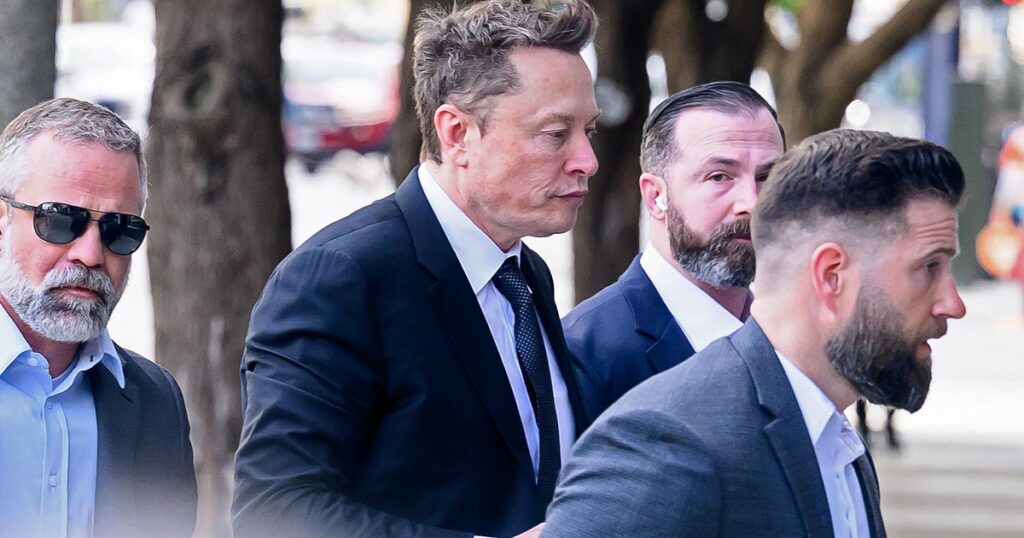
In a dramatic turn of events, billionaire Elon Musk took the stand in a shareholder trial on Wednesday in San Francisco, where he faces allegations of making false statements that allegedly drove down Twitter's stock price prior to his acquisition of the social media platform for $44 billion in 2022. The lawsuit, filed in October 2022 in the U.S. District Court for the Northern District of California, represents Twitter shareholders who sold their stock between May 13 and October 4, 2022, just weeks before Musk's purchase was finalized. The plaintiffs claim that Musk's public statements were strategically misleading, asserting that they were "carefully calculated to drive down the price of Twitter stock," violating federal securities laws.
Musk struck a deal to buy Twitter in April 2022, but on May 13, he declared that the acquisition was "temporarily on hold," citing a need to confirm the number of spam and fake accounts on the platform. This announcement triggered a substantial drop in Twitter's stock, which plummeted nearly 10% on that day. Shortly thereafter, Musk tweeted that the deal "cannot go forward," alleging that almost 20% of Twitter accounts were "fake," a statement central to the lawsuit.
The lead plaintiff's attorney, Aaron P. Arnzen, began his questioning by focusing on Musk's social media activity—or lack thereof—regarding his Twitter stock purchases before deciding to take the company private. In response, Musk, dressed in a black suit and tie, asserted that he did not consider it "material" to disclose his Twitter stock acquisitions to the Securities and Exchange Commission (SEC) before making his intentions public. He highlighted that he had invested in "many companies" without making public declarations. However, after Musk disclosed his stake in Twitter, the company's stock skyrocketed by 27% in just one day.
Arnzen challenged Musk's claim that the May 13 tweet was an innocuous remark, presenting it as a misrepresentation since the merger agreement allowed no provision for Musk to pause the deal. Musk defended his statements, suggesting that calling the deal "temporarily on hold" was akin to notifying someone of being late for a meeting, indicating his commitment to the acquisition.
As the trial progressed, Arnzen sought to understand Musk's thought process behind the tweet and its potential market implications. Musk maintained that he was "simply speaking my mind" and did not contemplate how his words would affect Twitter's stock price. The lawsuit contends that in the weeks following his initial statements, Musk continued to express doubts about the deal, attempting to delay it or ultimately break it off.
In July 2022, Musk intensified his focus on the issue of bots, claiming he would abandon the acquisition unless Twitter provided adequate information regarding the number of fake accounts. It's worth noting that Musk had previously waived due diligence in his "take it or leave it" offer, relinquishing his right to investigate Twitter's nonpublic financial records. When questioned about whether he inquired about Twitter's methodology for estimating fake accounts, which the company had disclosed to be about 5%, Musk admitted that he did not but expressed an assumption that the SEC filings would be accurate. "It subsequently turned out they misrepresented the number of bots," he stated. "They lied."
On July 8, after declaring his intent to walk away from the deal, Twitter's stock closed at $36.81—32% below Musk's offered price of $54.20 per share. The lawsuit claims that Musk’s materially false statements and omissions constituted a scheme to deceive the market, in direct violation of the law.
The issue of bots on Twitter is not a new one. In fact, the company had previously paid $809.5 million in 2021 to settle claims of overstating its growth rate and user figures, and had disclosed its bot estimates to the SEC for years, cautioning that these numbers may be underestimated.
Ultimately, Twitter sued Musk to compel him to complete the deal, leading to a countersuit from Musk. On October 4, 2022, he proposed to proceed with the original $44 billion acquisition, a move that Twitter accepted. The deal closed later that month, after which Musk implemented significant changes to the company, including workforce reductions, dismantling content moderation policies, and rebranding Twitter as 'X' in July 2023.
This court case isn't Musk's first brush with legal scrutiny related to his social media statements. Three years ago, he testified for about eight hours regarding his plans to buy Tesla for $420 per share, a deal that fell through. In that instance, a nine-member jury found him not liable for wrongdoing.
As this case unfolds, it highlights the intricate relationship between social media, corporate governance, and the responsibilities of high-profile executives. The outcome could have significant implications not only for Musk but also for the way social media statements are perceived in the financial world.
Seahawks Star Faces SHOCKING Injury Update—Fans Are Left in TOTAL Panic! What Happens Next?

Measles Outbreak Hits Colorado School: 3 Cases and Counting—Is Your Child Safe?

You Won't Believe What Happened at Jeff Cook's Exclusive Client Appreciation Event—Shocking Surprises Await!
Is This the Unbelievable Chance Ty Simpson Needs? Why the Cardinals Could Change Everything!

Legendary Coach Lou Holtz's Shocking Death at 89: What It Means for Notre Dame Football!

Devastating Loss: How the Christopher Boys Soccer Team Shockingly Missed CCS Glory by Just ONE Goal!
You might also like: