
Egypt's Bold $1 Billion Startup Gamble: Will It Transform the Future or Crash and Burn?

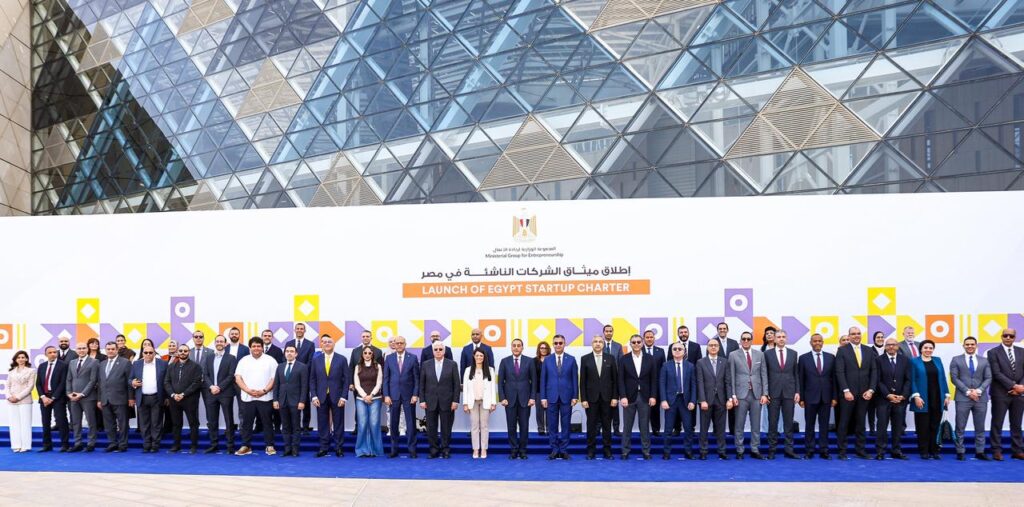
On Saturday, Egypt took a significant step toward bolstering its entrepreneurial landscape by launching its first national “Startup Charter,” with an ambitious goal of mobilizing $1 billion in financing over the next five years. The initiative aims to create approximately 500,000 direct and indirect jobs and support up to 5,000 startups throughout the nation.
The charter was unveiled by Prime Minister Mostafa Madbouly and Minister of Planning, Economic Development and International Cooperation Rania Al-Mashat. It follows more than a year of discussions involving 15 national entities and over 250 representatives from the entrepreneurial community, including members of parliamentary committees and venture capital funds.
“Egypt’s Startup Charter is not merely a theoretical document, but rather a flexible, executable tool that evolves continuously,” Al-Mashat stated. The charter aims to provide a solid foundation for updating legislation to align with fast-paced technological shifts.
A significant focus of the charter is the establishment of the first officially recognized, unified definition of startups. This classification distinguishes startups as newly established, high-growth companies centered on innovative products or business models. By obtaining classification certificates from small and medium enterprise authorities, these firms can access specific government incentives and facilitation measures.
The government plans to achieve its $1 billion funding target by coordinating resources among state entities and activating co-investment mechanisms with the private sector. The financing initiative aims to maximize the effectiveness of available government resources by potentially amplifying their impact by up to fourfold through financial guarantees and partnerships with venture capital.
Moreover, the charter introduces a “Startup Scale-Up Empowerment Programme,” targeted at mature startups. This program aims to facilitate billion-dollar investments, enable stock market listings or strategic exits, and cultivate the creation of “unicorn” companies that can expand regionally and internationally.
During the 13th annual RiseUp Summit, held at the Grand Egyptian Museum, Prime Minister Madbouly emphasized that the charter serves as an executive tool to transition Egypt toward a knowledge-based economy. “The building of nations will not be achieved without the building of minds, and the most precious thing Egypt possesses is the minds of its youth,” he remarked. He further noted that the government has undertaken significant structural reforms since March 2024, including stabilizing the exchange rate and curbing inflation, to foster a favorable environment for private sector growth.
To improve the overall business landscape, the charter proposes measures such as simplifying tax procedures, easing liquidation and exit processes, and providing a unified guidance manual that covers all government permits and licenses. This manual was developed in collaboration with Intilaaq and UN Women.
In a bid to monitor progress and collect data on policy implementation, the government also established an Entrepreneurship Policy Observatory. This observatory includes a “Council of Elders” with representatives from the startup community, tasked with providing direct oversight and submitting recommendations to the Ministerial Group for Entrepreneurship, officially established by decree in September 2024.
The roadmap laid out in the charter identifies priority sectors for innovative solutions, including deeptech, AgriTech, and TravelTech, aimed at connecting state challenges with startup-led innovation. This strategic focus could catalyze new ventures and partnerships, propelling Egypt's growth in key areas.
As Egypt positions itself to become a regional startup hub, the Startup Charter could pave the way for a new era of innovation and economic development. By attracting investment and nurturing homegrown talent, this initiative reflects a commitment to harnessing the potential of the country’s youth, ultimately contributing to a more dynamic and sustainable economic future.
Did the Rockets Just Sabotage Their Future by Ignoring This $200M Star at the Trade Deadline?
You Won't Believe What Ann Michael Maye Uncovered About Hingham's Needlepoint Craze – Shocking Details Inside!
White House Declares War on 15 Nations! Find Out Who's Next in Iran Trade Chaos!

Is Your Midnight Snack Sabotaging Your Sleep? Shocking Truth Inside That Could Change Everything!

Is Bad Bunny REALLY getting $10 million for the Super Bowl halftime show? You won't believe the truth!

You Won’t Believe How the Harbor Boys Soccer Team Shocked Everyone with a 12-0 Victory! What’s Next?
You might also like: