
Democrats on the Brink: Will a $1B ICE Reform Demand Lead to a Historic Government Shutdown?

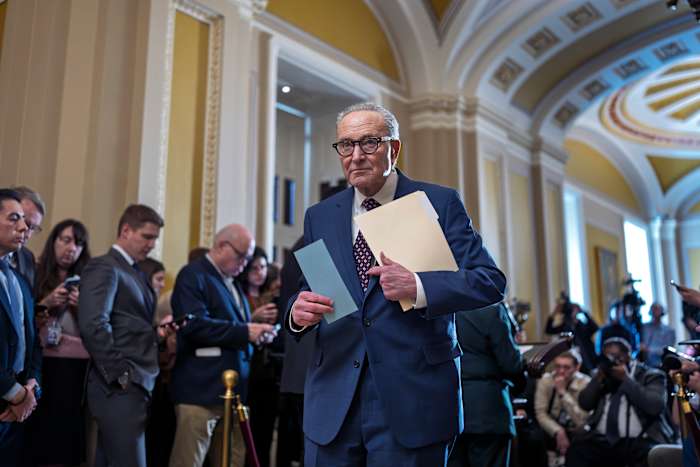
WASHINGTON – Tensions are escalating in Congress as Senate Democrats prepare to block crucial funding legislation for the Department of Homeland Security (DHS) and several other federal agencies, inching the government closer to a partial shutdown. This standoff comes amid public outrage following the deaths of two protesters at the hands of federal agents in Minneapolis, igniting a heated debate over immigration enforcement policies under President Donald Trump's administration.
As negotiations intensify ahead of a test vote scheduled for Thursday morning, Senate Democrats have outlined a series of demands aimed at curbing the aggressive tactics employed by U.S. Immigration and Customs Enforcement (ICE). Among these requests are calls for federal agents to remove their masks to disclose their identities, obtain warrants before making arrests, and adhere to the same standards of accountability expected of local law enforcement agencies.
Senate Democratic Leader Chuck Schumer emphasized the need for reform, stating, “The American people support law enforcement, they support border security, they do not support ICE terrorizing our streets and killing American citizens.”
The growing discontent among Senate Democrats has resulted in a unified front, with figures like Minnesota Senator Tina Smith asserting that the “lawless ICE agents” must operate under the same rules as local police. “There has to be accountability,” Smith said following a caucus meeting. Democrats are especially insistent on curtailing ICE's “roving patrols” in urban areas and establishing stricter regulations on immigration arrests.
In a potential move towards resolution, the White House has shown a willingness to negotiate with Senate Democrats to prevent a shutdown, which is slated for midnight on Friday. Discussions have included the possibility of separating DHS funding from the broader spending package, thereby allowing for more focused negotiations without risking a government shutdown.
Still, significant challenges lie ahead. The impasse is reminiscent of a previous shutdown that lasted 43 days earlier this year, during which Democrats refused to support a spending bill over federal health care subsidies. This time, however, the Democratic caucus appears more united in their stance against ICE's enforcement tactics, particularly in light of the recent fatalities.
The House of Representatives passed the remaining six funding bills last week, complicating the Democrats' request to strip the Homeland Security portion from the package. These bills were sent to the Senate as a bundled package, meaning that any attempt to amend them would require consent from all 100 senators or a series of votes that could extend beyond the impending deadline.
Despite ongoing negotiations, Republican leaders remain firmly aligned with President Trump and ICE, indicating resistance to any modifications that could empower Democrats. The conservative House Freedom Caucus issued a letter to Trump asserting their commitment to support the current funding plan without alterations to DHS appropriations. “The package will not come back through the House without funding for the Department of Homeland Security,” the letter stated.
Some Republican senators have expressed openness to separating the DHS funding for further discussion; however, they are less likely to support the Democrats’ demand for ICE agents to reveal their identities. Senator Thom Tillis from North Carolina raised concerns about safety, stating, “There are a lot of vicious people out there, and they’ll take a picture of your face, and the next thing you know, your children or your wife or your husband are being threatened at home.”
While some Republican senators, such as John Cornyn of Texas, acknowledged the tragedy of recent events, they cautioned against using a government shutdown as a political tool. “What happened over the weekend is a tragedy,” Cornyn remarked, adding that a shutdown would unjustly penalize the American public.
Democrats, however, remain resolute in their demands, framing the situation as a moral imperative. Senator Richard Blumenthal from Connecticut articulated the stakes, saying, “It is truly a moral moment. I think we need to take a stand.”
As both parties engage in high-stakes negotiations, the implications of their decisions will reverberate beyond the Capitol, affecting countless Americans who depend on the stability of federal services. The coming days will be critical as lawmakers grapple with the balance between immigration enforcement and public accountability.
Giannis on the Move? Shocking Bucks Trade Rumors Could Change NBA Forever!
You Won't Believe What Happens When Access to This Page is Denied! Find Out the Shocking Truth!
You Won't Believe What Happens Next: 5 SHOCKING Secrets Revealed!

Ex-NFL GM Drops BOMBSHELL: Belichick's Hall of Fame Future Hangs by a THREAD! What You Must Know!

Tesla’s Shocking $2 Billion Bet on Controversial xAI Startup Leaves Shareholders Fuming—What Happens Next?

I Swung a Kettlebell 300 Times a Day for 30 Days—You Won't Believe What Happened Next!
You might also like: