
Dallas County GOP’s SHOCKING Decision: No Hand Count for Primary Ballots—What’s Really Going On?

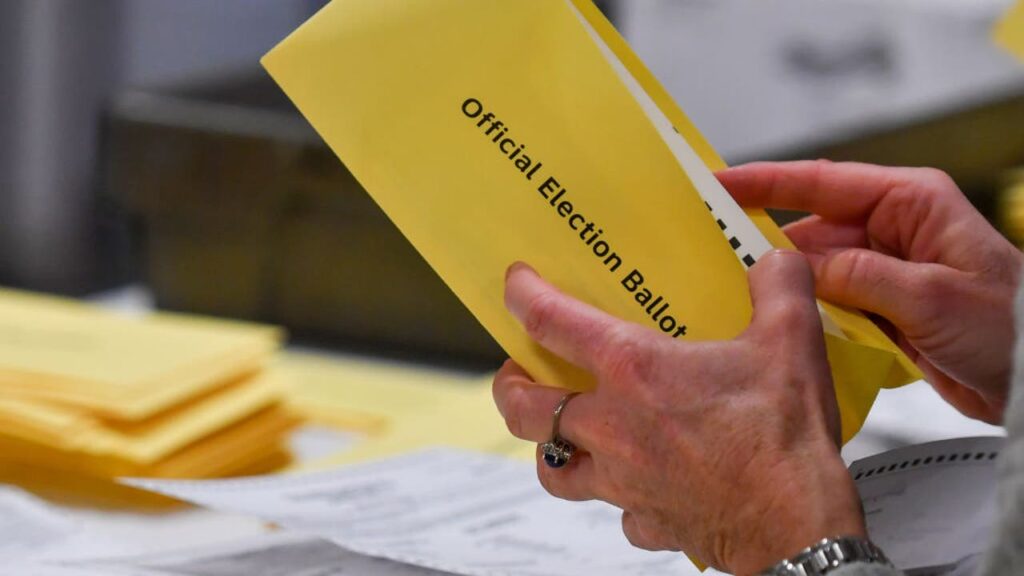
In a significant shift ahead of the upcoming March primary, the Dallas County Republican Party has abandoned its plan to hand-count ballots due to a lack of sufficient volunteers. This decision, announced by Dallas County GOP Chairman Allen West, comes as the party sought over 3,000 volunteers to manage the hand-counting of votes, a requirement deemed necessary to ensure accuracy and integrity. As the deadline for their contract with the county approached on December 29, the party concluded that the risks associated with an insufficient volunteer turnout outweighed the benefits of hand-counting.
“If you can mitigate those risks, then you can move forward. If there’s no path to mitigation, then you can’t continue on,” West explained. He emphasized the legal implications of failing to have enough counters, which could place election judges in a precarious position. With this decision, the party will revert to utilizing electronic tabulating equipment for the election.
Despite this setback on the hand-counting front, the Dallas County Republican Party plans to implement a "precinct-based" voting system for the primary. This means that Republican voters will be restricted to casting their ballots only at their designated neighborhood polling places on Election Day. In contrast, the Dallas County Democratic Party intends to maintain countywide voting, allowing voters to access any polling location in the county. This divergence in voting methods could create logistical challenges at shared polling sites, particularly for voters participating in the joint primary.
Under Texas law, a situation where one party opts for precinct-based voting while another allows countywide voting can complicate the electoral process. Officials are currently working to clarify the implications of these differing approaches for voters and polling site logistics.
Looking ahead, West noted that the lessons learned from this cycle will inform their preparations for a potential hand-count during the 2028 presidential primary, suggesting a commitment to revisiting this method in the future if feasible. Early voting for the March primary is scheduled to begin on February 17, marking the start of a critical period for voters.
This development in Dallas is a reflection of broader trends in American elections where the integrity and efficiency of the voting process have come under increased scrutiny. As political parties navigate the complexities of election logistics, the decisions made—whether they lean towards traditional hand-counting or modern electronic methods—will have lasting implications on voter confidence and participation.
The decrease in volunteer engagement and its impact on election processes illuminate a growing concern across various regions in the U.S., where participation rates can vary significantly. Recent statistics from municipal elections in Pennsylvania reveal that only about 15% to 27% of eligible voters have participated in recent elections, underscoring a trend of low voter turnout that merits attention as Election Day approaches.
As the March primary draws nearer, the Dallas County Republican Party’s approach will be closely watched. Voters and political analysts alike will be interested to see how these changes affect voter engagement, election integrity, and ultimately, the outcomes of the primaries.
Oregon vs. Texas Tech: You Won't Believe the Shocking Upset That Just Changed Everything!

Unlock the Secret: How One NBA Star Scored 70+ Points and Ruined Fantasy Dreams!

Is mRNA Vaccine Technology the Key to America’s Future—Even Without Trump? Shocking Insights Revealed!

Trump’s Shocking Health Confession: "I Take DOUBLE the Aspirin!" - What Does This Mean for America?

Microsoft Engineer Reveals SHOCKING Truth About Bill Gates Calls—You Won’t Believe Who They Were REALLY Transferred To!
You Won't Believe Why This Shocking Legal Case Is Keeping a Millionaire Silent!
You might also like: