
Could the Unthinkable Link Between Giraffes and Poop Save an Entire Species? You Won't Believe How!

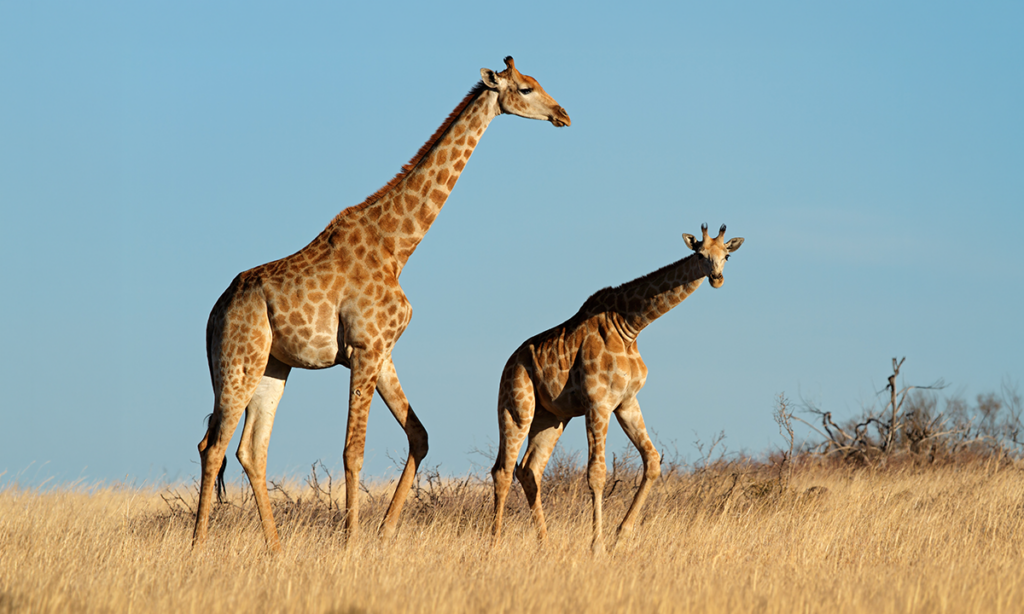
In a remote field camp in Kenya, Jenna Stacy-Dawes, an expert on population sustainability of wild animals with the San Diego Zoo Wildlife Alliance (SDZWA), introduces a groundbreaking method for tracking vulnerable giraffes. Surprisingly, this innovative approach hinges on one of nature's less glamorous aspects: giraffe scat. “It kind of looks like a Hershey’s kiss,” she remarks, holding up a small sample. For an animal that can reach heights of 18 feet, their droppings are surprisingly modest in size.
Stacy-Dawes explains to a team of researchers the significance of analyzing giraffe poop. “What can we get from poop data? Everything,” she states. These tiny nuggets can unveil a wealth of information about giraffes—ranging from their diet and habitat preferences to genetic data that might help distinguish critically endangered subspecies. With only one giraffe for every four elephants in Africa, knowledge about these majestic creatures remains alarmingly sparse, contrary to the popular belief that they are thriving due to their frequent appearances in documentaries and zoos.
Conventional tracking methods for these long-necked giants are fraught with challenges, often requiring the use of tranquilizers to fit them with GPS trackers. “Giraffe react really poorly to the drugs that are used to bring them down,” Stacy-Dawes notes. The unpredictable reactions can lead to dangerous situations for both the giraffes and the field teams. In contrast, collecting and analyzing scat provides a humane, cost-effective solution, especially since evidence of giraffes can be found nearly everywhere in the savanna. “You literally can’t walk more than 10 feet in the savanna without stumbling over giraffe fecal material,” adds Mrinalini Erkenswick Watsa, a geneticist from SDZWA working on adapting existing technologies for this purpose.
In 2025, the International Union for Conservation of Nature (IUCN) made a significant announcement: giraffes, once classified as a single species, were re-categorized into four distinct species—Masai, reticulated, Southern, and Northern giraffes. Each of these species has been further divided into seven subspecies, a development that emphasizes the need for targeted research and conservation efforts. However, telling these species apart visually is nearly impossible. “Coat pattern is not a good tool,” explains Julian Fennessy, director of the Giraffe Conservation Foundation. The similarities in their appearance mask significant biological differences, akin to contrasting polar bears with grizzly bears.
Over the last 300 years, giraffe populations have plummeted, with their range reduced by 90% across Africa. Fennessy attributes this decline largely to human activity—population growth, agricultural development, and landscape fragmentation have all contributed to the giraffe's precarious situation. “Humans doing what they do,” he remarks, underscoring the impact of human behavior on wildlife.
As giraffes face varying levels of threat, some subspecies are critically endangered. Conservation efforts must adapt accordingly; for instance, giraffes are often hunted for food in regions afflicted by famine or civil strife, a grim reality referred to as “war fodder.” “One bullet brings a hell of a lot of food for people,” Fennessy explains. Conversely, in more stable areas like South Africa, giraffe populations are actively managed, with careful translocation efforts aimed at bolstering numbers in national parks.
Stacy-Dawes highlights the potential of fecal testing to inform these translocation decisions, allowing scientists to confirm a giraffe’s species and ensure that individuals are not moved into unsuitable habitats. In 2019, she collaborated with international researchers to publish updated geographic range maps for the four giraffe species across sub-Saharan Africa. “There’s parts of Southern Ethiopia or Western Somalia where there could be giraffe, but people just don’t go there,” she notes, emphasizing the need for more research to fill these gaps in knowledge.
After their training, the field research team set out in search of giraffes, returning late in the day with 24 fresh scat samples. Each sample was matched to identified individuals, an exhausting but rewarding endeavor that highlights the effectiveness of this new tracking method. “Poop is gold,” Erkenswick Watsa declares, underscoring its value in the urgent fight for giraffe conservation.
As this research continues to evolve, it offers hope for giraffe populations across Africa. By integrating innovative methods like scat analysis, conservationists can better understand these majestic creatures and implement more effective strategies for their survival.
Samsung's Shocking Giveaway: Win the $1,200 Galaxy S26 Ultra & Buds4 Pro—But Time is Running Out!

You Won't Believe How NS's Shocking Deal with Georgia Tech Could Transform Rail Careers Forever!
Is Your Home at Risk? The Alarming Climate Change Gap Experts Are Ignoring!

You Won't Believe What Rock Entertainment Just Unveiled: A Shocking New Venue Next to the Practice Facility!
Why Geneva's Bold Move Could Change the Future of Our Planet Forever—Are You Ready for the Shocking Truth?

Minnesota's Shocking Move: Join Lawsuit Against Federal Vaccine Rules—What Happens Next Will Astonish You!
You might also like: