
“Could Moderate Global Warming Spark Unimaginable Disasters? Shocking New Study Reveals Startling Predictions!”

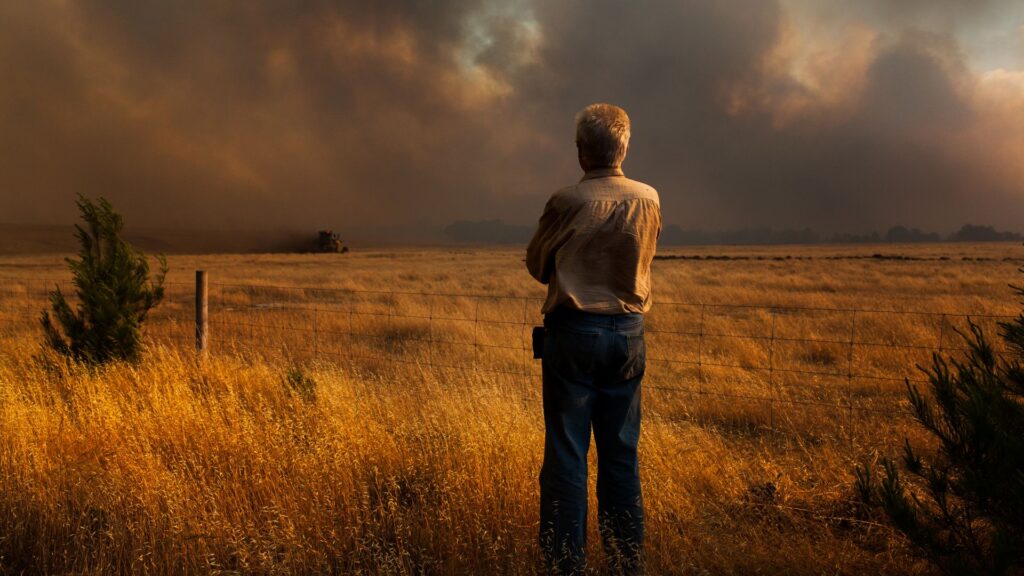
Climate change continues to pose a significant threat, with new research suggesting that even modest increases in global temperatures could trigger extreme weather events more frequently than previously anticipated. A recent study published on March 25 in the journal Nature reveals alarming insights into the potential consequences of a climate scenario where global temperatures stabilize at approximately 3.6 degrees Fahrenheit (2 degrees Celsius) above preindustrial levels.
The study, led by Emanuele Bevacqua, head of the Climate Compound Extremes group at the Helmholtz Center for Environmental Research in Germany, indicates that such moderate warming could result in deadly floods in urban areas, severe droughts affecting major crop-producing regions, and an increase in destructive forest wildfires. "Our results do not mean that 2 C of global warming would be as severe overall as much greater warming," said Bevacqua in an email to Live Science. "Rather, they show that extreme impacts in particularly vulnerable or socially important sectors may occur even under moderate warming of 2 C."
Utilizing a suite of 50 climate models similar to those employed by the Intergovernmental Panel on Climate Change (IPCC), the researchers diverged from the norm by analyzing the models individually to discern a range of possible outcomes associated with a 3.6 F warming scenario. They focused on three critical sectors vulnerable to climate impacts: densely populated areas susceptible to rainfall and flooding; agricultural regions sensitive to drought; and forests at risk from wildfires.
Analysis revealed a broad disparity in potential climate events across the models. For instance, urban areas could see precipitation levels increase by 4% to 15%, significantly raising the likelihood of catastrophic flooding due to limited drainage capabilities. The study highlighted that worst-case scenarios, particularly for regions like India and west-central Africa, could exceed expectations usually associated with 5.4 F warming.
Drought conditions in major agricultural zones presented the most variability among the models, with some indicating limited impacts, while about one in four projected that droughts could be as severe, or even more so, than normally expected under 7.2 F warming. Regions identified as most at risk include the Indian subcontinent, East Asia, south-east South America, south-east Australia, the Caucasus, and central North America.
Similarly, the research indicated a significant risk regarding wildfires, suggesting that there is a 1-in-5 chance that conditions conducive to fires could become as intense or even more intense under 3.6 F warming than projected for 5.4 F. The regions most likely to face this risk include Canada, central Africa, northeast South America, northeastern Europe, and parts of Russia. These forests are not only vital ecosystems but also critical carbon sinks that have suffered substantial losses over the past two decades.
While the likelihood of extreme outcomes occurring under a 3.6 F scenario is low, the study emphasizes the importance of preparing for such possibilities. Bevacqua remarked, "Focusing on the most likely outcome or model averages alone can create a false sense of security about moderate global warming." He advocates for a thorough examination of the plausibility of extreme outcomes, especially as global temperatures approach 1.5 C (2.7 F), which highlights the urgent need to limit warming well below 2 C.
Christian Franzke, a professor in the Center for Climate Physics at Pusan National University in South Korea, who did not participate in the study, echoed the urgency of the findings. He noted that the authors effectively demonstrated a wide spectrum of impacts arising from a single warming scenario. "I am not surprised by the results," Franzke stated. "But you have to keep in mind that they compare extremes at 2 C global warming with the mean states at 3 C and 4 C."
Franzke also suggested that effective water management policies could mitigate some adverse climate outcomes in crop-producing regions. However, he cautioned that climate models might overlook unpredictable factors. "In the real world, we can face unanticipated bad surprises," he warned.
As the consequences of climate change become increasingly apparent, this study serves as a stark reminder that even moderate warming scenarios can yield severe and unpredictable outcomes. It underscores the necessity for proactive measures and comprehensive planning to adapt to the shifting climate landscape.
France's Shocking Move: Will Kids Under 15 Face a Total Social Media Ban? The Debate Is Heating Up!
You Won't Believe What Happens When Access Is Denied – Shocking Consequences Revealed!

College Football’s Shocking 2027 Draft: How This Change Could RUIN Your Team's Future!
You Won't Believe How This 60-Year-Old IT Guru Shockingly Reversed His Diabetes—And What He Did Might Save Your Life!

Pittsburgh's Shocking NFL Draft Plan: Are You Prepared for This Health Crisis?

You Won't Believe How Apple Transformed from a Small Garage Startup to a $2.5 Trillion Empire in Just 50 Years!
You might also like: