
Could a 7% Increase in Snowfall in Northern Japan Signal a Climate Crisis? The Shocking Truth Revealed!

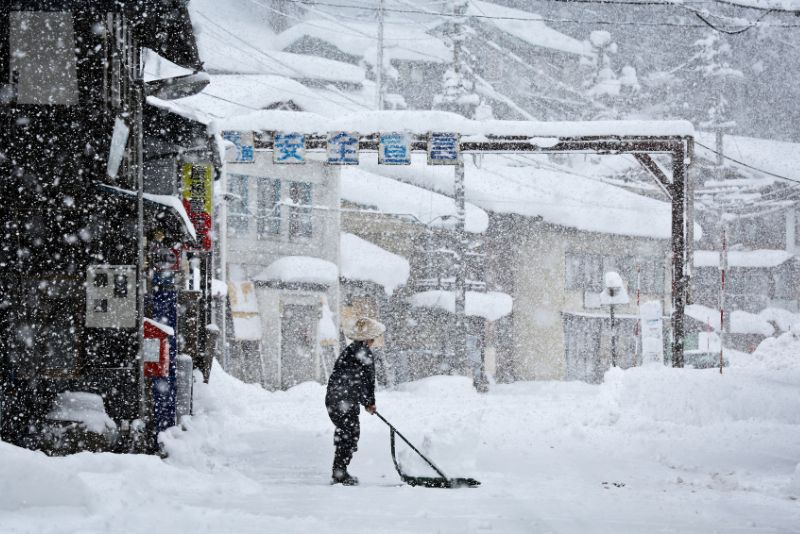
A recent study published by Japan's Ministry of Science and the Meteorological Research Institute sheds new light on the complex relationship between climate change and snowfall patterns in Japan. Titled “Global warming affects the heavy snowfall in late January 2026,” the research indicates that while rising temperatures typically reduce snowfall in many regions, some colder areas may experience an increase, creating a paradox in the impacts of global warming.
The study focuses on severe snowstorms that paralyzed parts of northern and western Japan from January 21 to January 31, 2026. During this period, a surge of cold air led to record-breaking snowfall, with areas around Sapporo seeing train services suspended and Aomori Prefecture buried under up to 6.5 feet (approximately 2 meters) of snow. The disruptions were severe enough to warrant the deployment of Japan’s Self-Defense Forces for disaster relief.
Utilizing advanced climate simulations through a method known as “event attribution,” researchers compared weather simulations reflecting the current climate conditions with those simulating a world unaffected by human-driven warming. This approach allowed them to assess how much of the severe weather could be attributed to climate change.
The findings revealed that in colder regions along the Sea of Japan coast—specifically in Niigata Prefecture and further north—climate change has likely increased snowfall by approximately 7%. The rationale behind this is straightforward: warmer air holds more moisture, which can lead to heavier snowfall when temperatures remain low enough for precipitation to fall as snow. In their analysis, researchers concluded, “Increased atmospheric water vapor can raise the risk of heavier snowfall.”
Conversely, the effect of climate change was markedly different in warmer regions of Japan. In western areas, where winter temperatures hover closer to freezing, the study found a reduction in snowfall amounts of about 7%. Here, rising temperatures lead to a shift in precipitation forms, with rain replacing what would have previously fallen as snow.
This research highlights a counterintuitive aspect of climate change: warming does not universally lead to less snowfall. Instead, its impact varies significantly based on local temperature conditions. In regions that remain well below freezing, the additional moisture can intensify snowstorms, while in milder climates, the same warming trend can diminish snowfall.
In their simulations, researchers modeled the snowstorm event under two different scenarios: one depicting current climate conditions and another representing a hypothetical climate without human-induced warming. The comparison allowed scientists to quantify the extent to which climate change influenced snowfall totals during the late-January storm.
As the findings illustrate, regions that typically experience heavy snowfalls must remain prepared for significant winter weather, even in a warming world. The potential for heavier snow events is a crucial consideration for disaster preparedness and infrastructure planning.
This study not only contributes to our understanding of the complex interactions between climate change and weather patterns but also emphasizes the need for ongoing research and preparedness in the face of changing climate conditions. As global temperatures rise, the implications for snowfall will continue to evolve, impacting communities in diverse and unexpected ways.
You Won’t Believe How $500 Million in Commercial Deals Transformed Long Island—Find Out Why Now!

New Law Could Ban Corporations from Buying Homes—What This Means for You!
Is Your Browser Leaving You Vulnerable? 9 Shocking Security Risks You Can't Ignore!

First Nations' Land at Risk: Are Carbon Markets Sabotaging Indigenous Stewardship?

Smartphone Shipments Plunge 7% in 2026: Is Your Next Upgrade at Risk?

Is This the ONE Cryptocurrency That Could Skyrocket to $10,000 by 2026? Don't Miss Out!
You might also like: