
COP30 Just Shocked the World: Biofuels Are Set to Explode—Will You Be Left Behind?

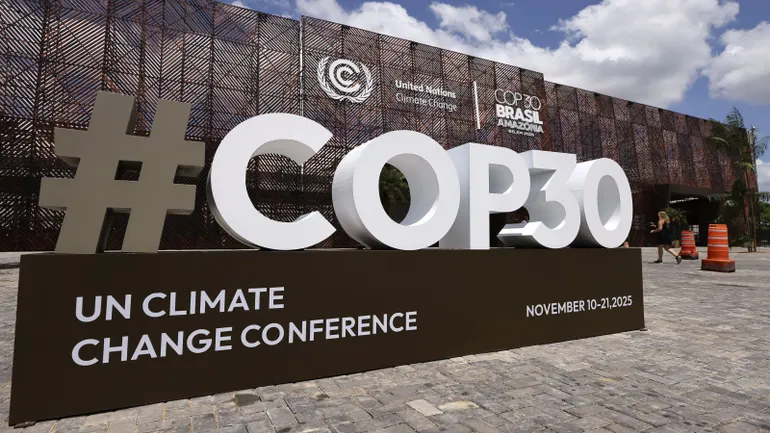
The recent conclusion of COP30, an international climate conference, marked another moment of missed opportunities in the global effort to combat climate change. While no new plans to curb fossil fuel emissions were established, some encouraging developments emerged from side meetings. A coalition led by Brazil, Italy, Japan, and India introduced the Belém 4X Pledge on Sustainable Fuels, which aims to significantly increase the use of "sustainable fuels," such as biogas, by fourfold by 2035. This pledge was endorsed by 23 additional countries, highlighting a growing recognition of the importance of alternative energy sources.
The United States, despite not attending COP30, has played a foundational role in the Clean Energy Ministerial (CEM), the organization responsible for advancing this new pledge. The U.S. has seen a substantial increase in biogas production in recent years. According to the American Biogas Council, the number of biogas systems converting food waste into renewable energy has surged by 19% over the last five years, with approximately 2,500 operational sites nationwide.
Patrick Serfass, executive director of the American Biogas Council, highlighted the significance of biogas and other renewable fuels for companies aiming to decarbonize swiftly. He stated, “Scaling [sustainable fuels] up requires long-term, stable policies that grow demand and reflect their full lifecycle benefits. With better regulatory cooperation, aligned certification, and fair, transparent trade, we can unlock the full climate potential of sustainable fuels.” This perspective underscores the need for comprehensive policies that support the growth of the biogas industry.
The urgency for such measures is emphasized by the findings of the Global Methane Status Report, which notes that the global waste sector accounts for 20% of all anthropogenic methane emissions. At COP30, the Global Methane Hub announced a plan aiming to cut methane emissions from organic waste by 30% by 2030. This aligns with the broader goal set by the Paris Agreement to limit global temperature rise to 1.5 degrees Celsius, a target that remains alarmingly out of reach.
The Belém pledge resonates with a prior agreement encouraging nations to transition away from fossil fuels in an equitable manner, promoting "technologically neutral" solutions such as biogas-derived fuels. This principle reflects a shift towards recognizing and investing in sustainable energy sources as integral components of the global energy landscape.
Industry Developments in Biogas
As interest in biogas grows, several companies are ramping up their operations in this sector. For instance, WM (formerly Waste Management) recently opened two new renewable natural gas (RNG) facilities: a $50 million plant in Opelika, Alabama, and a $78 million facility in Okeechobee, Florida. The Opelika facility is projected to generate approximately 750,000 mmBtus of RNG annually, while the Okeechobee plant will produce 1.5 million mmBtus, supplying the Florida Southeast Connection pipeline. These facilities are part of WM's ambitious goal to establish 20 new RNG facilities as part of a $1.6 billion investment from 2022 to 2026.
Another noteworthy development is Nopetro Energy’s partnership with Johnson Controls to construct a $50 million landfill gas-to-RNG facility at the Lena Road Landfill in Manatee County, Florida. Scheduled to begin construction next year and operational by 2027, this facility is expected to yield around 525,000 mmBtus of RNG annually.
Sparq Renewables is also making strides in the biogas sector, planning to build an RNG facility at the Reno County Landfill in Kansas through a collaboration with Greenview Energy. Once completed, the facility is anticipated to produce 210,000 mmBtus of RNG annually. This project follows Sparq Renewables’ previous partnership with NextEra Energy to develop a facility in Enid, Oklahoma.
On the dairy front, Aemetis has reported substantial progress with its anaerobic digesters, which process dairy manure. In its third-quarter earnings release, the company reported $4 million in revenue from its 12 operating digesters, generating a combined total of 114,000 mmBtus of RNG. Aemetis has also completed a project to extract biogas from dairy cow manure and plans to sell related federal tax credits for approximately $20 million.
As the world grapples with climate change, the focus on biogas and sustainable fuels reflects a growing recognition of their potential role in achieving energy transition goals. While the path ahead is fraught with challenges, the increased collaboration among nations and the private sector highlights a pivotal moment for renewable energy. The next steps will be crucial in realizing these ambitious targets and addressing the pressing climate crisis.
US Vaccine Advisers Just Made a Shocking Decision: Should Your Baby Skip the Hepatitis B Shot? Find Out Now!

Meta's Shocking $100 Million Deal with Top Publishers: What It Means for Your News Feed!

CDC's Shocking New Hepatitis B Guidelines for Infants: What Every Parent Must Know Now!

Why Ignoring Intangibles Could Cost You Thousands in Property Taxes – Find Out What You’re Missing!

You Won't Believe What Hyrox's New Fitness Cruise Could Mean for Your Next Vacation!

Brandon Aubrey's Shocking NFL Record-Breaking Moment in Week 14: You Won't Believe What Happened!
You might also like: