
Colorado's $37 Billion Climate Catastrophe: Are You Prepared for the Consequences?

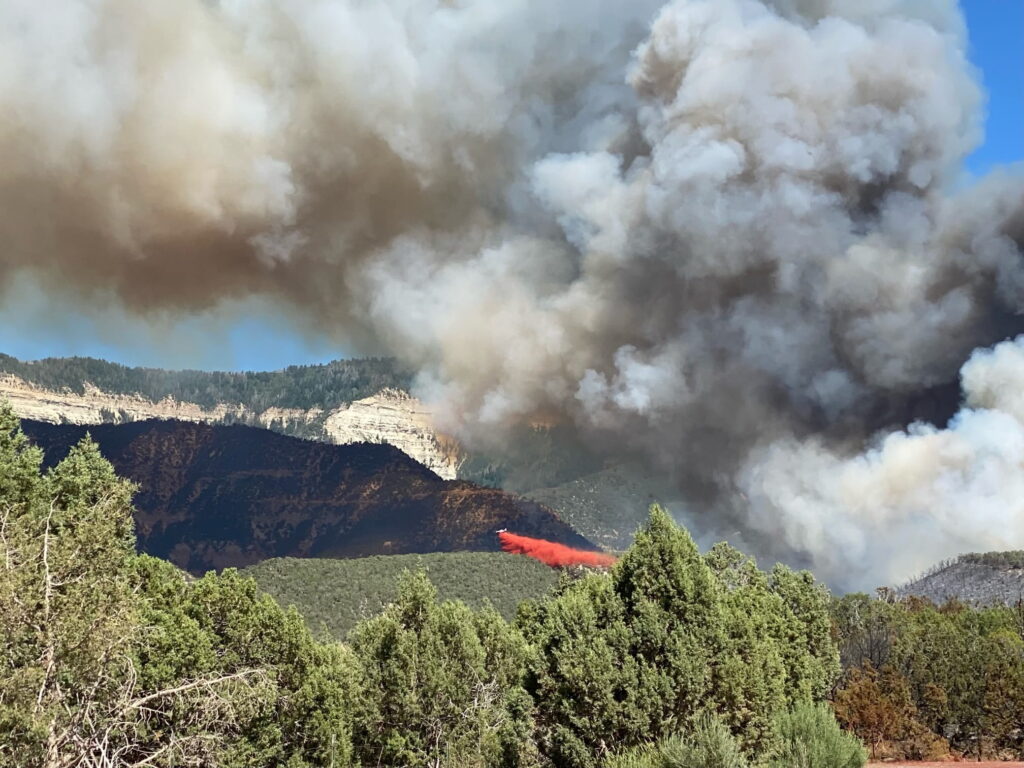
The Colorado Fiscal Institute (CFI) has released a staggering report predicting that climate change could impose costs of between $33-$37 billion on Colorado by 2050. This revelation has sparked urgent discussions about the impacts of climate change across the state, especially following one of the worst winters in recent memory. Ski resorts and mountain towns are already feeling the economic pinch as drought conditions persist, and a dry summer looms on the horizon.
This year, Colorado's ski industry, which generates approximately $4.8 billion annually, is facing new challenges. The CFI report highlights crucial issues like wildfires, water restrictions, and potential threats to the economic stability of ski towns, all of which have shown a worrying trend in previous years. The report uses global emissions pathway models to project greenhouse gas levels over the next 25 years, envisioning two scenarios: a “medium-high” pathway that assumes limited emissions reductions, and a “high-end” worst-case scenario predicting a swift increase in emissions.
Pegah Jalali, an analyst at CFI, pointed out that the projected costs from climate change will affect various sectors, including health, infrastructure, and winter recreation. “Between 2025 and 2050, climate change could impose roughly $33-$37 billion in additional costs and resilience needs across Colorado’s health, infrastructure, wildfire, flooding, and winter recreation impacts,” Jalali stated. These alarming figures put the ski industry's economic contribution into perspective, highlighting the urgency of addressing climate change.
One of the most immediate threats cited in the report is extreme heat. According to the Colorado Climate Center, annual temperatures across the state rose by 2.3 degrees from 1980 to 2022. This uptick has already shortened the ski season, with forecasts predicting an additional increase of 2.5°F to 5.5°F by 2050. Chris Miller, senior vice president for sustainability at Aspen, revealed to The Colorado Sun that the resort has experienced a loss of over 30 days of winter since 1980 due to rising temperatures.
The town of Aspen is feeling the repercussions as well. “It is clear that snow is an important factor for those considering Aspen for a ski vacation, which in turn has an impact on our local businesses,” said Eliza Voss, senior vice president of destination marketing at the Aspen Chamber Resort Association (ACRA). As the ski season shrinks, maximizing revenue during peak periods has never been more critical.
This year, Vail Resorts reported a net loss of $172.8 million in its first fiscal quarter of 2025, largely attributed to low snowpack and limited terrain openings, which resulted in trip cancellations. This financial strain speaks to the broader economic implications of climate change on the ski industry, as uncertainties surrounding season reliability could lead to fewer pass sales and planned visits.
Despite significant investments in snowmaking technology, ski resorts are struggling to keep pace with rising temperatures. The CFI study also looked at the human toll of climate change, estimating that extreme heat could lead to up to 1,900 heat-related deaths, contributing billions to the overall economic impact. Jalali noted that these estimates are derived from a widely accepted climate impact tool that incorporates daily temperatures, baseline mortality rates, and an epidemiological risk analysis.
The repercussions of climate change extend beyond financial figures; they resonate deeply in the mountains, rivers, and lakes that define Colorado's landscape. With record-low snowpack levels, local waterways are suffering. However, there is some hope on the horizon. Early indications suggest a potential super El Niño for the summer months, which could provide much-needed rain. For many Coloradans, this would be a welcome sight as they prepare for another dry season.
Steelers' Shocking Draft Blunder: Did Eagles Just Snag Their Dream Receiver? Find Out!
You Won't Believe What This Celebrity Did—Legal Trouble That Could Change Everything!
Governor Kehoe’s Shocking Move: 4 New Laws Could Change Everything for You! Find Out How!

You Won't Believe the Shocking Mistake That Ruined the Knicks' Final Play—NBA Legend Exposes the Truth!

Journalists Uncover Shocking Mental Health Crisis—You Won't Believe the Stats Behind Their Award!
Your Browser Might Be Putting Your Online Safety at Risk—Discover the Shocking Truth Now!
You might also like: