
College Leaders at the White House: You Won't Believe What They Demanded to Save Students!

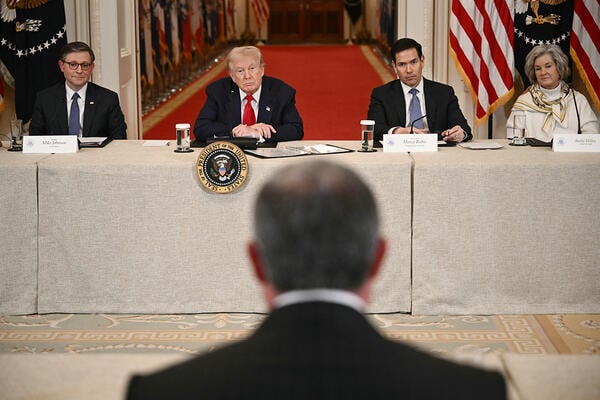
In a bold declaration regarding the tumultuous landscape of college athletics, President Donald Trump announced his intention to draft an executive order aimed at overhauling the system. Addressing participants in a two-hour roundtable discussion at the White House, Trump warned that “a lot of really bad things are happening” in college sports, highlighting the pressing need for reform.
While specific details of the proposed executive order remain unclear, Trump expressed a desire to revert to a model where student-athletes are primarily compensated through athletic scholarships. Acknowledging the complexities of the situation, he conceded that any executive order would likely face legal challenges.
At the heart of the discussion were the financial strains plaguing college athletic programs, with Trump asserting that without significant changes, many institutions could face bankruptcy. “Many are going to go down the tubes,” he warned, pointing to a larger systemic crisis in the collegiate sports arena. Recent legal rulings have disrupted the traditional financial frameworks governing college athletics. In 2021, court decisions deemed NCAA restrictions on athlete compensation a violation of federal antitrust laws, paving the way for student-athletes to profit from their name, image, and likeness (NIL) and share in the revenue generated from their respective sports. Institutions that opted into a recent settlement, effective from July 2021, agreed to pay a minimum of $20 million annually in revenue-sharing payments to student-athletes.
This shift has escalated the operational costs of athletic departments, leading to dire warnings about the sustainability of the current model. Many programs are reporting significant deficits and accumulating debt, prompting some institutions to seek investments from private equity or foreign investors. Facing these financial realities, college administrators anticipate cuts to athletic programs may be imminent.
In a recent open letter, senior administrators from the University of Louisville made a compelling case for urgent reform. The letter, signed by Louisville President Gerry Bradley, Athletic Director Josh Heird, and Board Chairman J. D. Nichols, highlighted the financial struggles facing their athletic department, which is grappling with a $12.5 million deficit. They noted that only two out of the university's 23 sports are currently profitable, while the department's cash reserves have plummeted from $34 million to just $3.4 million. To manage this shortfall, the university has relied on a $12 million institutional subsidy, a $200-per-student athletic fee, and a $25 million line of credit.
“Louisville’s situation is not the exception—it is the rule,” they wrote, pointing to a widespread financial crisis that affects athletic programs across the nation. “From the wealthiest programs in the nation to those fighting simply to stay afloat, the financial picture is remarkably and alarmingly similar.”
A Call for Federal Intervention
During the roundtable, participants echoed the sentiments expressed in Louisville's letter, emphasizing the need for immediate federal action. “College football has become a runaway financial train,” said Pete Bevacqua, Athletic Director for the University of Notre Dame. He called for increased regulations, greater financial transparency, and consequences for unsustainable financial practices.
Attendees included over 50 individuals from various sectors of college athletics, including administrators, former coaches, and professional sports executives. However, the absence of current student-athletes and representatives from women's or Olympic sports raised concerns about the comprehensiveness of the discussion. Experts fear that non-revenue generating sports may be cut as institutions focus on financially lucrative programs such as football and basketball.
Karen Weaver, an adjunct assistant education professor at the University of Pennsylvania and former athletic director, criticized the narrow focus of the roundtable, stating, “The people he has in the room today will not solve the problem of college athletics; they have such a narrow viewpoint.” Despite skepticism about the potential for significant change, some industry experts remain hopeful that presidential involvement could catalyze action. Tim Walsh, Managing Director of Strategy and Operations at the consultancy Huron, noted, “These problems aren’t new and have been evolving for many years. They’ve just gotten dramatically worse in the last couple of years, so everybody’s desperate for action.”
For years, the NCAA and various athletic conferences have sought federal reforms as essential for creating a sustainable future for college sports. The NCAA has advocated for Congress to grant it an antitrust exemption and establish a cohesive national framework for NIL regulations, replacing the current inconsistent state-by-state system. However, despite numerous congressional hearings and proposed legislation, no significant bills have advanced in the House or Senate. House Speaker Mike Johnson, who participated in the roundtable, expressed confidence that he has the votes to pass the Student Compensation and Opportunity through Rights and Endorsements (SCORE) Act. This proposed legislation aims to standardize NIL regulations and grant the NCAA a limited antitrust exemption but faces hurdles in garnering bipartisan support.
“If Congress doesn’t act, we are very quickly gonna be in a world of 30 to 50 college football teams that are basically a mini NFL, and the Division II and Division III schools are gonna be left behind,” warned Senator Ted Cruz. He urged those present to advocate for the importance of maintaining scholarships and programs that provide educational opportunities for millions of student-athletes.
As the landscape of college athletics evolves, the urgency for reform is palpable. The financial strain on athletic departments continues to mount, with the cap on revenue-sharing payments expected to rise to over $21 million in the coming year and potentially reach $32 million within the decade. Experts like Weaver caution that reliance on donor contributions for funding could become increasingly unsustainable. “Now the rubber hits the road because they realize how hard it was to raise the money this year,” she explained, emphasizing the need for strategic reconsideration of athletic programs' future viability.
As institutions navigate this precarious financial space, the impending changes in media rights contracts could offer a glimmer of hope. Current deals set to expire starting in 2029 could provide significant financial boosts, yet this waiting game poses risks for many institutions not poised to benefit from the potential influx of cash. “Everybody else is just holding on for dear life,” Walsh added, underscoring the urgency for proactive measures in an increasingly competitive and financially strained environment.
You Won't Believe Which Smartphone Dominated Our Shocking 7-Round Face-Off—The Results Will Leave You Speechless!

Is Your Home at Risk? Shocking Flooding Statistics Reveal Climate Change's Hidden Threats!

This $1,000 Foldable Phone with a 200MP Camera is Launching Soon—You Won't Believe What It Can Do!

This $200 Smartphone Kills the Competition—You Won't Believe What It Can Do!
You Won’t Believe What Shocking Laws Were Passed on This Day in 1935 – Discover the Hidden Impact!

Why This Secret Geothermal Startup Just Secured Millions—And What It Means for Your Energy Bills!
You might also like: