
City Hall's Shocking Move: $200M Health-Care Funds Vanishing to Fix Budget Crisis—What’s Next?

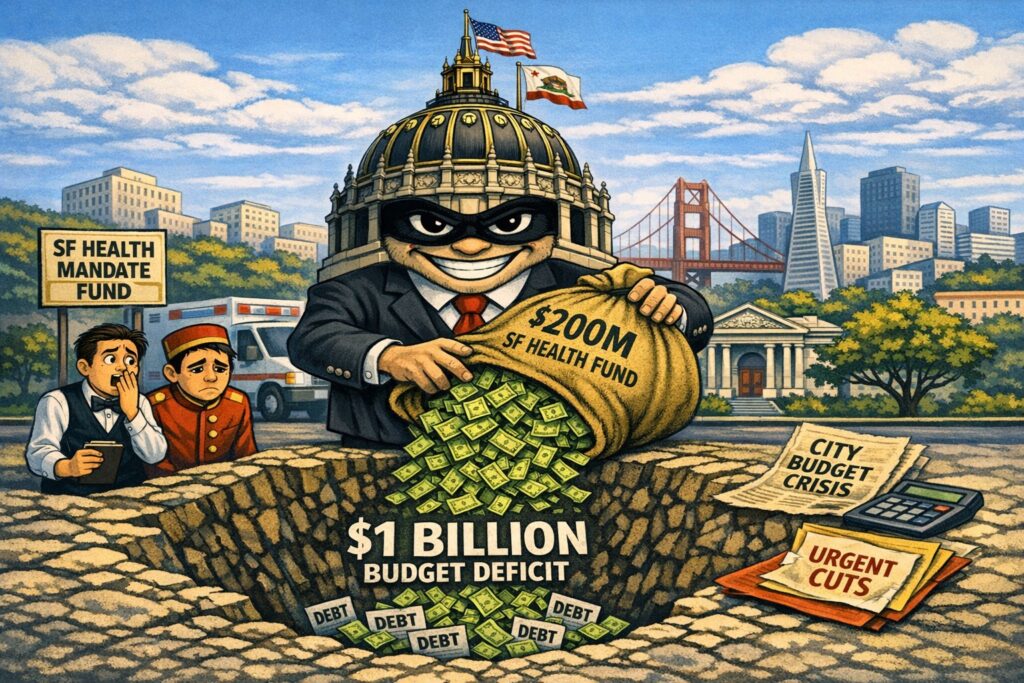
In a move that has sparked significant debate, San Francisco plans to transfer over $200 million from the city’s health care mandate fund into its general fund by April 2026. This transfer comes as the city grapples with a staggering $1 billion budget deficit. The decision, made by the city’s Health Commission in 2022, reflects a shift in policy aimed at addressing the growing financial strain on the city’s resources. Mayor Daniel Lurie and the San Francisco Board of Supervisors, who approved the current two-year budget last June, intend to utilize $200-$240 million of these funds to help mitigate the deficit.
The health care mandate fund, established to provide health insurance for hourly workers, is financed through fees imposed on San Francisco employers. This often appears as a health care surcharge on restaurant bills, leaving many customers unaware that they can request its removal. Restaurants can choose whether to itemize this fee on their bills, adding an element of confusion for consumers.
Officially known as the Health Care Security Ordinance (HCSO), the mandate requires employers with more than 19 employees nationwide to allocate a minimum amount per hour for employee health care unless they provide qualifying coverage. Many companies meet this requirement by contributing to the San Francisco City Option (SFCO). In the 2023–24 period, 2,003 employers contributed approximately $215 million for 79,227 workers, translating to an average of $2,715 per employee annually. For a business with 20 employees, this costs around $4,520 each month, even if those employees never utilize the benefits.
California law stipulates that funds must be inactive for three full years before they can be declared abandoned, which explains the substantial transfer amount. This transfer captures over a decade of accumulated balances that have become eligible for reallocation. Contributions to the fund are mandated across various sectors, including dining, hospitality, retail, and services.
In an effort to encourage workers to utilize their SFCO funds, the San Francisco Department of Public Health has been running a social media campaign and issuing reminders since 2023. They stress that anyone who has worked for an employer making these contributions should check for unclaimed healthcare funds, stating, “People are able to access their funds even if they have left the Bay Area or no longer work for the company that made the contribution.” Those interested can verify their accounts or set up their Medical Reimbursement Accounts (SF MRAs) through designated channels.
As of January 2026, there is approximately $240 million in the SF City Option pool fund or in SF MRAs that have been inactive for three consecutive years or more. Individuals must act before 5 PM on May 21, 2026, or risk losing access to these funds forever. Once enrolled, employees can be reimbursed for various health and wellness expenses, including health insurance premiums, lab tests, and even baby formula.
The background behind the accumulation of these unused funds is largely attributed to the transient nature of jobs in the restaurant and service sectors. Many employees leave without ever learning about their accounts or how to access them. Insurance consultants suggest that the Department of Public Health estimates over 135,000 employees have not set up their SF MRAs, leading to further underutilization of the funds.
The impending transfer has reignited criticism of a program originally designed to support workers. Many business owners in San Francisco are asserting that the mandated health care fee is a costly burden that should be repealed. Matt Boschetto, a small business owner and former candidate for supervisor, voiced frustration, stating, “It seems they’ve created an illegal tax from an already unpopular mandate. If the employees are not using the funds, it should go back to the employers, and the mandate should be reformed to be less costly for businesses.”
In 2025, Ben Bleiman, a bar owner and head of the Entertainment Commission, called the situation “offensively unfair,” reflecting a growing sentiment among business owners that they are being disproportionately impacted by city policies. Others in the hospitality industry have expressed outrage that funds intended for workers’ healthcare are now being used to balance the city’s budget deficit, declaring, “It’s theft and fraud! That money needs to be returned.”
The reimbursement model associated with the SFCO can be cumbersome. Workers must pay upfront for expenses and submit receipts for reimbursement, a process that can prove challenging for those who cannot afford to pay out of pocket. Furthermore, following the expansion of access to Medi-Cal and Covered California plans under the Affordable Care Act, many workers have health insurance from other sources, reducing the necessity to draw on city accounts. Yet, employer contributions continue at a fixed hourly rate, resulting in growing unused balances over the years.
The burden of this mandate often functions like a tax for employers, compelling them to pay substantial amounts for each worker, regardless of whether the employees utilize the benefits. Many establishments are forced to pass these costs along to customers through surcharges, complicating the overall dining experience. This has led to altered tipping behaviors among patrons, sometimes resulting in decreased tips for servers who feel the financial pressure.
As April 2026 approaches, the transfer of funds not only highlights the financial challenges facing San Francisco but also underscores a broader tension in the city’s policy landscape. While progressive mandates aim to achieve social goals, the costs ripple outward and impact various stakeholders—businesses, consumers, and workers alike. The city’s strategy of reallocating these funds has brought to light the complexities of maintaining a balance between fiscal responsibility and worker support in a rapidly evolving economic climate.
Voter Watch: Did You Spot Election Day Shenanigans in Kane County? Here’s How to Report Them NOW!
Why This Israeli Fund Just Invested $100 Million in Defense Tech Startups – The Shocking Truth Behind Military Innovation!

UP Health System Cuts Essential Services Amid Severe Weather—What This Means for You!
Kratika Sengar Shockingly Quits Social Media: What She Discovered Offline Will Leave You SPEECHLESS!

This Entrepreneur's AI-Powered Dog Vaccine Could Revolutionize Cancer Treatment—Are You Prepared for the Shocking Truth?

What Warren Buffett's $373 Billion Warning Reveals About the Stock Market's Hidden Danger!
You might also like: