
China's Smog Clean-Up Linked to Australia’s Hottest Year: What You NEED to Know!

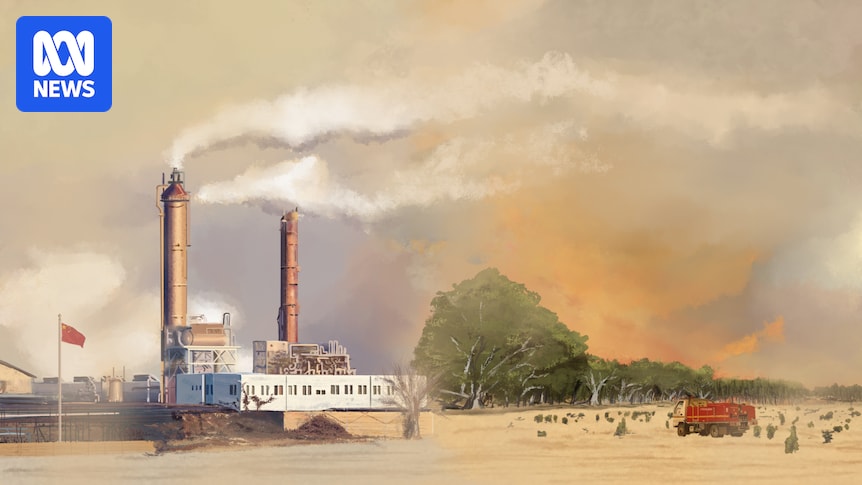
In the months leading up to the 2008 Beijing Olympics, Chinese authorities implemented an unprecedented measure to combat the city’s notorious smog: a ban on half of all private cars from the roads, alternating daily between those with even and odd-numbered license plates. This radical approach was part of a broader strategy that included factory closures and construction halts, all aimed at alleviating the harmful air pollution that had become a defining feature of life in the city.
Decades of rapid industrialization had led to severe air quality issues in Beijing, impacting the health of residents and raising concerns that pollution could derail the highly anticipated Olympic Games. Even after the haze lifted for the event, persistent complaints from athletes and international media about the air quality contributed to a lasting legacy of scrutiny regarding China’s environmental practices.
Post-Olympics, as China's economy surged, emissions of aerosols—tiny particles expelled into the atmosphere from burning fossil fuels, volcanic eruptions, and even bushfires—reached their peak before dramatically declining. Aerosols can have a cooling effect by reflecting sunlight away from the Earth, unlike greenhouse gases, which trap heat. This cooling effect is significant, as it can alter weather patterns and regional climates.
The Global Impact
Remarkably, the success of China's air quality improvements since the 2010s has been linked to changes in weather patterns beyond its borders, notably in Australia. Researchers have found that reductions in aerosols correlate with alterations in rainfall patterns and contribute to global temperature rises, as their masking effect on climate change diminishes.
CSIRO scientist Melita Keywood explains that while aerosols can cool the atmosphere, they can also impact cloud formation and rainfall. "Sulphate aerosols are like a white roof that reflects light, but a black roof absorbs heat," she notes. This influence extends thousands of kilometers; a study from 2025 revealed that Australia's hot and dry conditions in the 2010s were impacted by China's aerosol reductions, leading to decreased moisture and an increased risk of bushfires across the continent.
Despite Australia experiencing relatively high rainfall since 2020, Professor Yang Yang from Nanjing University of Information Science and Technology emphasizes that changes in China continue to influence Australian weather. "The marked increase in Australian rainfall after 2020 does not invalidate conclusions about the influence of Chinese aerosols on Australia's climate," he states. This illustrates the complex interplay between local and distant pollution sources and their effects on global weather systems.
In 2022, a group of European climate scientists identified East Asian aerosol reductions as a significant contributor to the acceleration of global warming since 2010. Joonas Merikanto from the Finnish Meteorological Institute explained that these changes disrupt local circulation patterns over the Pacific, influencing monsoon precipitation across Asia.
This phenomenon isn't novel; similar patterns were observed in Europe. For instance, researchers have noted that the removal of pollution in Europe led to a significant rise in temperatures. Johannes Quaas, a professor of theoretical meteorology at Leipzig University, stated, "I grew up in an industrial area. I know the smell of sulphuric acid in the air from playing as a child outside when I shouldn't." Climate scientist Karsten Haustein estimates that central European countries have faced nearly a 3 degrees Celsius increase in temperatures since pre-industrial times, largely due to the loss of the cooling effect provided by aerosols.
In 2024, Tim Cowan and his colleagues found evidence suggesting that Asian aerosol emissions had previously bolstered Australia's summer monsoon rainfall. However, after China initiated major reductions in aerosol emissions, the opposite effect became evident, leading to decreased moisture levels.
As pollution reduction efforts gain traction in other parts of Asia—such as India and Bangladesh, where air pollution poses severe health risks—climate experts warn that these measures could paradoxically lead to increased local temperatures and extreme weather events. "Removing aerosols means more flooding in Bangladesh, and in India, maybe issues with the pre-monsoon, which is really important for agriculture," Dr. Haustein predicts.
While the implications of aerosol emissions and reductions are becoming clearer, experts agree that there's still much to learn. Dr. Cowan suggests that Australia has yet to fully grasp the role aerosols play in its climate. "Our understanding of the role aerosols play in driving our climate is fairly rudimentary," he asserts, underscoring the need for more extensive research in this area.
As nations navigate the complex balance between improving air quality and understanding its broader climatic impacts, the lessons drawn from China's pollution management will likely shape environmental policies worldwide. It is a reminder that while the immediate benefits of cleaner air are evident, the long-term effects on global weather and climate systems require careful consideration and ongoing study.
Is 2026 the Year Social Media Rules Tear the US and EU Apart? Shocking Details Inside!

8 Shocking Behaviors of Those Who've Endured REAL Hardship—Are You Missing These Key Signs?

Real Madrid’s Shocking Demand: Will They Really Sell Vinicius Jr? Man Utd's Bold Move Exposed!

Michael Chandler Drops BOMBSHELL: UFC Showdown with Conor McGregor Might Happen THIS MONTH!

Venezuelan Government Shocks World: 88 Prisoners Freed After Turmoil! What Happens Next Will Astonish You!

The Jaw-Dropping Prices of Morris County’s Most Expensive Homes—You Won’t Believe #3!
You might also like: